
“A calm home is not an empty home. It is a home where everything has room to breathe.”
There is a quiet kind of beauty in a home that gives you room to breathe.
Not because every surface is empty or every object has been hidden away, but because the space feels considered. The colors are soft. The light is gentle. The things you see have a purpose, a memory, or a reason for being there.
This is the heart of warm minimalism.
Unlike traditional minimalism, which can sometimes feel cold or overly perfect, warm minimalism makes space for comfort, texture, and personality. It keeps the visual calm of a simple home while adding the details that make it feel welcoming: natural wood, linen curtains, handmade ceramics, softened edges, well-loved books, and objects that tell a story.
More than an interior design style, it offers a slower way of thinking about home. As the approach explored in Soft Minimal Home, it reminds us that simplicity does not have to mean emptiness. It can mean choosing carefully, living with less noise, and creating a space that supports the life we actually want to live.
What Is Warm Minimalism?
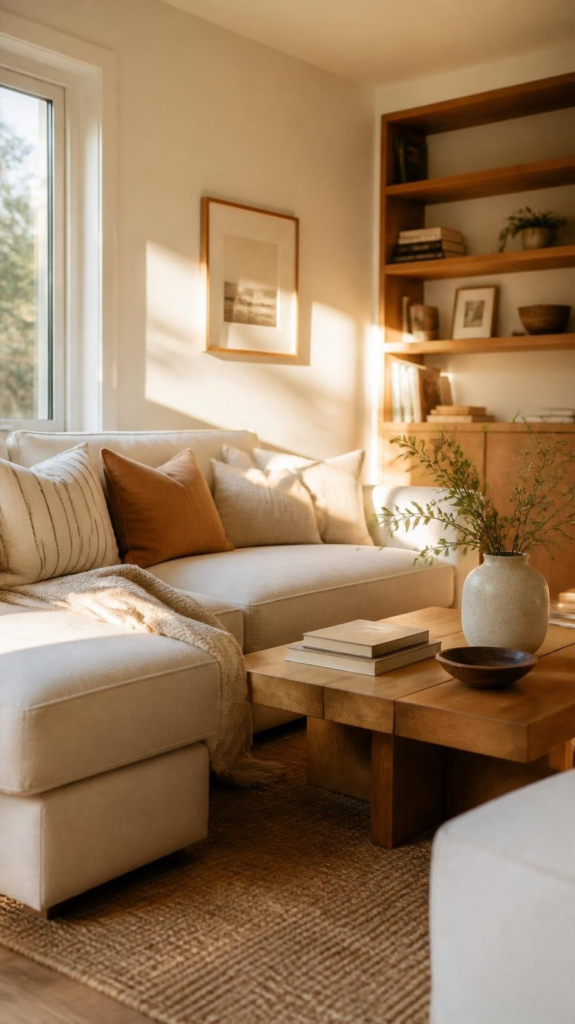
Warm minimalism combines the clean, uncluttered feeling of minimal design with warm colors, natural materials, organic shapes, and layered textures.
The foundation is still simple. Rooms feel open, functional, and visually peaceful. But instead of relying on bright white walls, sharp contrasts, and perfectly bare surfaces, a warm minimalist home uses creamy whites, oatmeal, beige, soft brown, muted terracotta, and gentle shades of green.
As The Spruce explains in its guide to warm minimalism, the style preserves the simplicity of traditional minimalism while using earthy tones, natural materials, and organic textures to make a room feel more welcoming.
Texture takes the place of excess decoration. A linen throw, a woven rug, a wooden table, or a ceramic lamp can bring depth to a room without making it feel busy. These same elements are central to The Art of a Cozy Home, where comfort is shaped through light, texture, and intentional details.
Personal objects are welcome too. The difference is that they are displayed with intention. A framed photograph, a stack of favorite books, or a bowl brought home from a meaningful trip can make a room feel personal without filling every corner.
Warm minimalism is not about removing everything. It is about allowing the right things to remain.
Why Warm Minimalism Belongs in a Slow-Living Home
Our surroundings quietly shape the way we move through the day.
A crowded kitchen counter can make preparing breakfast feel more difficult. A bedroom filled with visual noise can make it harder to settle at night. A living room arranged only for appearance may never become a place where anyone truly rests.
Warm minimalism encourages us to look at our homes differently. Instead of asking how a room should look, we begin by asking how it should feel and what it should help us do.
Should the kitchen invite us to prepare food slowly? Should the bedroom make rest feel natural? Should the living room encourage conversation, reading, or quiet evenings without screens?
This shift is closely connected to slow living. Both approaches value intention over excess. Both invite us to notice what supports our well-being and release what creates unnecessary pressure.
A warm minimalist home does not need to be flawless. It simply needs to feel calm enough for life to unfold within it. If you want to explore this relationship further, 5 Simple Ways to Create Calm Spaces for a Calmer Mind looks more closely at how the atmosphere of a room can influence everyday well-being.
Begin With Warm, Natural Colors
Color is one of the simplest ways to soften a minimalist space.
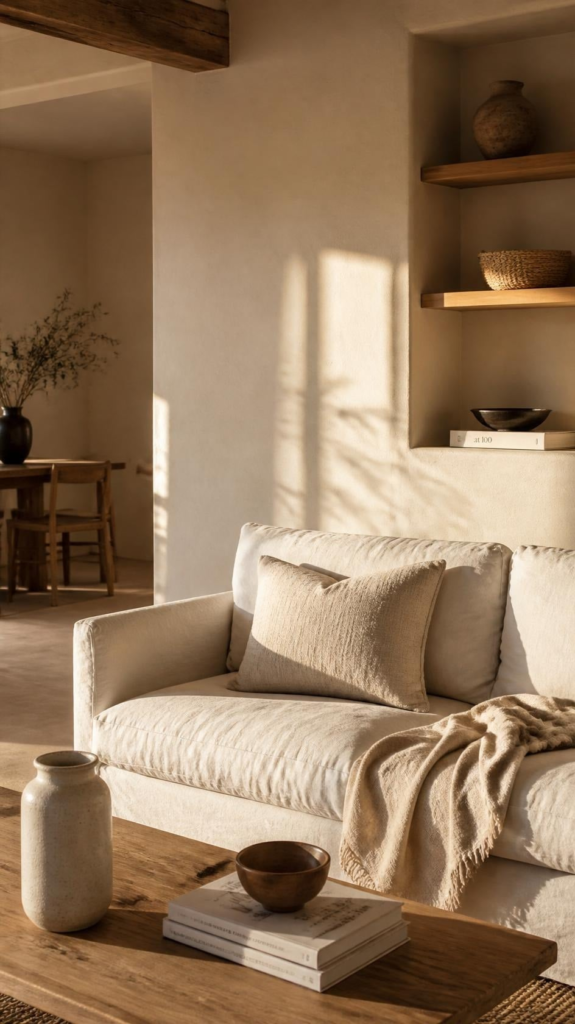
Start with warm neutrals rather than stark whites or cool grays. Cream, ivory, sand, mushroom, oatmeal, taupe, and soft brown create a calm base while making a room feel more welcoming.
Earthy colors can be added in small amounts. Muted terracotta, clay, olive, sage, and dusty rose bring subtle depth without disturbing the peaceful atmosphere.
The goal is not to make every room beige. It is to create a palette that feels connected, quiet, and easy to live with.
Before repainting an entire room, notice how the existing colors respond to natural light throughout the day. A shade that feels warm in the morning may look cooler in the evening. Testing colors slowly can prevent the space from feeling forced and helps you choose tones that genuinely belong in your home.
Let Texture Create the Warmth
In warm minimalist interior design, texture does much of the work that decoration normally would.
Linen curtains soften sunlight. A wool rug adds warmth underfoot. Woven baskets bring natural detail to open storage. Wood introduces variation through its grain, while ceramics and stone add a quiet sense of permanence.
These materials make a simple room feel layered without making it cluttered.
This balance between visual calm and tactile character is also central to Suzie Anderson Home’s approach to warm minimalism, which focuses on creating refined spaces that remain comfortable and full of character.
Try combining a few contrasting textures:
- Smooth wood with soft linen.
- Woven fibers beside handmade ceramics.
- A wool throw over a simple cotton sofa.
- Matte walls with warm metal accents.
- A natural rug beneath clean-lined furniture.
You do not need to add every texture at once. Begin with the places you touch most often: bedding, towels, cushions, rugs, and the chair where you usually sit. Comfort becomes more meaningful when it is part of everyday life rather than something reserved for display.
Choose Fewer Things, but Let Them Mean More
Warm minimalism is not a rule about owning a specific number of things. It is a practice of being more selective about what occupies your space and attention.
Before buying something new, pause and ask:
- Will I use this regularly?
- Does it make the room more comfortable?
- Does it work with what I already own?
- Would I still choose it if it were not currently trending?
- Does it bring beauty, meaning, or function to my daily life?
The same questions can help when decluttering. Some objects are useful. Others hold a memory. A few simply make us happy when we see them. Those are all valid reasons for keeping something.
The goal is not to create an impersonal home. It is to remove enough distraction that the meaningful things can be noticed again.
Make Space for Personal Objects
A home becomes warm when it reflects the people who live there.
Traditional minimalist spaces can sometimes hide personal belongings to preserve a perfectly clean appearance. Warm minimalism takes a gentler approach. It allows meaningful objects to become part of the design.
Display a small collection of books you return to often. Frame a photograph that reminds you of a peaceful day. Leave a handmade mug on an open shelf. Place a branch gathered during a walk in a simple ceramic vase.
These details do not have to match perfectly. Their value comes from the life attached to them.
Choose a few objects and give them room. A single photograph can feel more special when it is not surrounded by ten others. A favorite bowl becomes easier to appreciate when the shelf around it is calm.
This is where a warm minimalist home begins to feel lived in rather than staged.
Use Lighting to Change the Mood
Lighting can determine whether a simple room feels peaceful or sterile.
Natural light should be allowed to move gently through the space. Lightweight linen or cotton curtains can soften harsh sunlight without making a room feel closed.
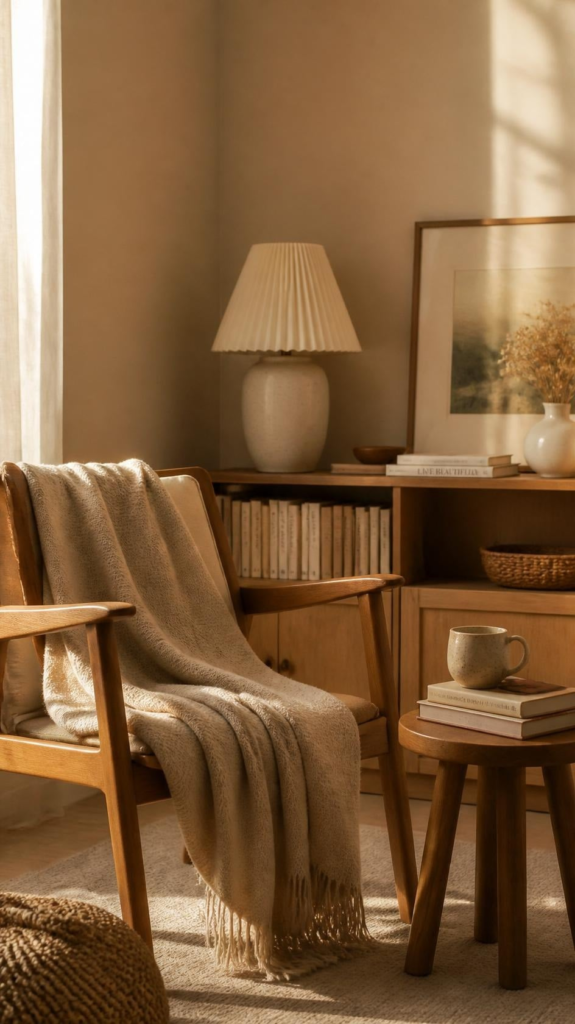
In the evening, avoid relying on one bright ceiling light. Use smaller sources of light at different heights: a table lamp beside the sofa, a reading lamp near a chair, or a soft wall light in the hallway.
Warm bulbs create a calmer atmosphere and help signal that the active part of the day is ending. Candles can add another layer of comfort, especially during quiet dinners, rainy afternoons, or reading nights.
Lighting is not only decorative. It supports the rhythms of daily life. It can also turn an ordinary chair into a peaceful place for quiet reading nights and help a room transition naturally from activity to rest.
Create Small Areas With a Clear Purpose
A calm home is easier to create when each area supports a specific part of your life.
A chair near a window can become a reading corner. A small tray can keep the objects used during a morning coffee ritual together. A basket beside the sofa can hold the blanket you reach for in the evening. A clear section of the kitchen counter can make preparing meals feel less rushed.
These small arrangements bring order without requiring a major renovation.
Think about the moments you want more of:
- Reading before bed.
- Drinking coffee without checking your phone.
- Cooking simple meals.
- Writing in a journal.
- Sitting quietly at the end of the day.
Then make those moments easier to begin. Place the book where you can see it. Keep the mug within reach. Leave the journal beside a comfortable chair. Even a slow morning routine becomes easier to maintain when the environment quietly supports it.
Warm minimalism is most meaningful when it supports a gentler way of living.
Allow Your Home to Evolve Slowly
One of the easiest mistakes is trying to complete a room all at once.
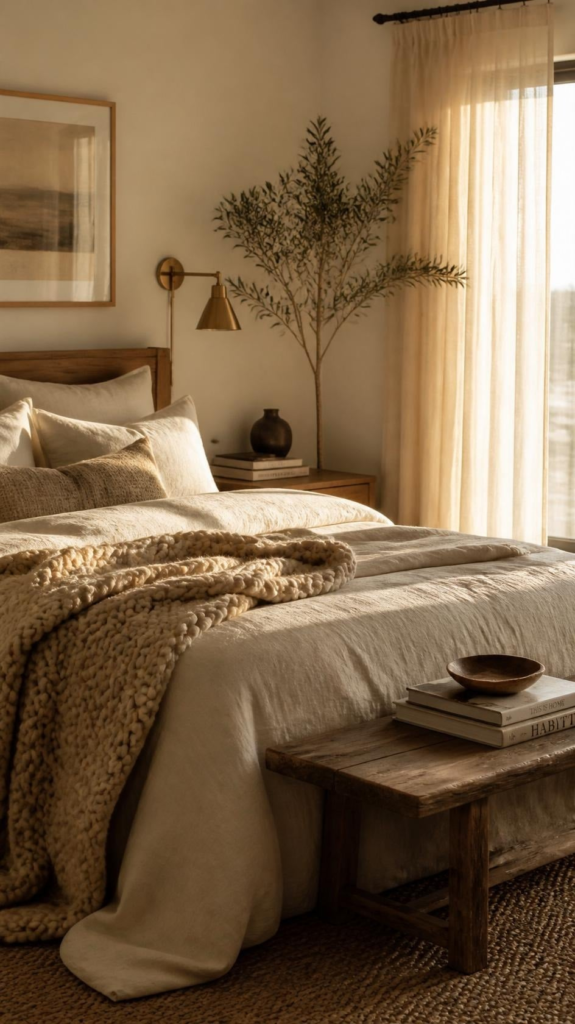
Warm minimalist homes often feel natural because they develop over time. The right chair may be found months after the room is painted. A vintage table may replace a temporary one. A handmade object may arrive through a gift, a trip, or a local market.
Waiting allows you to understand what the room actually needs. It also reduces impulsive purchases and makes space for objects with greater character.
A home does not need to look finished to feel beautiful. Sometimes the most peaceful rooms are the ones still becoming. This gradual approach reflects the idea of gentle productivity: meaningful progress does not have to happen all at once.
Warm Minimalism Is a Feeling, Not a Formula
There is no single version of a warm minimalist home.
For one person, it may be a bright apartment with pale wood, linen, and a few carefully chosen books. For another, it may include darker timber, vintage furniture, clay pottery, and deep earthy colors.
The style works when the space feels calm without feeling empty, beautiful without feeling untouchable, and personal without becoming overwhelming.
You do not need to replace everything you own or follow a perfect neutral palette. Begin with one room, one surface, or one daily ritual. Remove what creates noise. Keep what brings comfort. Add warmth through light, texture, and meaning.
Slowly, the home begins to feel different.
Not because it has become perfect, but because it gives you more space to be present in your own life.
A Simpler Home, a Gentler Life
Warm minimalism reminds us that simplicity and comfort do not have to compete.
A calm home can still hold books, memories, soft blankets, imperfect ceramics, and signs of everyday life. It can be uncluttered without losing its soul. It can be beautiful without asking us to live carefully around it.
The most meaningful homes are not designed only to be seen. They are designed to support slow mornings, shared meals, quiet evenings, creative work, deep rest, and the ordinary moments that make a life feel full. This is also the foundation of The Cozy Home Mindset: warmth is something we practice through the way we live, not a decorating project with a finish line.
Start small. Choose one corner and ask what would make it feel calmer, warmer, and more useful.
Sometimes, that is all a home needs to begin changing.
Final Reflection
A warm minimalist home is not created in a single weekend. It grows slowly, shaped by the choices you make and the life you live within it.
Instead of asking whether your home looks minimal enough, you might ask something simpler:
Does this space help me feel calm, comfortable, and present in my daily life?
If the answer is not yet, what is one small change you could make today to move closer to that feeling?
Continue the Journey
- Soft Minimal Home — A gentle approach to minimalism that focuses on softness, comfort, and lived-in simplicity.
- The Art of a Cozy Home — How to create warmth through light, texture, and intentional details.
- 5 Simple Ways to Create Calm Spaces for a Calmer Mind — Practical ideas to reduce visual noise and support everyday well-being.
- The Cozy Home Mindset — A perspective on creating a home that feels warm, personal, and aligned with slow living.