
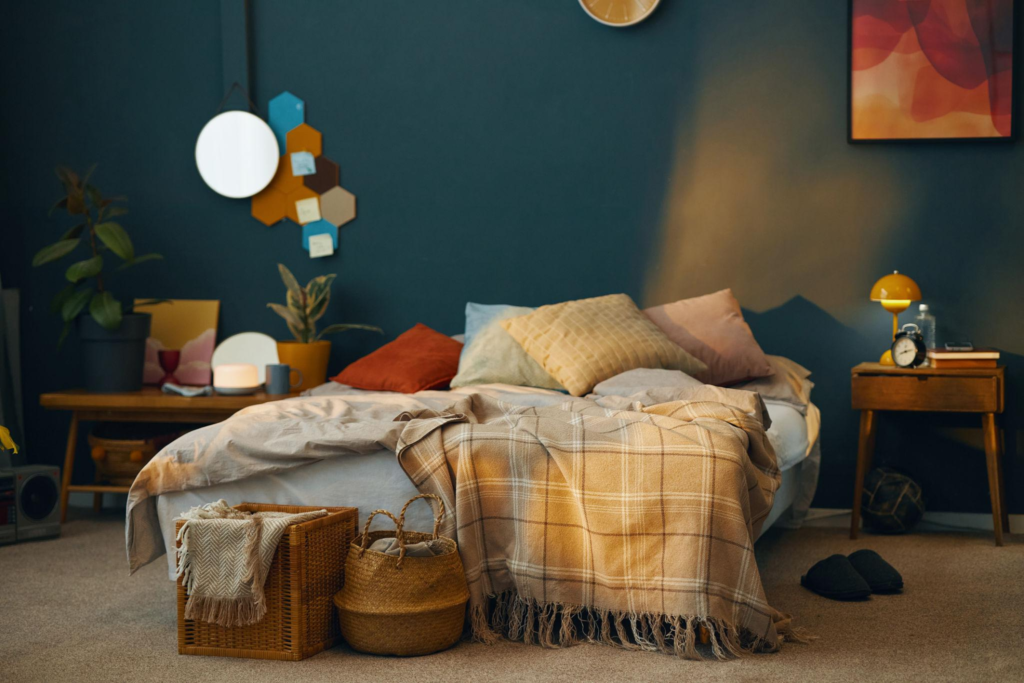
Creating calm spaces at home isn’t about achieving magazine-style perfection; it’s about intentionally building an environment that supports the life you truly want to live.
The Connection Between Our Homes and Our Minds
Have you ever noticed how different you feel the moment you step into a peaceful room? A tidy, organized space feels refreshing, a cozy corner provides comfort, and a room filled with natural light can instantly lift your mood. Our homes influence us far more than we often realize; the spaces we inhabit directly affect our focus, energy levels, and overall well-being. When our environment is calm, our minds tend to follow.
Why Calm Spaces Matter
Modern life is often a constant stream of noise. Digital notifications compete relentlessly for our attention, our schedules become overcrowded, and information arrives faster than we can process it. In this chaotic landscape, our homes should offer something different, a sanctuary.
A calm home creates a necessary sense of balance. It becomes a dedicated space where the mind can finally rest, recover, and reset. When we reduce both visual and mental distractions, we create the physical room for clarity, creativity, and inner peace.
Sound as a Layer of Calm
We tend to design for how a room looks, but a calm space is just as much about how it sounds. A home filled with constant background noise- a television left on out of habit, notifications chiming, traffic bleeding through thin windows- keeps the nervous system subtly on alert even when nothing is technically wrong.
Consider what your home sounds like during a typical evening. Something as simple as turning off background noise for twenty minutes, opening a window to let in natural outdoor sound, or playing soft instrumental music instead of nothing at all can shift a room from merely quiet to genuinely peaceful.
Creating Boundaries Between Spaces
Calm spaces also depend on knowing what each room is for. When a bedroom doubles as a home office and a living room becomes a catch-all for laundry, mail, and unfinished projects, the mind struggles to fully rest in any of them, because every space is quietly asking something of you.
Where possible, give each area of your home one primary purpose, even in a small apartment. A single chair reserved only for reading, a desk that gets tidied at the end of the workday, a nightstand free of anything work-related: these small boundaries help your mind understand, the moment you enter a space, exactly what kind of moment it’s meant to be.
“Outer order contributes to inner calm.”
— Gretchen Rubin
The Elements of a Calm Space
A calming environment isn’t achieved through grand renovations; it is built from small, intentional details working in harmony. To transform your home into a sanctuary, start by focusing on the sensory elements that define your daily experience.
Lighting and Color Palette
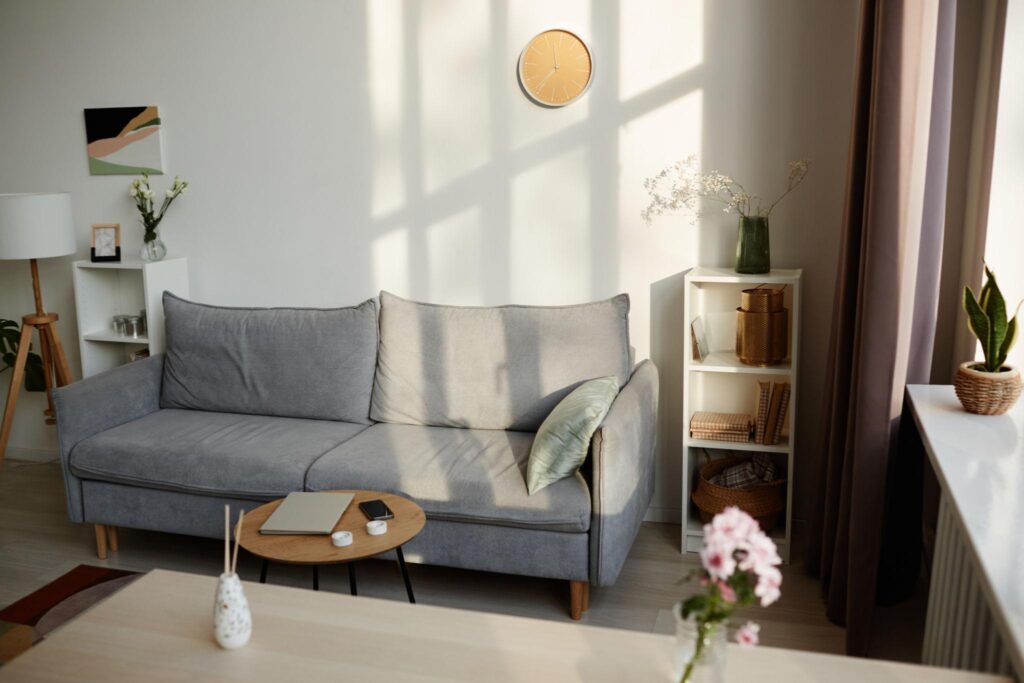
Natural light has a powerful influence on our mood. Whenever possible, keep curtains open to allow sunlight to dictate the rhythm of your day, creating warmth and openness. Complement this with a color palette inspired by nature. Incorporating tones like warm white, cream, soft beige, sage green, or dusty blue helps create a sense of cohesion, making your rooms feel more spacious and serene.
The Power of Texture and Decluttering
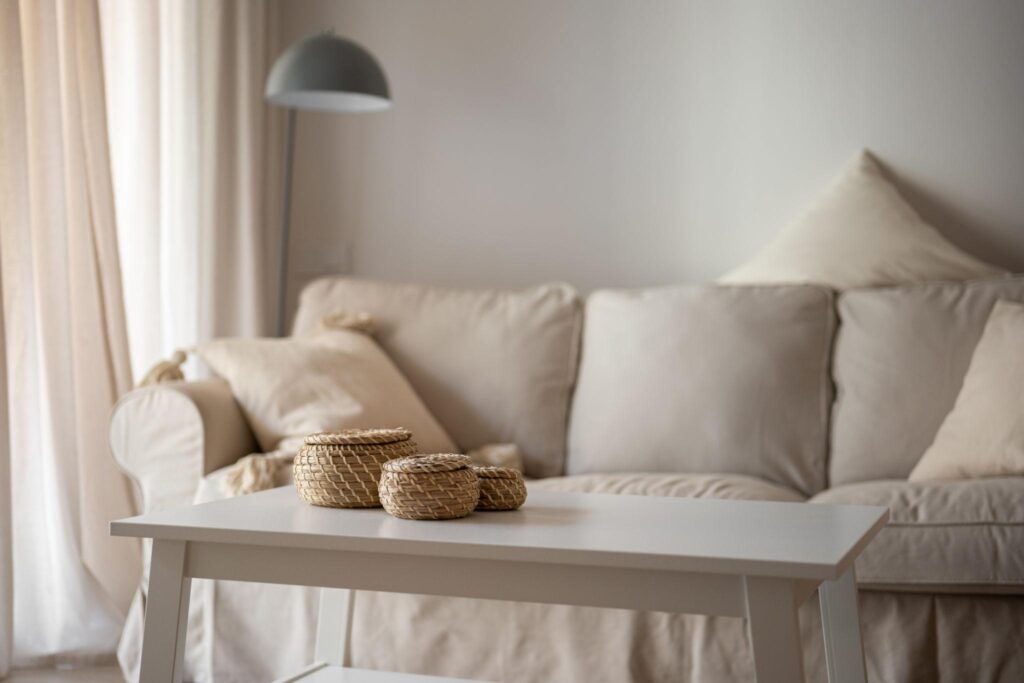
A home should feel as comforting as it looks. You can add depth by layering natural textures, think linen bedding, cotton cushions, wool throws, and woven baskets. These elements soften a space and make it feel like a true retreat.
However, texture needs room to breathe. When surfaces are crowded, our attention becomes scattered. Decluttering doesn’t mean aiming for clinical emptiness; it means making thoughtful decisions about what truly belongs. Before keeping an item, ask: Do I use it? Do I love it? Does it support the atmosphere I want to cultivate? Removing the unnecessary often brings an immediate sense of mental relief.
According to a Good Housekeeping expert guide on professional decluttering rules, keeping an organized environment isn’t a one-time project but a lifestyle choice. Adopting these small habits to clear your surfaces can immediately lift your mood and reduce daily decision fatigue, helping you maintain calm spaces throughout your entire home.
Designing for Slow Living
Every home benefits from a dedicated “quiet corner,” a space to slow down. Whether it is a reading chair by a window, a small desk for journaling, or a nook filled with books, these spots serve as invitations to pause. Complement this by bringing nature indoors through houseplants, fresh flowers, or wooden accents.
When you surround yourself with elements of nature and intentional design, you naturally embrace the philosophy of slow living. You begin to notice the small, meaningful details: the morning sunlight on the wall, the sound of rain, or the warmth of a cup of tea. Slow living is not about doing less; it is about experiencing more of what truly matters.
Quick Wins: Creating Calm This Week
If you want to feel a shift in your home today, start with these simple, actionable steps:
- Clear one cluttered surface to reclaim your visual space.
- Make opening your curtains a morning ritual.
- Introduce one plant into your favorite room.
- Set up a dedicated reading or quiet corner.
- Use warm, soft lighting in the evenings instead of harsh overhead lamps.
- Remove one item that no longer serves your well-being.
- Dedicate ten minutes to sitting in your space without any digital distractions.
Calm Spaces Begin With Intention
The most peaceful homes are not necessarily the largest or the most expensive; they are the homes that prioritize ease. A calm space supports your rest, fuels your creativity, and strengthens your connection to yourself. When your surroundings encourage peace, it becomes significantly easier to carry that tranquility into the rest of your life.
Discussion Question
What is one area of your home that instantly helps you feel calm and relaxed?
Explore More Comforting Spaces
Warm&CozySpaces Pt.5: Discover how adopting a warm cozy lighting guide can truly protect your peace throughout the day.
Warm&CozySpaces Pt.4: Embracing a slower pace at home is a beautiful journey; explore our guide on how to style your space with the perfect warm minimalist decor.
Warm&CozySpaces Pt.3: Looking for practical inspiration for smaller spaces? Check out our favorite cozy bedroom checklist to transform any room.