
“A cozy home is not created all at once. It is built slowly, through light, texture, ritual, and the quiet ways a space learns to hold your life.”
Creating a Home That Feels Warm, Peaceful, and Truly Yours
The art of a cozy home begins long before we choose a paint color or arrange a collection of pillows. It begins with a feeling: the sense that we can exhale when we walk through the door.
A truly cozy home does not need to be large, perfectly styled, or filled with expensive decor. It simply needs to support the way we want to live. Warm lighting can soften the end of a difficult day. A familiar chair can invite us to read instead of scroll. A clear kitchen counter can make preparing breakfast feel less like another task and more like a quiet ritual.
This is what makes coziness more than an interior design trend. It is a relationship between atmosphere and everyday life. Through thoughtful choices, meaningful objects, and gentle routines, even the simplest space can become a personal sanctuary.
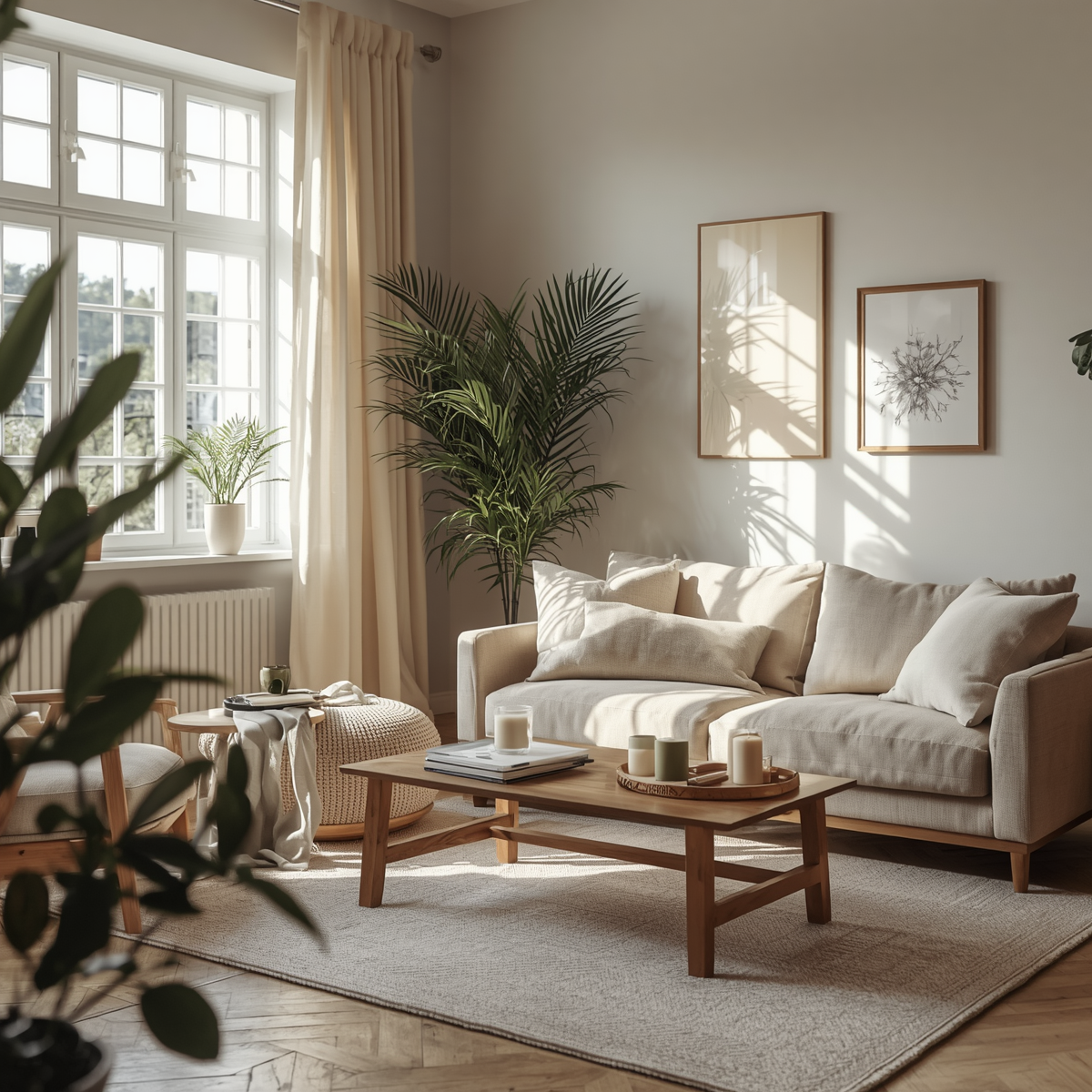
Begin With Feeling, Not a Decorating Style
Before changing anything in your home, ask a more useful question than “What should this room look like?”
Ask: “How do I want to feel here?”
Perhaps you want your living room to feel welcoming enough for long conversations. Maybe your bedroom needs to feel quiet and protected, while your kitchen should encourage slower meals and easier mornings. Starting with emotion gives every design decision a purpose.
This is also where the idea of hygge becomes meaningful. Denmark’s official cultural guide describes hygge as more than physical coziness; it is connected to well-being, togetherness, and taking time away from the daily rush. Candles and blankets may help create the setting, but presence is what gives the setting life.
Your version of cozy may include warm minimalism, collected vintage pieces, rich color, pale natural tones, or shelves filled with books. There is no single correct aesthetic. What matters is whether the room feels comfortable, personal, and easy to live in.
If you prefer a quieter visual style, our guide to warm minimalism explores how natural materials and gentle colors can create calm without making a home feel cold.

Use Warm, Layered Lighting
Lighting changes the emotional tone of a room faster than almost any other element. A beautiful space can still feel uncomfortable when it relies on one bright overhead fixture.
Instead, create layers of light at different heights:
- Use a floor lamp beside a sofa or reading chair.
- Place a small table lamp on a console, nightstand, or kitchen counter.
- Add a wall sconce where floor space is limited.
- Use candles or flameless candles for a softer evening atmosphere.
- Let natural light become part of the room during the day.
For rooms meant for rest, bulbs around 2700K usually create the familiar warm-white appearance associated with residential comfort. The U.S. Department of Energy’s guide to color-tunable lighting identifies approximately 2700K as warm white and explains how color temperature changes the appearance of a space.
The goal is not to make every corner equally bright. Small pools of light create depth and give a room places to gather, pause, and settle.
For a practical room-by-room example, explore our guide to creating a cozy living room.
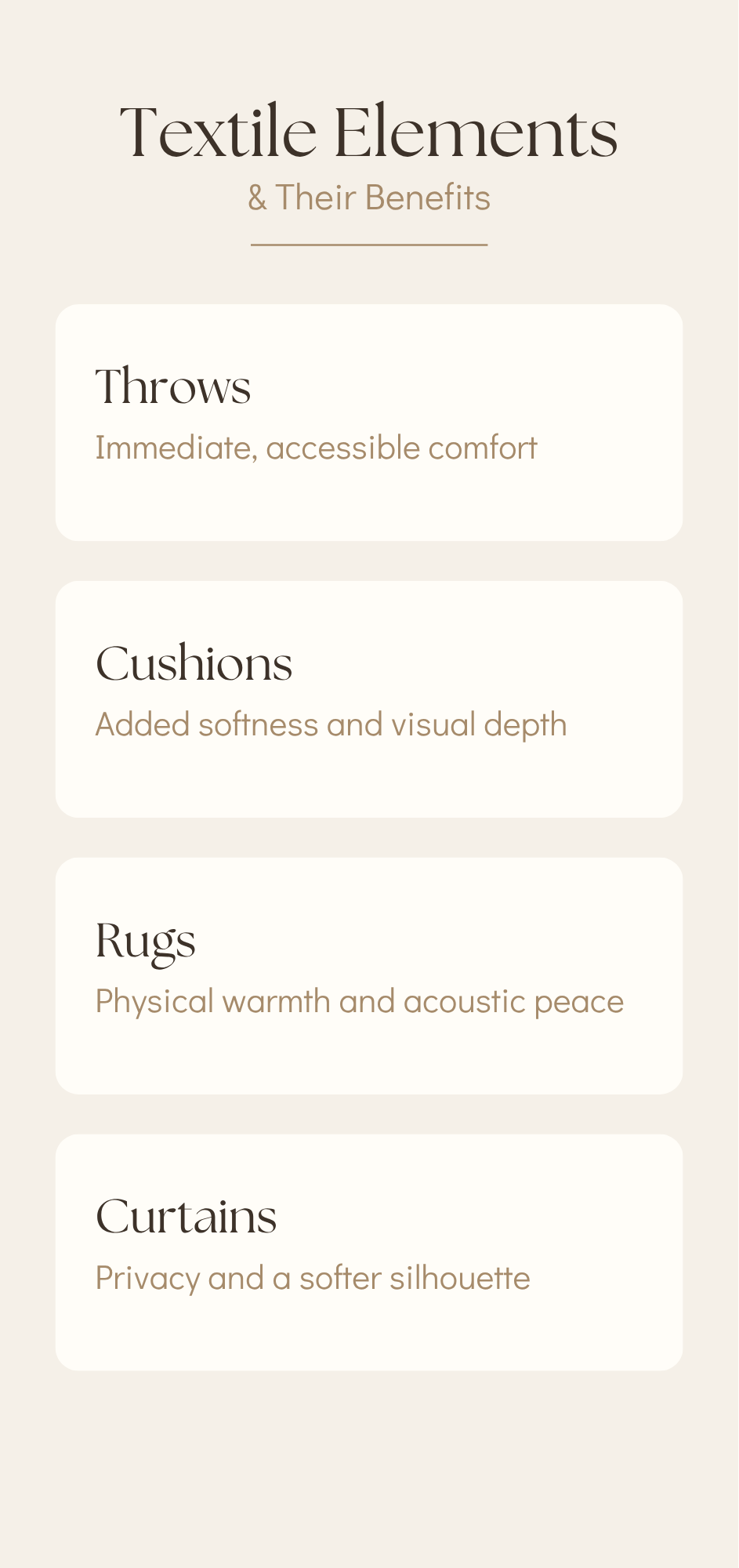
Layer Textures That Invite Touch
Cozy rooms are not only seen; they are felt.
Texture gives a space softness, depth, and a sense of being lived in. A linen curtain moving near an open window, a wool throw folded across a chair, or a woven basket beside the sofa can make a simple room feel more complete.
Choose a small combination of tactile materials:
- Linen or cotton for curtains and pillow covers.
- Wool, boucle, or soft knit for throws.
- Wood, rattan, or jute for warmth and structure.
- Ceramic and stone for quiet, handmade character.
- Rugs to soften hard floors and visually anchor a room.
You do not need to layer everything at once. Begin with the places your body meets the room: the chair where you read, the bedding you touch every night, and the rug beneath your feet in the morning.
The most inviting layers are also useful. A blanket should be warm enough to use. A basket should hold something that otherwise creates clutter. A curtain should soften light or offer privacy. When beauty and usefulness meet, a room begins to feel naturally comfortable rather than staged.
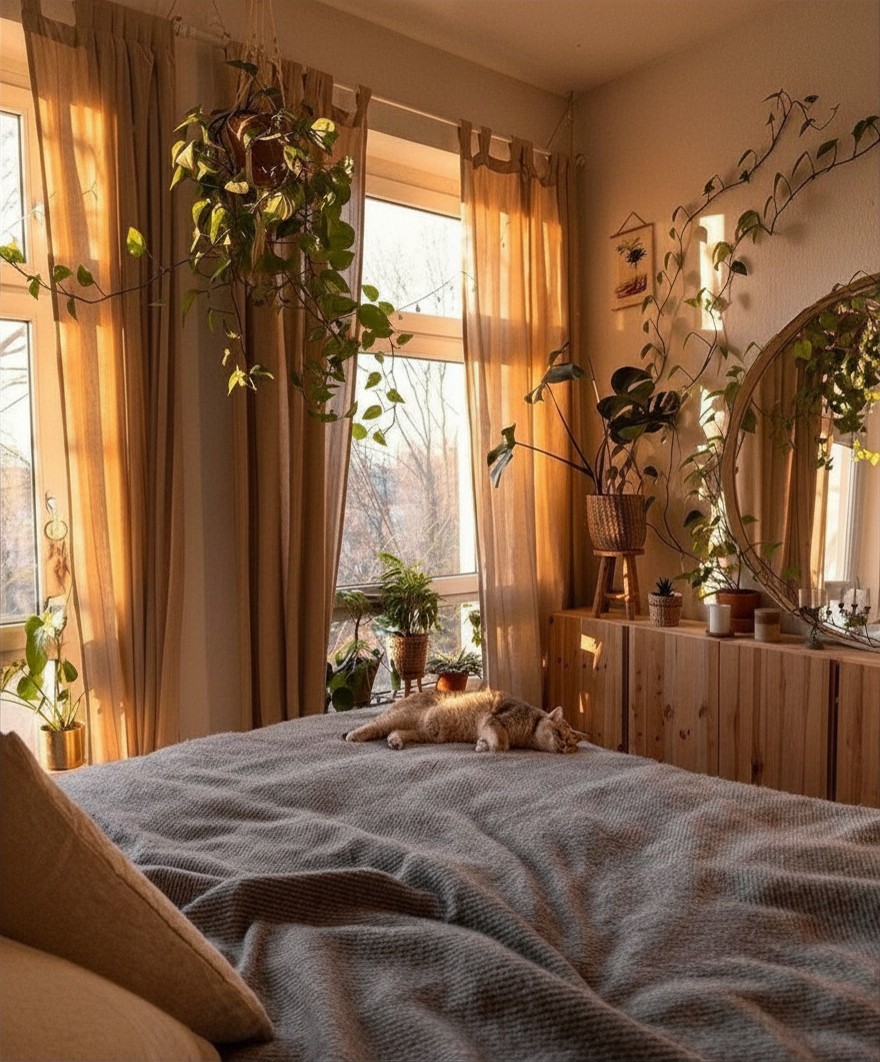
Bring Nature and Honest Materials Indoors
Natural elements help a home feel connected to something slower than the pace of a screen.
This can be as simple as opening the curtains each morning, placing a branch in a ceramic vase, or choosing a wooden tray instead of a plastic one. Houseplants, fresh flowers, linen, clay, stone, and woven fibers introduce irregular shapes and subtle textures that keep neutral spaces from feeling flat.
Do not treat nature as another decorating checklist. Choose what fits your home and what you can realistically care for. A single pothos on a shelf, a bowl of seasonal fruit in the kitchen, or a small collection of smooth stones from a meaningful trip can be enough.
Objects become more comforting when they carry a story. A handmade mug, an old photograph, a book with notes in the margins, or a wooden table marked by years of use brings a kind of warmth that cannot be recreated through trends.
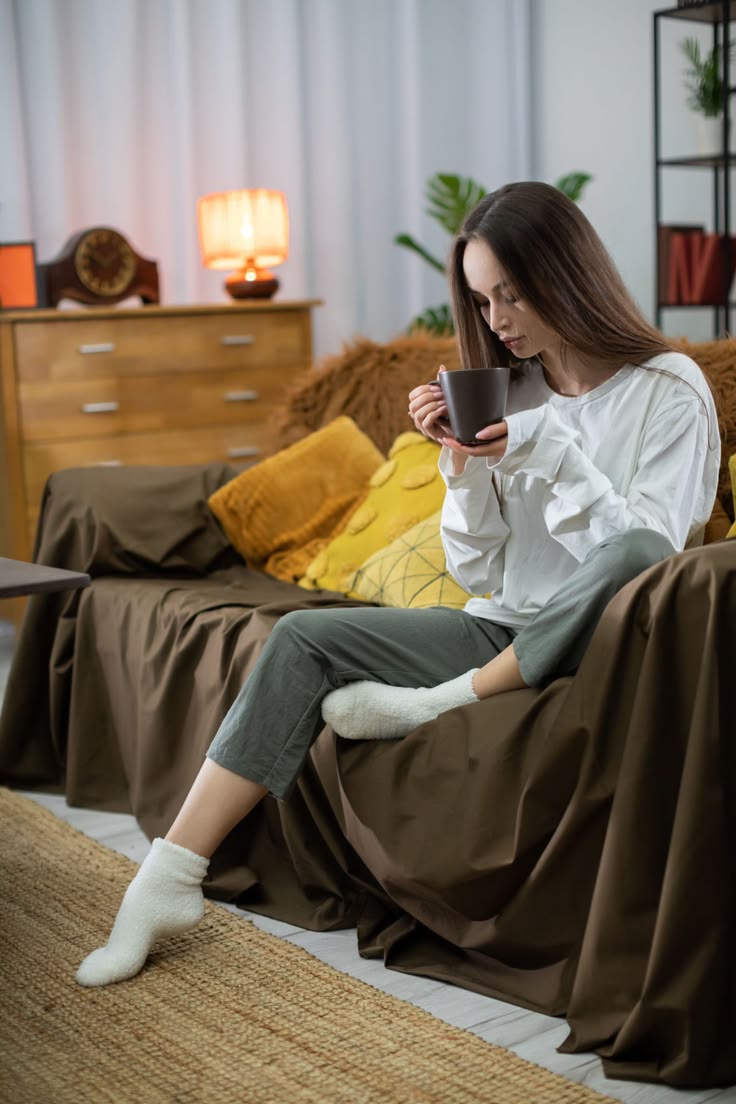
Create Visual Calm Without Removing Personality
A cozy home should feel collected, but it should still give the eyes somewhere to rest.
Visual clutter competes for attention. Recent research highlighted by the National Eye Institute shows that clutter changes how visual information is processed. This does not mean every surface must be empty. It means the objects we display benefit from space around them.
Try a gentle approach:
- Clear one primary surface, such as the coffee table or kitchen counter.
- Keep the objects you use or genuinely enjoy.
- Group smaller items on a tray instead of scattering them.
- Store cords, remotes, and paperwork in baskets or drawers.
- Leave a little open space between decorative objects.
Organization should support your life, not turn your home into a showroom. A few books beside a chair, a blanket left within reach, or a mug waiting near the coffee maker can make a room feel inhabited in the best possible way.
If your surroundings feel mentally noisy, Calm Spaces, Calm Mind offers simple ways to create more breathing room without pursuing perfection.

Design Quiet Corners That Support How You Live
Every home benefits from at least one place with a clear invitation.
It might invite you to read, drink coffee, journal, listen to music, or simply sit near a window. The space does not need to be a separate room. A small corner can become meaningful when its purpose is easy to understand.
For a reading corner, begin with:
- A comfortable chair or cushioned bench.
- A lamp positioned for reading.
- A small surface for a book and warm drink.
- A blanket within reach.
- A basket or shelf for current reads.
Our guide to creating a cozy reading nook offers more practical ideas for transforming an overlooked corner into a place you will want to return to.
The same principle works throughout the home. A tray can turn part of the kitchen into a coffee corner. A small desk beside natural light can become a creative space. A bedroom chair can hold tomorrow’s clothes rather than becoming another pile. Coziness grows when each area gently supports a real part of your day.
Build Coziness Through Everyday Rituals
Design creates the setting, but rituals create the feeling of home.
Think about the moments you remember most: coffee made slowly on a Sunday morning, a candle lit before opening a book, fresh sheets at the end of a long week, or music playing while dinner comes together.
These moments are rarely expensive. Most take only a few minutes. Yet they become the invisible threads that make a space feel familiar and deeply personal.
Try creating one ritual for each part of the day:
A Slow Morning
Open the curtains before checking your phone. Prepare coffee or tea without multitasking, then sit for a few quiet minutes before the day begins. Our slow morning routine offers a gentle place to begin.
An Afternoon Reset
Clear one surface, open a window, make a warm drink, or read a few pages. A small pause can help the room feel calm again after the busier part of the day.
A Peaceful Evening
Turn off the brightest overhead lights, put away what you no longer need, and choose one quiet activity. Read, stretch, listen to music, or prepare tomorrow’s breakfast. The purpose is not to perform the perfect evening routine; it is to help the home change pace with you.
Let Each Room Express Coziness Differently
A whole home does not need to repeat the same colors, textures, or decorative objects. What it needs is a consistent sense of care.
Living Room
Prioritize comfortable seating, layered lighting, and a surface within reach. Arrange the room around conversation and everyday use rather than around the television alone.
Bedroom
Reduce visual noise and let bedding provide most of the softness. Warm bedside lamps, breathable layers, and a calm color palette can help the room feel protected and restful. Explore more ideas in our cozy bedroom guide.
Kitchen
Keep frequently used objects accessible, but give the counters room to breathe. Wooden boards, linen towels, ceramic containers, and a comfortable lighting source can soften a practical space. See how we approached this in Creating a Kitchen That Invites You to Slow Down.
Small Apartment
Choose fewer pieces with more than one purpose. Use lighting and texture to create emotional warmth without overcrowding the room. Our small cozy apartment ideas can help you work with limited space.
Frequently Asked Questions About Creating a Cozy Home
What makes a home feel cozy?
A home feels cozy when it combines physical comfort with emotional ease. Warm lighting, tactile materials, personal objects, visual calm, and familiar routines all contribute. The exact style matters less than whether the space helps you feel safe, present, and at home.
How can I make my home cozy on a budget?
Begin with changes that influence atmosphere rather than expensive furniture. Replace a harsh bulb with warmer light, clear one crowded surface, rearrange a chair near a window, and bring a blanket from another room. Coziness can be built slowly, one useful layer at a time.
Can a minimalist home still feel cozy?
Yes. Minimalism feels warmer when it includes natural materials, soft textiles, personal objects, and gentle lighting. The aim is not emptiness; it is creating enough space for meaningful details to be noticed.
How do I make a small home cozy without making it feel crowded?
Choose functional furniture, keep walkways clear, and concentrate texture in a few intentional places. A warm lamp, one good rug, and a comfortable reading chair can create more atmosphere than many small decorative objects.
Where should I begin?
Start with the room you use most. Adjust the lighting, clear one surface, and add one comforting texture. Then create a small ritual that helps you enjoy the room. Once that space feels right, use it as a guide for the rest of your home.
The Art of Coming Home
The art of a cozy home is not the pursuit of a finished room. It is the practice of paying attention.
It is noticing where the evening light falls. It is keeping a favorite blanket close to the chair where you read. It is choosing objects that carry meaning and leaving enough space to enjoy them.
Your home does not need to impress everyone who enters it. It needs to support the life unfolding inside it.
So begin with one lamp, one cleared surface, or one quiet ritual. Let comfort grow slowly. The most meaningful homes are not completed in a weekend; they are shaped over time by the people who live there.
Continue the Journey
Warm Minimalism: How to Create a Calm Home That Still Feels Cozy: Discover how warm colors, natural materials, and layered textures can bring softness to a clean and uncluttered home.
Creating a Cozy Living Room You’ll Never Want to Leave: Create a welcoming living room through comfortable seating, warm lighting, natural textures, and thoughtful everyday details.
The Cozy Home Mindset: Why Warmth Is a Practice, Not a Project: Explore why the feeling of home is shaped by rituals, presence, and the way we care for our spaces over time.
Small Cozy Apartment Ideas: Learn how to create warmth, comfort, and personality in a smaller home without making it feel crowded.