
“A room filled with books does more than reveal what you have read. It quietly shows what you care about.” — NewMorning
Some of the most memorable homes are not the most perfectly decorated. They are the ones that reveal something about the people who live there.
A cookbook with flour on its pages, a novel inherited from a grandparent, a field guide brought home from a trip, or a stack of art books collected slowly over time can say more than an object chosen only to fill an empty shelf.
That is what makes decorating with books so effective. Books add color, scale, texture, and visual rhythm, but they also carry interests, memories, and ideas. They make a room feel inhabited rather than assembled.
The goal is not to turn every book into a prop. It is to let the books you genuinely value become part of the way your home tells its story.
Why Books Make a Home Feel More Personal
Books have a visual quality that few decorative objects can reproduce.
Their spines form irregular lines. Cloth covers soften hard furniture. Older paper introduces warm, imperfect tones. Large illustrated volumes create weight, while slim paperbacks bring a more casual rhythm. Even a small group can make a new room feel collected over time.
More importantly, books invite interaction. A guest may recognize a title, open a photography book, or ask about a subject you love. The room begins to encourage conversation.
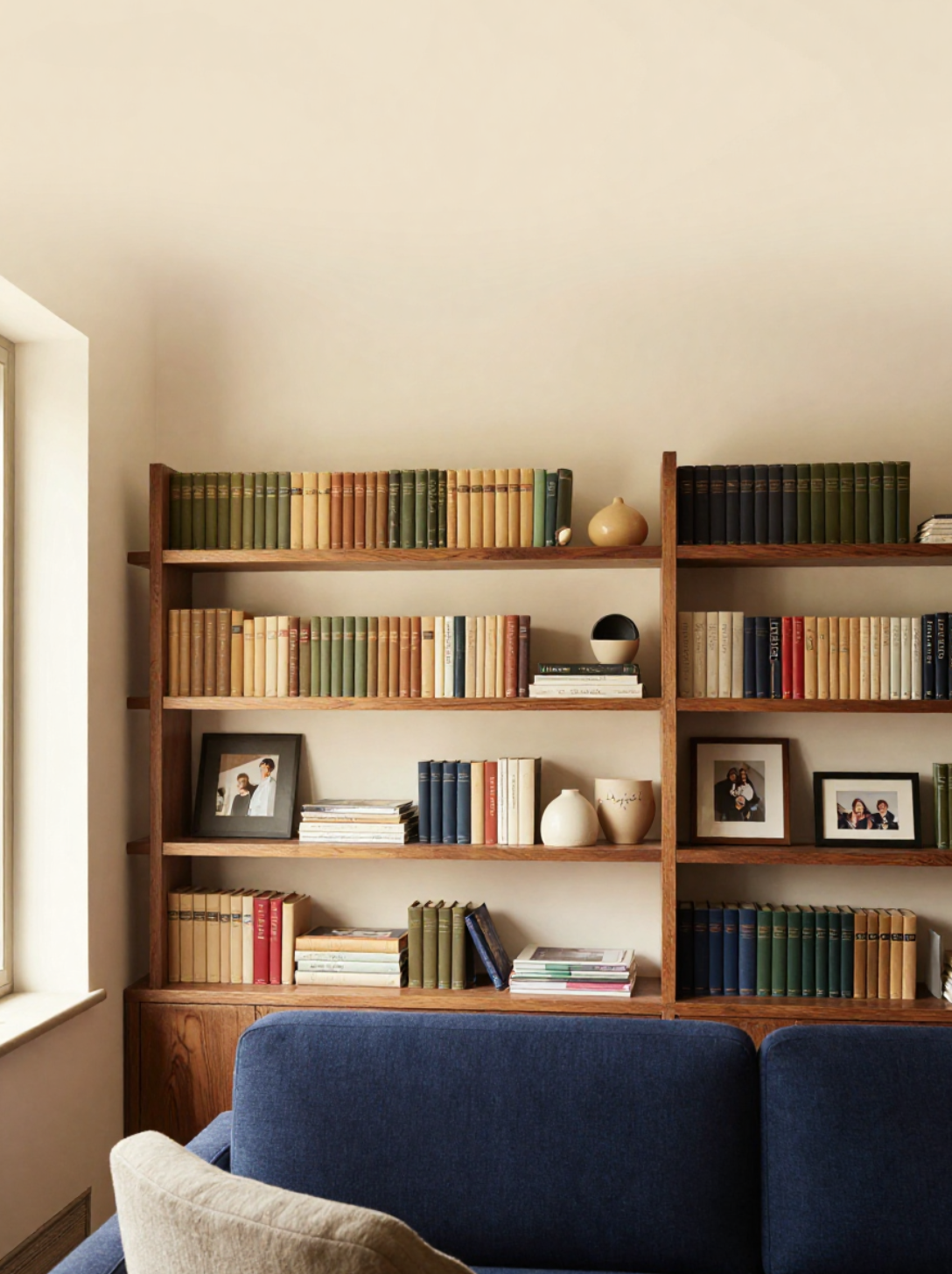
Current design advice increasingly favors meaningful collections over generic volumes selected only for their covers. A 2026 discussion in Homes & Gardens makes the same distinction: books connected to real interests give a home more individuality than familiar titles purchased simply because they appear in styled interiors.
A beautiful book display begins with content, not color.
Begin With Books You Actually Want to Keep
Before rearranging a shelf, gather the books that matter most.
They might be books you return to, books connected with your work or hobbies, gifts with thoughtful inscriptions, favorite childhood stories, useful reference books, or titles you hope to read soon. These are the volumes that naturally create a home with personality.
Remove books that are damaged beyond use, no longer relevant, or kept only because you feel guilty about letting them go. Donate readable copies when possible. Store sentimental or fragile books more carefully rather than forcing them into a busy display.
You do not need a large personal library. Five meaningful books will always say more than fifty chosen only to create an aesthetic.
Build Shelves Around Reading, Not Decoration
A bookshelf should remain easy to use.
Begin by placing most books vertically, supported at both ends so they do not lean heavily and strain their bindings. Keep subjects, authors, or favorite collections together if that makes finding them easier. Then interrupt longer rows with one or two horizontal stacks.
This combination creates movement without making the shelf confusing.
Avoid arranging every inch before stepping back. Work one shelf at a time, then look at the whole bookcase from across the room. If one side feels visually heavy, move a stack or leave a little open space.
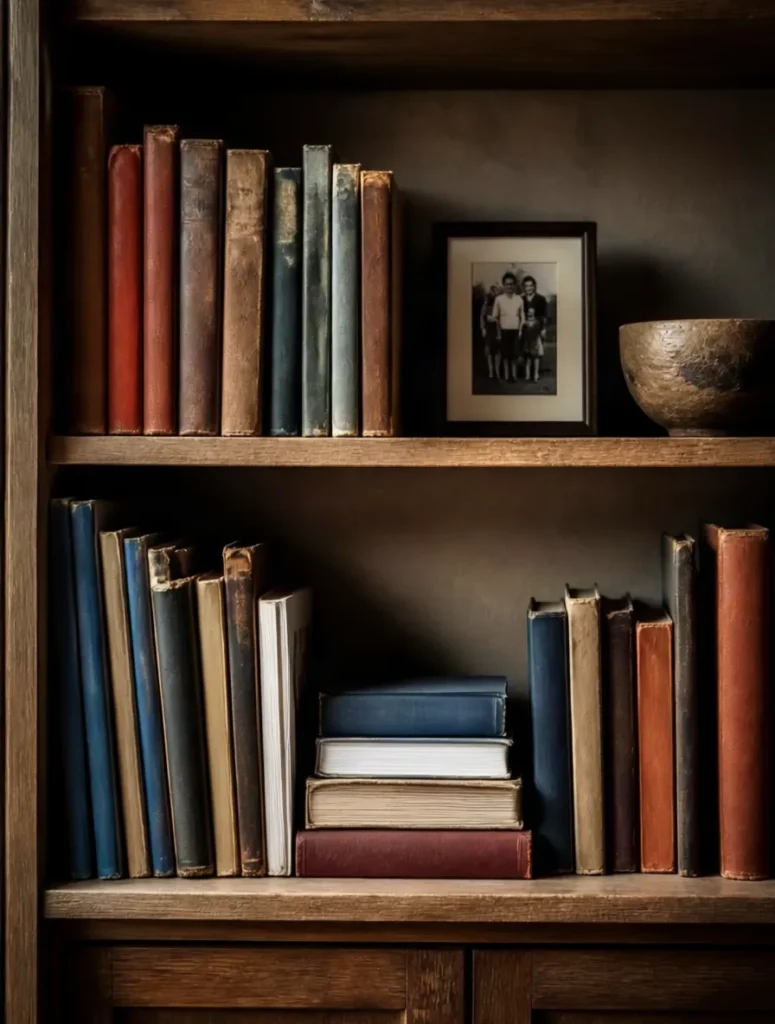
Designers often recommend combining books, artwork, and objects at different heights while treating empty space as part of the arrangement. The practical guidance in Homes & Gardens’ bookshelf-styling overview is useful here: start with the books, add only a few supporting objects, and consider what you leave unfilled.
The shelf should still look like a place where someone reads.
Use Horizontal Stacks to Create Gentle Height
A short stack of books can act like a small pedestal.
Place two or three books horizontally beneath a framed photograph, a ceramic bowl, a small sculpture, or an object brought home from a journey. The books raise the object and help it feel connected to the rest of the shelf.
Choose books of similar or gradually decreasing size so the stack remains stable. Avoid placing heavy objects on rare, delicate, or frequently used books. If you want to reread a title soon, keep it accessible rather than trapping it beneath decor.
Horizontal stacks are especially helpful on shelves with awkward height. They can fill a low gap, support shorter books, or create a pause between vertical rows.
The best stack feels useful, not architectural. Two books are often enough.
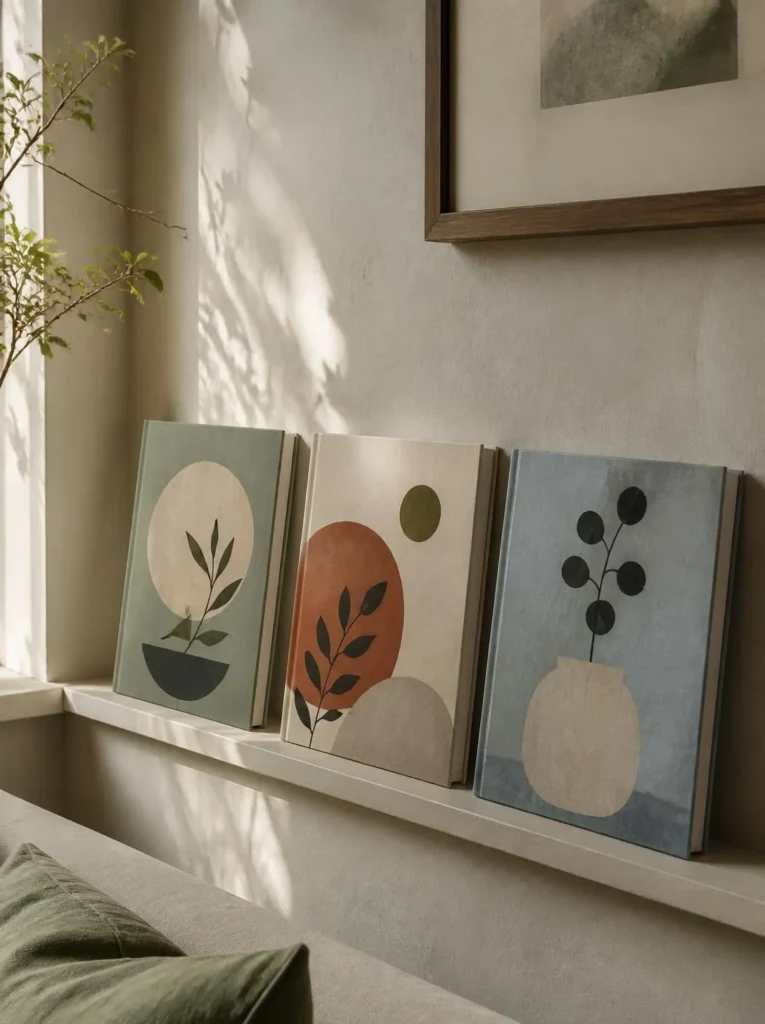
Display Beautiful Covers Like Small Works of Art
Some covers deserve to face the room.
Use a narrow picture ledge, shallow wall shelf, book stand, or the back of a deeper bookcase to display one cover forward. Children’s illustrations, vintage editions, art books, nature guides, and graphic novels work particularly well.
A front-facing book creates a focal point without requiring permanent artwork. It can also change easily with your interests.
Rotate the display after finishing a book, returning from a trip, or entering a new season. A gardening book in spring, a collection of coastal photography in summer, or a favorite illustrated story in winter can shift the mood without adding new decor.
Keep valuable covers away from strong direct sunlight. Light damage accumulates, and faded cloth or paper cannot simply be restored by moving the book later.
Give the Coffee Table One Thoughtful Stack
Coffee table books work best when the table remains usable.
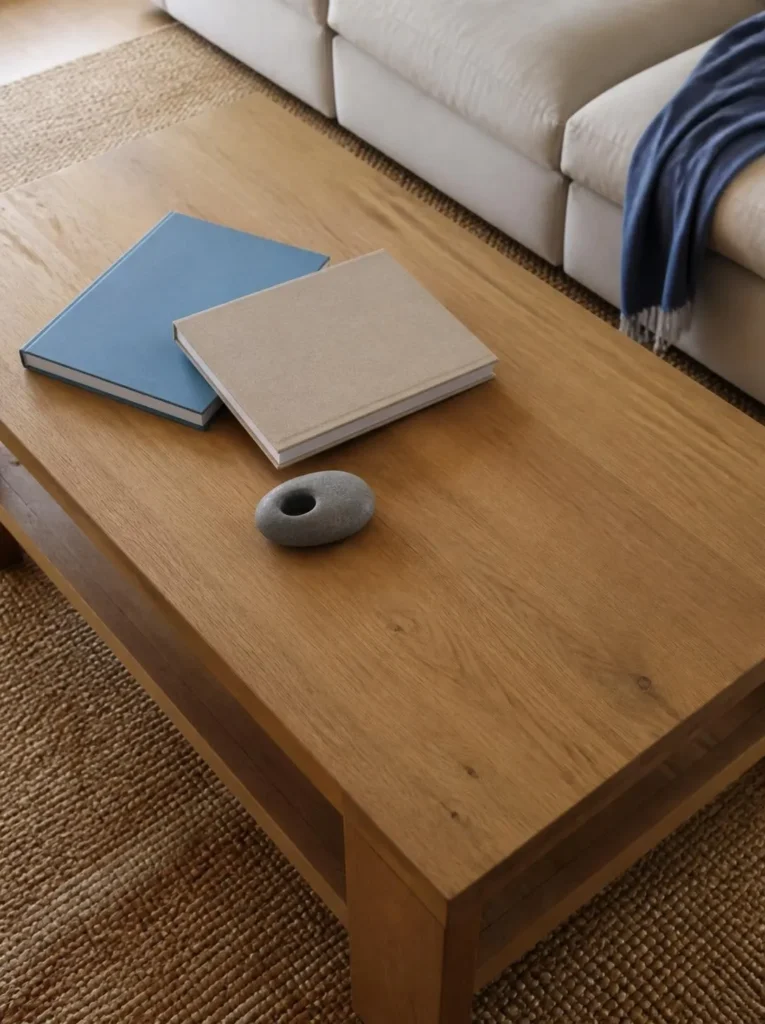
Choose one or two substantial books related to subjects you genuinely enjoy: architecture, painting, gardens, travel, cooking, fashion, film, or natural history. Stack the larger book below the smaller one and leave enough empty surface for daily life.
An arrangement does not need a candle, vase, tray, and several decorative objects at once. Try one companion piece—a small bowl, a found stone, or a simple object connected to the books’ subject.
The result should invite someone to open a book rather than make the table feel untouchable.
For a personal approach, Livingetc recommends choosing display books around the homeowner’s interests and experiences instead of selecting random attractive volumes. That small decision is what separates a meaningful table from a showroom arrangement.
Let a Side Table Hold Your Current Reading Life
Not every book display needs to be permanent.
A side table beside a sofa or chair can hold the book you are reading now, a slim notebook, and perhaps one volume you plan to begin next. This small, changing stack makes reading visible as part of everyday life.
Keep it low enough that the lamp, drink, or other practical objects still have room. If unread books begin accumulating, return all but the next one to the shelf.
A current-reading stack tells a more honest story than a carefully coordinated arrangement. It also reduces the distance between wanting to read and actually beginning.
If you are rebuilding your reading routine, How to Get Back Into Reading When You’ve Lost the Habit explores how visible books and small, reliable cues can make returning easier.
Keep Bedside Books Calm and Selective
A nightstand can quickly become a tower of good intentions.
Choose one active book and perhaps one alternative for a different mood. A novel and a collection of essays may offer enough variety without creating visual pressure. Keep the stack below the height of the lamp and away from water glasses or humidifiers.
If your bedroom palette is quiet, do not feel obligated to hide every colorful spine. One blue, rust, or green cover can add life to neutral bedding. The book already belongs because you are using it.
Reading before sleep works best when the book is easy to reach and the space does not feel crowded. Store finished titles elsewhere so the nightstand continues to support rest rather than unfinished tasks.
Turn Cookbooks Into Part of the Kitchen
Cookbooks belong where they are most likely to be opened.
Display a small group on an open shelf, in a glass-front cabinet, or upright at the end of the counter. A wooden or metal book stand can hold the recipe you are using and protect pages from a wet work surface.
Group books by how you cook rather than by appearance: everyday meals, baking, regional cuisines, seasonal food, or family recipes. Leave enough distance from the sink, stove, steam, and splashes.
A well-used cookbook makes a kitchen feel generous and alive. Notes, bookmarks, and softened pages are part of its usefulness.
For a broader approach to creating a welcoming space around everyday rituals, visit The Heart of the Home: Creating a Kitchen That Invites You to Slow Down.
Add Books to an Entryway or Console
A console table is a natural place for a small, personal vignette.
Stack two books beneath a lamp or shallow bowl, then leave open space for keys, mail, and objects used every day. Travel books can reflect places that matter to you, while local history, architecture, or nature books can create a quiet introduction to where you live.
Do not cover the entire surface. An entryway needs to function during busy arrivals and departures.
One intentional stack can soften a hard table and connect it visually with books elsewhere in the home. It also makes the first view of the room feel personal before a guest has seen the main living space.
Use Books to Warm Minimal Rooms
Minimal spaces sometimes need warmth more than additional furniture.
A short stack on a bench, one front-facing volume on a ledge, or a row of books beneath a console can introduce color and human scale without creating clutter. Books are especially effective beside materials such as pale wood, linen, plaster, stone, or metal because their paper and cloth surfaces add softness.
Choose a restrained number, but do not make every spine match. A few variations in tone prevent the room from feeling overly controlled.
This is the balance at the center of Soft Minimal Home: simplicity becomes more welcoming when it leaves room for texture, memory, and the signs of everyday life.
Organize by Color Without Losing the Library
Color can help a large bookshelf feel connected to the room, but strict rainbow arrangements are not the only option.
Look for broader color relationships instead:
- gather warm earth tones near wood furniture;
- repeat a blue or green spine in several areas;
- place brighter covers lower on the shelf;
- use neutral books to create pauses between stronger colors;
- keep a beloved series together even when its covers do not coordinate.
Function should still guide the arrangement. If you use books often, organize them in the way that helps you find them. Color can refine the composition after the practical structure is working.
Do not turn spines toward the wall merely to create a uniform beige display. A book’s title and spine are part of its identity, and hiding them makes the collection harder to use.
Mix Books With Objects That Carry a Story
Books look most natural beside objects with their own meaning.
Add a framed family photograph, handmade ceramic, small artwork, vintage box, shell from a memorable beach, inherited object, or piece created by someone you know. Let the objects relate through color, material, or memory rather than a rigid theme.
Use fewer pieces than you think you need. One object beside a row of books often feels stronger than several small accessories scattered across the shelf.
Vary shapes to balance the books’ rectangles. A rounded bowl, curved vase, or irregular stone can soften straight lines. Keep fragile objects secure and avoid placing living plants where water could damage nearby pages.
These personal layers help create what The Art of a Cozy Home describes as a home shaped through meaning and repeated daily life rather than decoration alone.
Use Vertical Space in Small Homes
A small apartment does not require giving up a personal library.
Tall, narrow shelves use wall height without taking much floor space. Picture ledges can display front-facing books in a hallway. A shallow shelf above a desk, a built-in bench with storage, or a compact bookcase beside the bed can hold a meaningful collection.
Keep frequently used books between waist and eye level. Heavier oversized volumes are safer on lower shelves. Use bookends when a row does not fill the entire shelf.
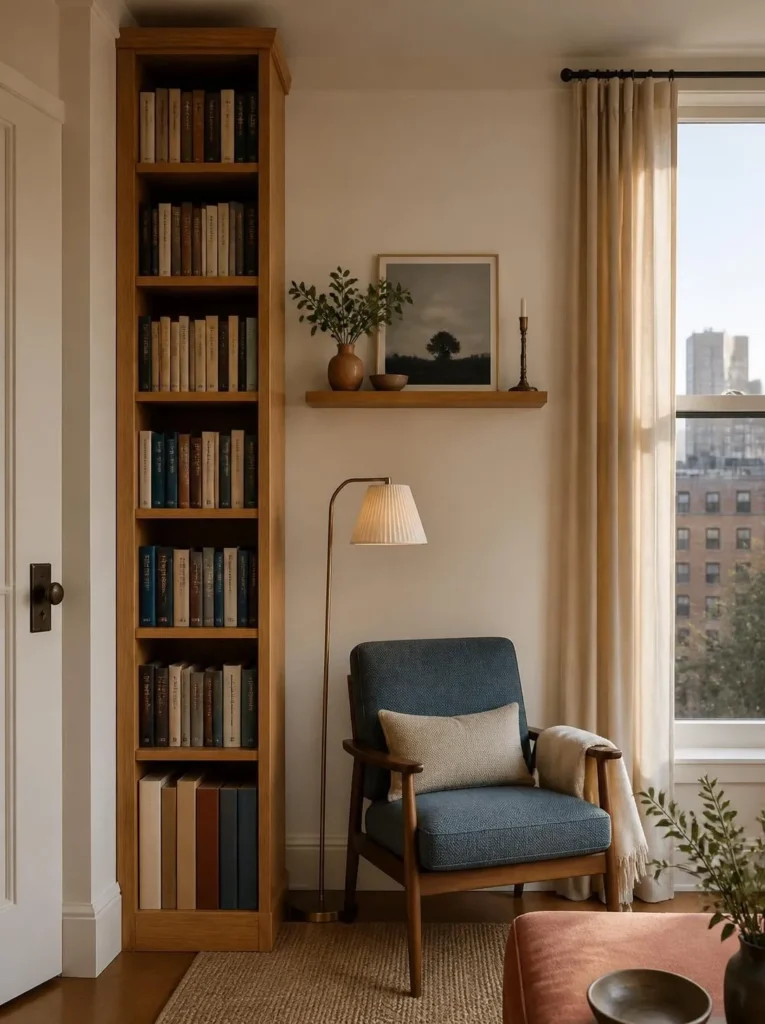
Avoid stacking large towers directly on the floor where they collect dust, are easily knocked, and can be exposed to moisture. If books must sit low, use a raised shelf or basket with firm support.
The principles in Small Cozy Apartment Ideas can help you balance storage, visual openness, and warmth when every surface matters.
Rotate Books With Your Interests, Not Every Trend
A book display can evolve without constant shopping.
Move garden books forward when you begin planting. Place a travel book on the coffee table while planning a trip. Keep a collection of poems nearby during a quieter season. Bring cookbooks into view when you want to return to preparing meals at home.
Rotation makes familiar books visible again.
Use what you already own before buying books as decoration. Libraries and secondhand shops are wonderful places to discover what you actually enjoy, but a purchase should still begin with interest in the book itself.
A home feels collected when it grows alongside your life—not when it is rebuilt for every new visual trend.
Protect the Books You Put on Display
Beautiful displays should not shorten the useful life of your books.
The Library of Congress guide to storing personal collections recommends a cool, relatively dry, stable environment and warns against vents, radiators, extreme temperatures, high humidity, and strong light. For an ordinary home collection, a few practical habits make a meaningful difference:
- keep books out of direct sun;
- avoid shelves immediately beside heaters or air-conditioning vents;
- do not store valuable books in damp basements or very hot attics;
- leave books upright and supported rather than leaning sharply;
- place oversized books flat when their weight makes vertical storage unstable;
- keep drinks, plant water, and food away from shelves;
- dust shelves and book tops gently;
- handle fragile volumes with clean, dry hands.
Not every paperback needs archival treatment. Focus extra care on signed, inherited, rare, or irreplaceable books.
The goal is to enjoy your collection while allowing it to age slowly and honestly.
Common Decorating Mistakes to Avoid
Buying books only for a matching color
A coordinated palette can be pleasant, but books with no connection to your interests often make a room feel generic.
Filling every gap
Empty space helps separate collections and gives your eye somewhere to rest.
Making books difficult to reach
If every title is stacked beneath objects, the shelf has stopped functioning as a library.
Turning all the spines inward
Page-facing shelves remove color and information while making books harder to locate.
Placing delicate books in direct sunlight
A beautiful cover can fade when displayed for long periods near a bright window.
Creating unstable floor towers
Tall stacks are difficult to clean, easy to knock, and hard on the books at the bottom.
Styling without editing
A few meaningful books and objects create more presence than many unrelated accessories.
A Simple Room-by-Room Guide
Living room
Use shelves for the main collection, one personal stack on the coffee table, and a current read beside the chair.
Bedroom
Keep one or two active books on the nightstand and store the rest on a nearby shelf.
Kitchen
Display the cookbooks you use most, protected from water, heat, and food splashes.
Home office
Keep reference books within reach and use one horizontal stack to support a small personal object.
Entryway
Add two books beneath a lamp or bowl while preserving practical space for arrivals.
Small apartment
Use tall shelving, narrow ledges, and under-bench storage instead of covering every table.
The arrangement does not need to be finished all at once. Begin in the room where you already spend the most time.
A Gentle Checklist for Decorating With Books
- Begin with books that mean something to you.
- Keep most titles easy to find and remove.
- Mix vertical rows with short horizontal stacks.
- Display one beautiful cover forward.
- Leave practical space on tables.
- Add only a few personal objects.
- Use color as a guide, not a strict rule.
- Keep valuable books away from sun and moisture.
- Adapt displays to the way each room is used.
- Rotate familiar books before buying more.
Books make a home more beautiful because they make it more recognizable as yours.
Reader Reflection
Which five books tell the clearest story about you?
Bring them together in one visible place this week. Arrange them simply, add one meaningful object if the space needs it, and leave enough room to open the book that calls to you first.
Frequently Asked Questions
How do you decorate with books without creating clutter?
Use a limited number on open surfaces, group the main collection on shelves, and preserve empty space between arrangements. Keep tables functional and return finished books to their regular place.
Should books be organized by color?
They can be loosely grouped by color, but accessibility should come first. Organize by subject, author, or use if that helps you find books, then adjust color balance without separating meaningful collections.
Is it safe to stack books horizontally?
Small, stable stacks are generally practical, particularly for oversized books that need flat support. Avoid stacks that are too tall, place larger books at the bottom, and do not put heavy objects on delicate volumes.
How many coffee table books should you display?
One to three books are enough for most tables. Choose sizes proportional to the surface and leave generous space for normal daily use.
How can I decorate with books in a small apartment?
Use tall narrow shelving, picture ledges, wall-mounted shelves, under-bench storage, and small purposeful stacks. Keep heavy books low and avoid unstable piles directly on the floor.
Should I remove book jackets when decorating?
Only if you prefer the hardcover underneath and can store the jacket safely. Dust jackets protect books and may be important to collectible value, so avoid discarding them.
How do I protect displayed books from fading?
Keep them away from direct sunlight and intense artificial light. Rotate front-facing books periodically and reserve particularly valuable or light-sensitive editions for more protected shelves.
Continue the Journey
The Art of a Cozy Home: Explore how meaningful objects, personal rituals, and everyday comfort create a home with lasting warmth.
Soft Minimal Home: Discover how books and other lived-in details soften minimal spaces without overwhelming them.
Creating a Cozy Reading Nook You’ll Love Returning To: Design a comfortable corner where the books on display naturally become part of your daily routine.
How to Get Back Into Reading When You’ve Lost the Habit: Rebuild your reading life with an inviting first book, a visible place to keep it, and a low-pressure daily rhythm.