“You do not have to become the reader you once were. You only need to find the book that makes you curious again.” — NewMorning
There was probably a time when reading felt effortless.
You carried a book everywhere, stayed awake for one more chapter, or looked forward to the quiet moment when you could return to a story. Then life changed. Work became busier. Your phone became harder to ignore. You chose several books that never held your attention, or you simply stopped having the energy to begin.
Now the wish to read is still there, but the habit feels far away.
Learning how to get back into reading is not about forcing yourself to finish a difficult novel or recovering an older version of who you were. It is about making reading feel inviting again—one page, one short session, and one genuinely interesting book at a time.
A Reading Slump Does Not Mean You Stopped Being a Reader
A reading slump is a period when books feel unusually difficult to start or continue. You may read a few pages and lose focus, collect titles without opening them, or want the feeling of reading more than the book in front of you.
This can happen after a demanding season, a disappointing book, changes in routine, emotional exhaustion, or months of consuming faster forms of entertainment. Sometimes your available attention has changed. Sometimes your taste has changed. Often, the book you think you should read is simply not the book you need right now.

You do not need to earn your identity as a reader by completing a certain number of books. Reading is not a streak that disappears when interrupted.
The return begins when you replace guilt with curiosity.
Stop Trying to Read Like Your Past Self
One of the quietest obstacles to reading again is comparison.
Perhaps you once finished a novel every week. Maybe you used to enjoy long classics, complicated fantasy worlds, or serious nonfiction. Returning with the expectation that your present attention should immediately match your past attention can make every book feel like a test.
Your life is different now, and your reading life is allowed to be different too.
Instead of asking, What would the old version of me have read? ask:
- What am I curious about today?
- Do I want comfort, surprise, humor, beauty, or useful information?
- How much concentration do I realistically have?
- Would I enjoy a short story, essay, graphic novel, audiobook, or reread more than a long novel?
The goal is not to prove that your taste is impressive. It is to find a form of reading that meets you where you are.
Choose a Bridge Book, Not the Perfect Book
The first book after a long break carries too much pressure when you expect it to restart your entire reading life.
Choose a bridge book instead: something accessible enough to move you from not reading toward reading again.
A good bridge book might be:
- a short novel with an immediate opening;
- a mystery with brief chapters;
- a memoir about a subject you already care about;
- a graphic novel or illustrated essay;
- a collection of short stories;
- a familiar favorite you have read before;
- the book behind a film or series you enjoyed;
- a practical nonfiction book connected to a current hobby.
The Reading Agency’s 2025 adult-reading research described many adults as interrupted readers and identified distraction as an important barrier. This makes the first choice especially important: the book needs to compete gently for your attention rather than demand immediate discipline.
Choose for momentum, not prestige.
Give Yourself Permission to Stop
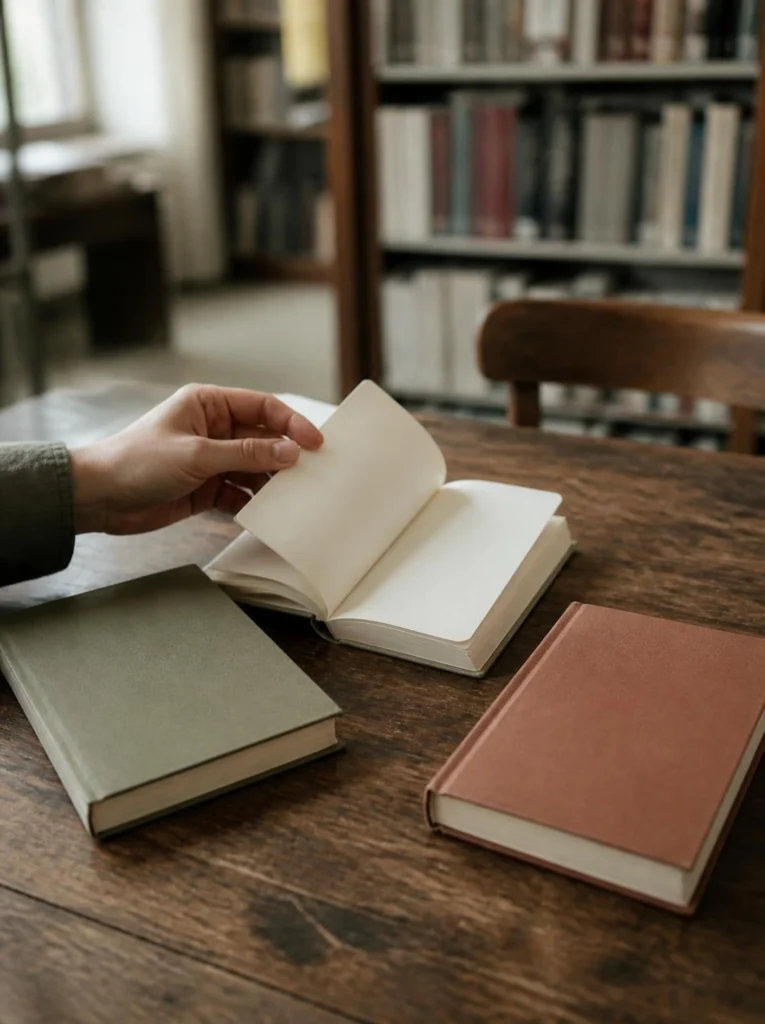
Finishing every book can sound virtuous, but it is not always helpful when you are trying to rediscover reading.
If you repeatedly avoid a book, notice what is happening. Perhaps the pacing is too slow for your current mood. Perhaps the subject feels like work. Perhaps the writing does not invite you in.
You may stop after thirty pages. You may return later. You may never return.
Abandoning the wrong book protects time for the right one. It also teaches you something useful about your changing taste.
Try a simple rule: if a book has not created curiosity after two or three reading sessions, sample another. This is not failure. It is readerly discernment.
Make the First Goal Almost Too Easy
“Read more” is too vague, while “finish fifty books” can turn pleasure into performance.
Begin with a goal small enough to keep on an ordinary day:
- read for ten minutes;
- finish five pages;
- read one short chapter;
- open the book while your tea steeps;
- listen to an audiobook during one part of your commute.
The National Literacy Trust’s Take 10 to Read initiative is built around a simple ten-minute reading pause. The idea is useful because it lowers the threshold for beginning. Ten minutes can become thirty when a book holds you, but it is already complete if it remains ten.
Stop while you still have a little curiosity left. Returning tomorrow becomes easier when reading ends with interest rather than exhaustion.

Attach Reading to a Reliable Moment
Motivation is helpful, but it changes from day to day. A consistent cue makes a habit easier to repeat.
Research summarized by University College London found that habits develop through repetition in a consistent context and that the time required varies considerably. The useful lesson is not the often-repeated average of 66 days. It is that regular repetition matters more than performing perfectly.
Connect reading to something that already happens:
- after breakfast;
- during a lunch break;
- when you get into bed;
- after closing your laptop;
- while waiting for an appointment;
- during the first ten minutes of a commute;
- immediately after placing your phone on its charger.
Choose one cue and keep the book visible nearby. The routine should be easy to recognize: when this happens, I read for a few minutes.
Missing one day does not erase the habit. Begin again at the next cue.
Reduce the Distance Between You and the Book
A book hidden on a crowded shelf must compete with a phone already in your hand.
Make reading the easier choice:
- place the current book on your pillow or favorite chair;
- keep an e-reader in your bag;
- leave a slim book where you usually wait;
- download the audiobook before your walk;
- use a bookmark so you can begin without searching;
- keep only one or two active books visible.
At the same time, add a little distance from distraction. Put your phone across the room, switch it to silent, or leave it charging outside your reading corner. You do not need to remove technology from the entire evening. Protect one short interval from interruption.
If digital distraction has spread into many parts of your day, Digital Slow Living offers a broader way to create a calmer relationship with screens.
Change the Format Before You Give Up
Reading does not only happen through a printed novel.
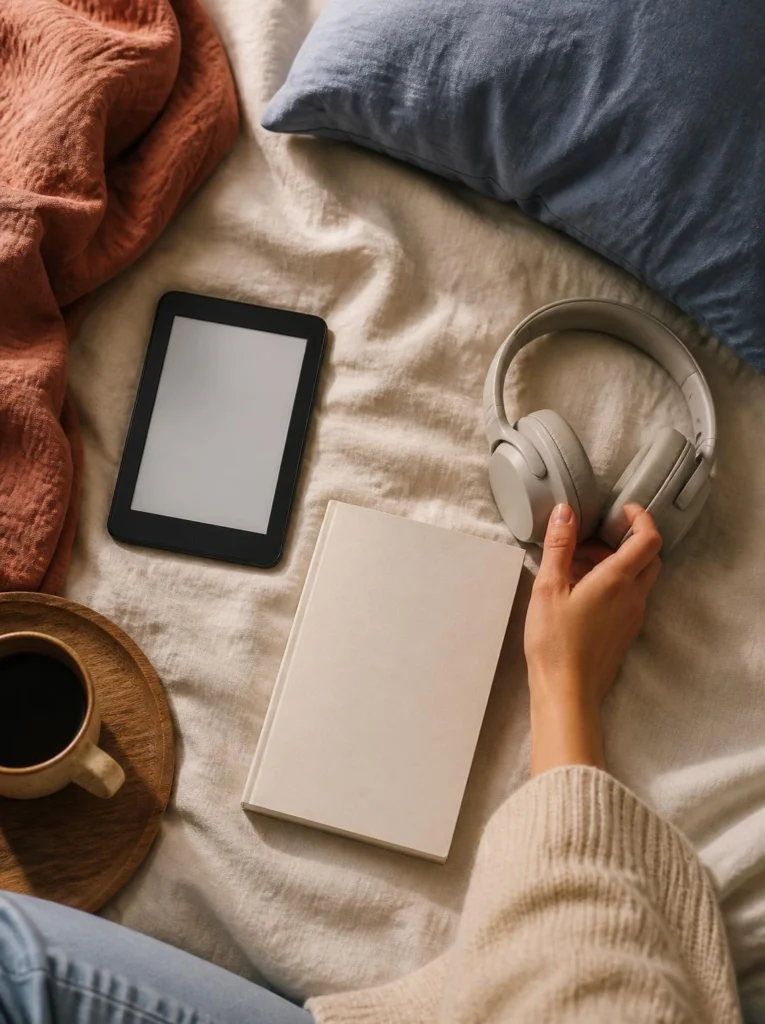
An audiobook can restore your relationship with stories while you walk, cook, commute, or rest your eyes. An e-reader can make a large book feel lighter and keep several choices close. Essays and short stories provide a complete experience without asking for weeks of commitment. Graphic novels can rebuild visual and narrative attention together.
Changing format is not cheating. It is adapting the reading experience to your current life.
You can also combine formats. Listen to the audiobook during the week and continue with the physical book at home. Read an ebook while traveling and return to print on the weekend. The story matters more than the container.
Revisit Something You Already Love
A familiar book removes the uncertainty of beginning.
You already know the characters, the atmosphere, or the ending. Instead of reading to discover what happens, you can notice how the book makes you feel now. A reread may reveal details that your earlier self missed.
You could also return indirectly:
- read another book by a favorite author;
- choose a novel with a similar setting;
- explore the source material behind a favorite adaptation;
- read essays about a subject you once loved;
- ask a friend for a recommendation based on an old favorite.
Comfort can be a doorway, not a retreat. Once reading feels natural again, curiosity usually begins to widen on its own.
Let Reading Become Social
Reading is quiet, but it does not need to be isolated.
A friend’s enthusiasm can give a book energy before you begin it. A library display can reduce the pressure of choosing. A book club can create a gentle reason to keep returning, while an informal conversation can be enough to make a story feel alive.
Try one low-pressure social connection:
- ask a friend to choose between two books for you;
- read the same novella at the same time;
- visit the library without a fixed list;
- join a silent reading gathering;
- send someone one sentence you enjoyed;
- follow a thoughtful librarian or independent bookstore for recommendations.
The point is not accountability for its own sake. It is to remember that books connect private attention with a larger world of readers.
Track What You Enjoy, Not Only What You Finish
A long reading challenge can be motivating for some people, but discouraging during a slump.
Try keeping a softer record:
- titles you sampled;
- lines you wanted to remember;
- subjects that held your attention;
- books you stopped and why;
- moments when reading felt easiest;
- formats that fit your current routine.
This turns your reading log into a map of taste rather than a scorecard.
If you enjoy recording ideas, the process can remain simple: one sentence after each session, a small list in your notes app, or a page in a reading journal. The record should deepen the experience, not become another obligation.
Create a Reading Space That Signals Rest
You do not need a perfect library or elaborate reading nook. You need a place where your body recognizes that attention is changing.
A chair near a window, one warm lamp, a pillow that supports your back, and somewhere to place the phone may be enough. Keep the space ready rather than styled only for photographs.
For more practical ideas, Creating a Cozy Reading Nook You’ll Love Returning To explores comfortable seating, lighting, texture, and the small details that make a reading corner easier to use every day.
The most effective reading space is the one you can enter without preparation.

A Gentle Seven-Day Reading Reset
If you want structure without a demanding challenge, try this one-week reset.
Day One: Follow curiosity
Choose three books based only on genuine interest. Read the first few pages of each and keep the one that creates the strongest pull.
Day Two: Prepare the environment
Place the book where you will see it. Choose one ten-minute period and move your phone out of reach.
Day Three: Read without measuring pages
Set a short timer and stop when it ends, even if you read slowly. The goal is to practice returning.
Day Four: Change the format
Sample an audiobook, essay, graphic novel, or short story. Notice whether another format feels easier.
Day Five: Make it social
Tell someone what you are reading, visit a library, or ask for one recommendation.
Day Six: Extend only if you want to
Begin with ten minutes. Continue if the story holds you, but do not turn extra time into tomorrow’s requirement.
Day Seven: Notice what worked
Ask which book, time, place, and format made reading feel most natural. Repeat that combination during the following week.
At the end of seven days, success is not finishing a book. Success is making the next reading session easier to begin.
When Taking a Longer Break Is the Right Choice
Sometimes the gentlest way back to reading is to stop pushing for a while.
If every book feels exhausting, your attention may need rest rather than another strategy. Continue enjoying stories through films, conversation, music, podcasts, or audiobooks if those feel accessible. Reading will still be available when your capacity changes.
Persistent difficulty concentrating can also accompany stress, sleep problems, grief, depression, anxiety, medication changes, or other health concerns. A reading slump alone does not diagnose anything, but if concentration problems affect many areas of daily life, consider speaking with a qualified health professional.
Books should support your life, not become another way to criticize yourself.
What Getting Back Into Reading Does Not Require
You do not need:
- an ambitious yearly goal;
- a perfectly styled reading nook;
- a long uninterrupted evening;
- expensive new books;
- a specific format;
- permission to abandon a book;
- the taste you had five years ago;
- the ability to read every day.
You only need a next book and a small opening in the day.
A Gentle Checklist for Starting Again
- Choose curiosity over obligation.
- Begin with a bridge book.
- Stop reading books you consistently avoid.
- Set a ten-minute minimum instead of a yearly total.
- Attach reading to a reliable cue.
- Keep the book visible and the phone farther away.
- Try another format.
- Revisit a favorite.
- Share the experience with another reader.
- Track enjoyment rather than quantity.
The most important step is not finishing. It is returning.
Reader Reflection
What kind of book would feel easiest to love right now?
Choose one title because it suits your present mood—not because it appears on a list of books you believe you should have read. Give it ten quiet minutes and notice whether curiosity returns.
Frequently Asked Questions
How do I get back into reading after years?
Start with a short, accessible book connected to something you already enjoy. Read for ten minutes at a consistent point in the day, keep the book visible, and remove pressure to finish it. Rebuilding comfort with reading matters more than choosing a challenging first title.
What is the fastest way to get out of a reading slump?
There is no universal instant solution, but changing the book, format, or environment can quickly reduce resistance. Try a favorite author, short mystery, audiobook, graphic novel, or reread. If a title repeatedly fails to interest you, choose another.
Why can’t I concentrate when I read anymore?
Concentration can be affected by distraction, fatigue, stress, sleep, the difficulty of the book, or changes in routine. Begin with shorter sessions and put your phone out of reach. If concentration problems are persistent and affect other areas of life, consider discussing them with a qualified professional.
Do audiobooks count as reading?
Audiobooks are a valid way to experience books, ideas, language, and stories. They can be especially useful during a reading slump or when your schedule makes print difficult. The most helpful format is the one that keeps you meaningfully engaged.
How long should I read each day to rebuild the habit?
Ten minutes is a practical starting point, but even five minutes can work. Consistency in a recognizable context is more important than a large daily target. Extend the session when you want to, not because the habit only counts after a certain number of pages.
Should I reread an old favorite?
Yes. A familiar book reduces decision-making and can reconnect you with the emotions that made reading meaningful. Rereading is not moving backward; it can become a bridge toward new authors and genres.
Continue the Journey
Reading as Self-Care: Finding Calm Between the Pages: Explore how reading can become a restorative practice rather than another item on your productivity list.
Books Worth Slowing Down For: Discover books that reward patient attention and create space for reflection.
Creating a Cozy Reading Nook You’ll Love Returning To: Create a comfortable, practical corner that makes daily reading easier to begin.
Digital Slow Living: How to Reduce Screen Time Without Disconnecting Completely: Build calmer boundaries around digital distraction and recover small pockets of attention.