“A gentler life is not one without responsibility. It is one in which struggle is no longer treated as proof of worth.” — NewMorning
There is a particular kind of exhaustion that comes from believing every part of life should be difficult.
Work must be demanding enough to prove ambition. Rest must be earned. Relationships must be maintained through endless availability. Even self-care can become another project to optimize, photograph, and complete correctly.
It is not surprising that people have begun looking for gentler alternatives. Two ideas appear often in those conversations: soft life and slow living.
At first glance, they can seem almost interchangeable. Both question hustle culture. Both make space for rest, pleasure, and a more intentional pace. Both are often represented online through calm homes, unhurried mornings, and beautifully ordinary moments.
Yet they come from different histories and answer different questions.
Soft life asks: What if struggle did not have to define my worth?
Slow living asks: What if faster were not always better?
Understanding that difference makes both ideas more useful—and protects them from becoming two more aesthetics we feel pressured to purchase.
What Does Soft Life Mean?
The phrase soft life describes a way of living that prioritizes peace, comfort, joy, boundaries, and freedom from unnecessary struggle.
It became widely recognized through Nigerian online culture and was especially amplified by Black women who were rejecting expectations of constant strength, sacrifice, and endurance. Essence’s exploration of the movement describes it as intentionally seeking comfort, peace, and rest while identifying personal limits and protecting mental well-being.
That context matters.

Soft life was not originally a neutral lifestyle label or a collection of pastel robes, flowers, and expensive vacations. It offered language for refusing the belief that a difficult life is automatically a more admirable one. For many Black women, it also pushed back against the expectation that they should absorb stress, care for everyone else, and remain endlessly resilient without receiving care themselves.
As the phrase spread across TikTok, Instagram, and mainstream wellness media, its meaning often became narrowed to luxury. Beautiful hotels, romantic dinners, designer clothing, and lives apparently free of work became the most visible version.
But luxury is not the heart of a soft life.
A soft life may include material comfort when it is accessible, but its deeper practices are often less photogenic:
- saying no without writing a long apology;
- leaving a relationship built on recurring chaos;
- asking for help before reaching exhaustion;
- choosing a job with healthier conditions over a more impressive title;
- protecting time that does not belong to productivity;
- allowing joy to exist before every problem has been solved;
- refusing to make suffering part of your identity.
The Calm overview of soft life similarly emphasizes ease, boundaries, rest, and redefining success beyond constant output. The useful idea is not that life can be made completely effortless. It is that we can stop adding avoidable hardness to a life that already contains real difficulty.
What Does Slow Living Mean?
Slow living is a broader philosophy about pace, attention, quality, and our relationship with time.
Its roots are commonly connected to the Slow Food movement, which began in Italy in 1986 as a response to fast-food culture and the loss of local food traditions. Slow Food now describes itself as a global movement working for food that is good, clean, and fair, while protecting cultural and biological diversity.
Over time, the “slow” philosophy expanded beyond food into homes, travel, fashion, work, cities, parenting, technology, and daily routines.
Slow living does not mean moving at the slowest possible speed. It means resisting speed when speed reduces quality, attention, connection, or care. A slow approach looks for the pace that fits the moment.
Sometimes that pace is genuinely unhurried: cooking a meal, walking without headphones, repairing an object, reading a chapter carefully, or sharing an evening without checking the time.
Sometimes slow living requires acting quickly. An emergency should be handled quickly. A useful tool can shorten an administrative task. A prepared meal can protect an overwhelmed week. The philosophy is not loyal to slowness for its own sake; it is loyal to intention.
This is why How to Slow Down in Life When Your Days Still Feel Busy focuses on realistic pauses rather than escaping every responsibility. Slow living asks us to notice where urgency is real, where it has become habitual, and where a different rhythm would help us live more fully.
Soft Life and Slow Living Share a Common Refusal
Although their histories differ, the two philosophies overlap in meaningful ways.
Both reject the idea that busyness is a reliable measure of value.
Both treat rest as part of a sustainable life rather than a prize at the end of perfect productivity.
Both encourage clearer limits around work, technology, relationships, and consumption.
Both ask us to become more selective: fewer obligations accepted from guilt, fewer purchases made from comparison, and fewer hours surrendered to habits that leave us depleted.
Both also recognize that a good life is experienced in the present. It cannot exist only as a future reward promised after the next promotion, project, renovation, or personal transformation.
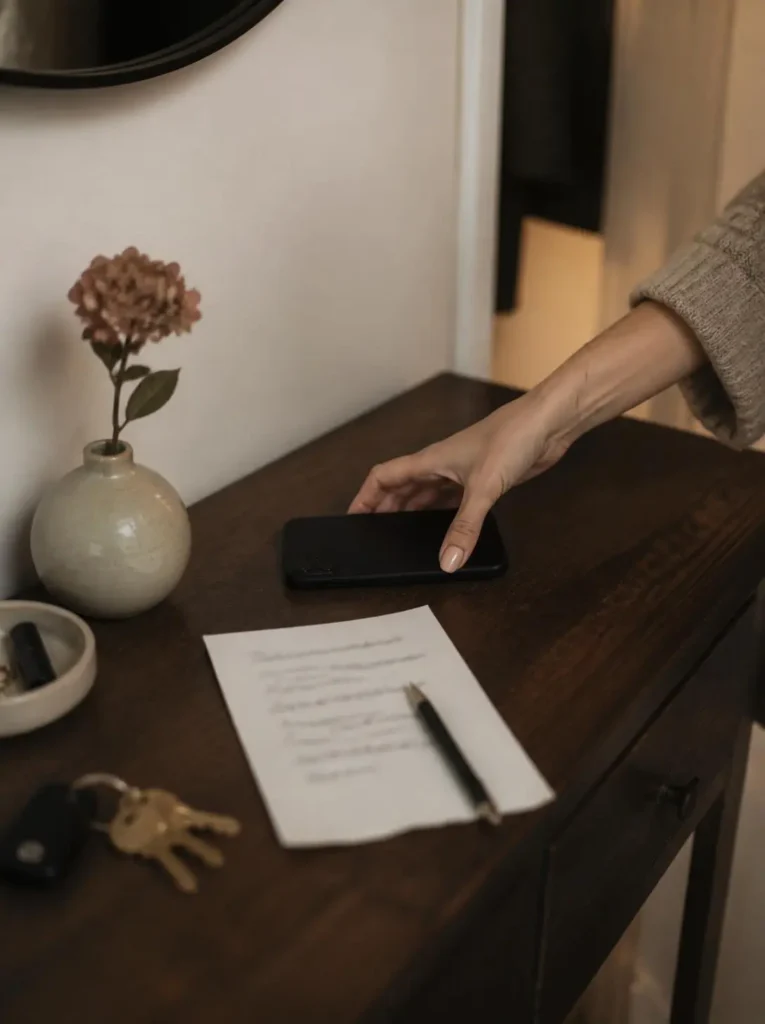
This shared ground is why the ideas blend so naturally online. A quiet morning can feel both soft and slow. So can a phone-free dinner, an afternoon nap, a walk through the neighborhood, or a home arranged around comfort rather than display.
But their differences remain important.
The Central Difference Is Ease Versus Pace
Soft life is primarily concerned with ease.
Slow living is primarily concerned with pace and attention.
A soft choice reduces unnecessary strain. A slow choice protects the quality of an experience or process.
Consider dinner on a difficult weekday.
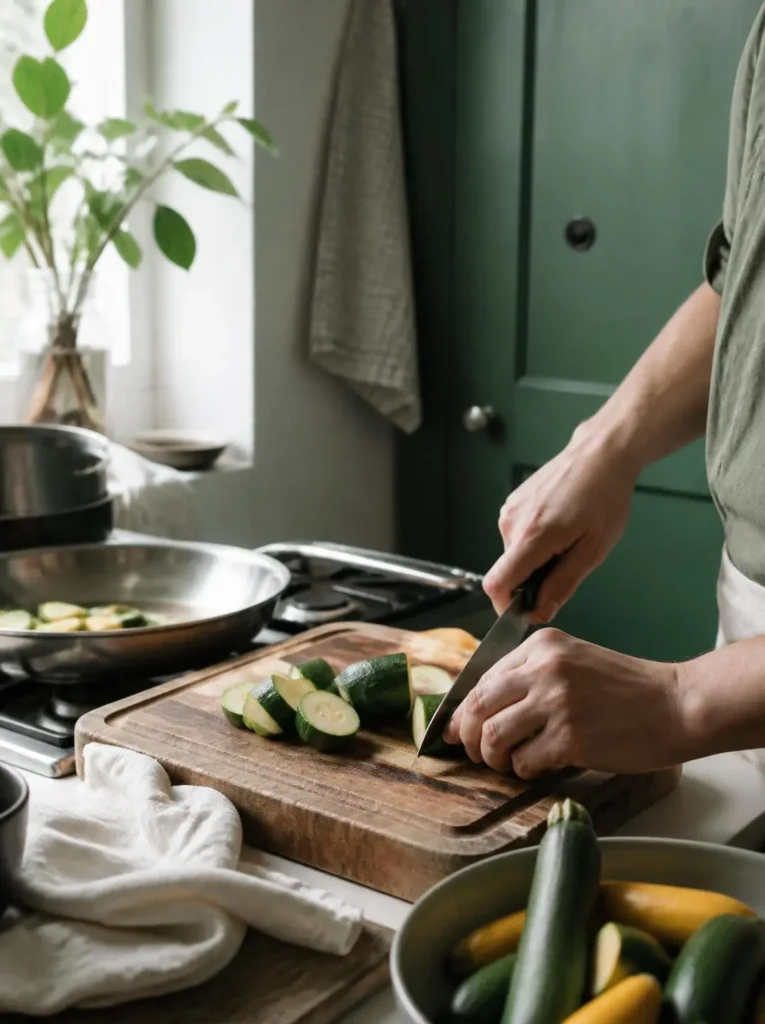
A soft-life decision might be ordering a nourishing meal because cooking would create more stress than comfort.
A slow-living decision might be preparing a simple recipe from basic ingredients, enjoying the process, and sitting down to eat without distraction.
Neither choice is morally better. They answer different needs.
The same distinction appears in many areas of life:
| Area | Soft-life question | Slow-living question |
|---|---|---|
| Work | How can I reduce unnecessary pressure and protect my limits? | What pace supports thoughtful, sustainable work? |
| Home | What would make daily life easier and more comfortable? | What helps me notice, use, and care for my home? |
| Food | What choice supports me with the energy I have today? | How can I reconnect with ingredients, preparation, and shared meals? |
| Technology | Which tools remove stress or repetitive work? | When does technology interrupt attention and presence? |
| Relationships | Where do I need stronger boundaries or more support? | How can I give people less hurried attention? |
One philosophy softens the weight. The other changes the rhythm.
Together, they can create a life that is both gentler and more present.
A Soft Life Does Not Always Look Slow
Ease can sometimes come through speed, convenience, or delegation.
Automatic bill payments, grocery delivery, a dishwasher, a short commute, prepared ingredients, a calendar reminder, or paying someone for skilled help may make life softer precisely because they save time and effort.
There is no virtue in making every task longer.
If baking bread brings you pleasure, it can be a beautiful slow ritual. If it creates stress during an already crowded week, buying bread may be the softer choice. If maintaining an elaborate garden restores you, the work can belong in a gentle life. If it becomes another source of guilt, a few easy plants may serve you better.
Soft life gives us permission to consider capacity.
Instead of asking what the most admirable or aesthetically pleasing option would be, we can ask:
- What can I realistically carry today?
- Which part of this task is unnecessarily difficult?
- Is there a tool, boundary, conversation, or request for help that would reduce the strain?
- Am I choosing this because it supports me, or because I want to appear capable?
- What would “enough” look like here?
A soft life is not a performance of effortlessness. It is an ongoing practice of removing avoidable friction while accepting that some responsibilities remain real.
Slow Living Does Not Always Feel Soft
Some slow practices require effort.
Cooking from scratch takes energy. Growing food includes weather, insects, failed plants, and physical work. Repairing an old object may be slower than replacing it. Learning a craft can be frustrating. Having an honest conversation is rarely comfortable. Choosing a lower-consumption life may require planning and patience.
Slow living is not designed to remove every challenge. It asks whether a challenge connects us to something meaningful.
The work of kneading dough may feel worthwhile because it engages the senses and feeds other people. Mending a shirt may feel satisfying because it extends the life of something useful. Walking to a nearby shop may take longer but offer movement, daylight, and contact with the neighborhood.
This is where slow living differs from the promise of effortless calm sometimes sold online. A slower life still includes chores, deadlines, grief, caregiving, and inconvenience. Its gift is not permanent serenity. Its gift is a more conscious relationship with how we move through those realities.
Neither Philosophy Should Become an Expensive Aesthetic
Both soft life and slow living are easily commercialized.
Soft life becomes silk pajamas, spa appointments, luxury travel, and interiors no one appears to clean.
Slow living becomes handmade ceramics, linen wardrobes, rustic kitchens, and baskets expensive enough to undermine the simplicity they represent.
Beautiful objects can support a meaningful life. Comfort matters. Quality can be worth paying for. The problem begins when a philosophy about freedom from pressure creates new pressure to look the part.
You do not need a renovated home to live slowly.
You do not need financial luxury to introduce softness.
You can start with:
- a protected lunch break;
- one obligation declined;
- notifications turned off for an hour;
- a chair moved toward the evening light;
- a repeated meal that simplifies the week;
- five quiet minutes before entering the house;
- comfortable clothes you already own;
- a conversation about sharing household labor;
- a library book instead of another purchase;
- an earlier bedtime on an ordinary night.
The most valuable changes are often invisible to other people.
Soft Life Cannot Solve Structural Stress Alone
It is important not to turn every difficult circumstance into an individual self-care assignment.
A person cannot journal their way out of unsafe work, unaffordable housing, discrimination, inadequate healthcare, or an impossible caregiving load. Better boundaries matter, but they do not remove every consequence of saying no. Convenience saves time, but it is not equally accessible. Rest is necessary, but many people have limited control over their schedules.
The World Health Organization defines burnout specifically as an occupational phenomenon resulting from chronic workplace stress that has not been successfully managed. Its guidance also notes that workload, long hours, lack of control, and lack of support are important psychosocial risks. These are not merely failures of personal attitude. The WHO’s explanation of burnout is a useful reminder that systems, workplaces, and shared responsibilities must change too.
A thoughtful soft life acknowledges reality without glorifying it.
Sometimes choosing softness means creating a gentle evening. Sometimes it means documenting a workplace problem, seeking professional support, renegotiating labor at home, joining with others, or making a long-term plan to leave a damaging situation.
The goal is not to blame yourself for failing to feel peaceful. It is to recognize where you have agency and use it with care.
How Soft Life Can Change the Way You Work
Work is one of the clearest places to examine unnecessary hardness.
A soft approach does not require abandoning ambition. It asks whether your goals depend on chronic self-neglect.
You might:
- stop treating immediate replies as evidence of professionalism;
- clarify expectations instead of guessing and overdelivering;
- schedule breaks before exhaustion;
- leave margin between meetings;
- ask which tasks actually affect the outcome;
- request help earlier;
- choose a sustainable deadline when you have influence over it;
- build skills that expand future options;
- define success beyond title, income, and visible busyness.
This works naturally beside Gentle Productivity, which focuses on meaningful progress without turning every day into a test of maximum output.
A useful question at the start of the day is not only, “What must I accomplish?” It is also, “How do I want to move through the work?”
Competence and calm do not have to be opposites.
How Slow Living Can Change the Way You Use Time
Slow living begins by noticing where your time disappears.
Not every busy day is a problem. A full day can feel meaningful when its activities are chosen, connected, and given enough attention. The deeper issue is fragmentation: rushing from one task to another while remaining mentally attached to everything unfinished.
Try observing one ordinary day without immediately correcting it.
Notice:
- when you reach for your phone without deciding to;
- which transitions are too compressed;
- what you repeatedly hurry through;
- which tasks create energy rather than only consuming it;
- where multitasking reduces quality;
- what you wish you could remember more clearly;
- which commitments no longer match your priorities.
Then choose one place to change the pace.
Eat one meal seated. Walk a familiar route without audio. Finish one task before opening another. Leave ten minutes between work and home. Read a complete article rather than collecting ten headlines.
Digital Slow Living explores this relationship with attention more deeply. The aim is not disconnection for its own sake; it is using technology without allowing it to set the pace of every hour.

Boundaries Are Where Softness Becomes Real
Soft living can look lovely in private, but its real test often appears in relationships.
A boundary may disappoint someone. It may interrupt a familiar pattern in which you solve, absorb, organize, or remain available. It can feel far less “soft” than avoiding the conversation.
Yet a life cannot become gentler if everyone else continues to have unlimited access to your time and energy.
Practical boundaries may sound like:
- “I cannot take that on this week.”
- “I am available until six.”
- “I need more notice before making plans.”
- “I can help with this part, but not the entire project.”
- “I am not able to discuss this while we are shouting.”
- “I need us to divide this responsibility differently.”
- “Tonight I am going to rest.”
Boundaries are not tools for controlling other people. They clarify what you will do, what you can offer, and what conditions you need to remain present without resentment.
A soft life is not built only through comfortable moments. It is also built through the courage to protect them.
Rest Without Turning It Into a Reward
Both soft life and slow living challenge the belief that rest must be earned.
Still, it is easy to keep the old rule in a gentler disguise: rest after the inbox is empty, after the room is clean, after everyone else is satisfied, after you have become sufficiently productive.
That finish line rarely arrives.
Rest Is Productive Too explores why recovery supports meaningful activity. But rest deserves a place in life even when it does not produce a better version of you afterward.
Some rest restores energy. Some rest brings pleasure. Some simply prevents the day from taking everything.
Let it be ordinary:
- sit down before you are completely depleted;
- leave part of the weekend unscheduled;
- stop a task at a reasonable point;
- take a nap without turning it into a wellness strategy;
- choose quiet entertainment;
- let an evening be unremarkable;
- go to bed without completing every small chore.
Rest does not need to become impressive to be legitimate.
A Practical Way to Combine Soft Life and Slow Living
You do not have to select one identity.
Use soft life to decide what deserves less strain.
Use slow living to decide what deserves more attention.
Try this weekly reflection:
What can become easier?
Choose one source of repeated friction. Automate it, simplify it, share it, decline it, prepare for it, or accept a good-enough version.
What deserves to become slower?
Choose one experience you have been rushing through: dinner, a conversation, your morning, creative work, a walk, or the transition into sleep.
Where is a boundary missing?
Notice where resentment, dread, or repeated overextension appears. Decide what limit or conversation could protect your capacity.
Where has convenience become disconnection?
A tool may make life easier while also removing something you value. Perhaps delivery has replaced every neighborhood errand, or streaming has replaced choosing a film with attention. Restore only the parts you genuinely miss.
What pleasure can exist now?
Do not reserve every good experience for a future version of life. Add one accessible pleasure to the present week: music while cooking, fresh sheets, a favorite route home, time outdoors, or an hour with no goal.
What can remain unfinished?
Choose something that is safe to pause. Let incompletion teach your nervous system that stopping does not cause the world to collapse.
This combination is practical because it does not require every moment to be slow or every task to feel easy. It helps you distribute effort more wisely.
Signs You May Need More Softness
You may be craving softness when:
- you feel responsible for everyone’s comfort except your own;
- asking for help feels like failure;
- every achievement is followed immediately by a new demand;
- you remain in draining situations to prove resilience;
- rest produces guilt rather than relief;
- your calendar reflects other people’s priorities;
- you choose the hardest option because it seems more worthy.
The first step may be a boundary, support, simplification, or permission to choose comfort.
Signs You May Need a Slower Rhythm
You may need slowness when:
- you move through the day without remembering much of it;
- your attention is divided even during activities you enjoy;
- meals, conversations, and transitions feel rushed;
- you consume more ideas than you can absorb;
- small delays create disproportionate frustration;
- your schedule contains no margin;
- you rarely experience anticipation, immersion, or completion.
The first step may be removing one input, widening one transition, or giving one activity your full attention.
What These Ideas Look Like in an Ordinary Week
A gentle life is rarely created through a dramatic escape.
It may look like preparing two simple meals in advance because weekday evenings are difficult. It may mean walking to the market on Saturday because you enjoy the route. It may mean declining a social event without inventing an excuse, then spending the evening doing nothing remarkable.
It can include ambition, caregiving, messy rooms, public transportation, deadlines, and uncertainty.
Perhaps Monday needs convenience.
Tuesday needs a firm boundary.
Wednesday needs focused work.
Thursday needs a phone-free meal.
Friday needs help.
Saturday needs a long, absorbing task.
Sunday needs rest without preparation for an ideal week.
There is no perfect rhythm to copy. A life becomes softer and slower through repeated choices that respond honestly to the conditions in front of you.
Do Not Turn Gentleness Into Another Standard
The internet can make any liberating idea feel like a new requirement.
Soon there is a correct soft-life wardrobe, a correct slow morning, a correct home, a correct breakfast, and a correct relationship with work. The pursuit of peace becomes surprisingly demanding.
If an idea makes you more judgmental toward your actual life, pause.
You are allowed to use convenience.
You are allowed to enjoy speed.
You are allowed to work hard for something that matters.
You are allowed to want material comfort.
You are allowed to rest in an imperfect room.
You are allowed to practice slowness during one part of the day and rush through another.
The goal is not to become the visual embodiment of a lifestyle term. It is to build a life in which your time, energy, attention, and joy are treated as valuable.
A Gentler Life Can Hold Both
Soft life and slow living are not competing trends.
Soft life reminds us that suffering is not a credential and that peace, support, pleasure, and boundaries belong in the present.
Slow living reminds us that faster is not always better and that attention gives ordinary life depth.
One helps us remove unnecessary hardness.
The other helps us stop rushing past what remains.
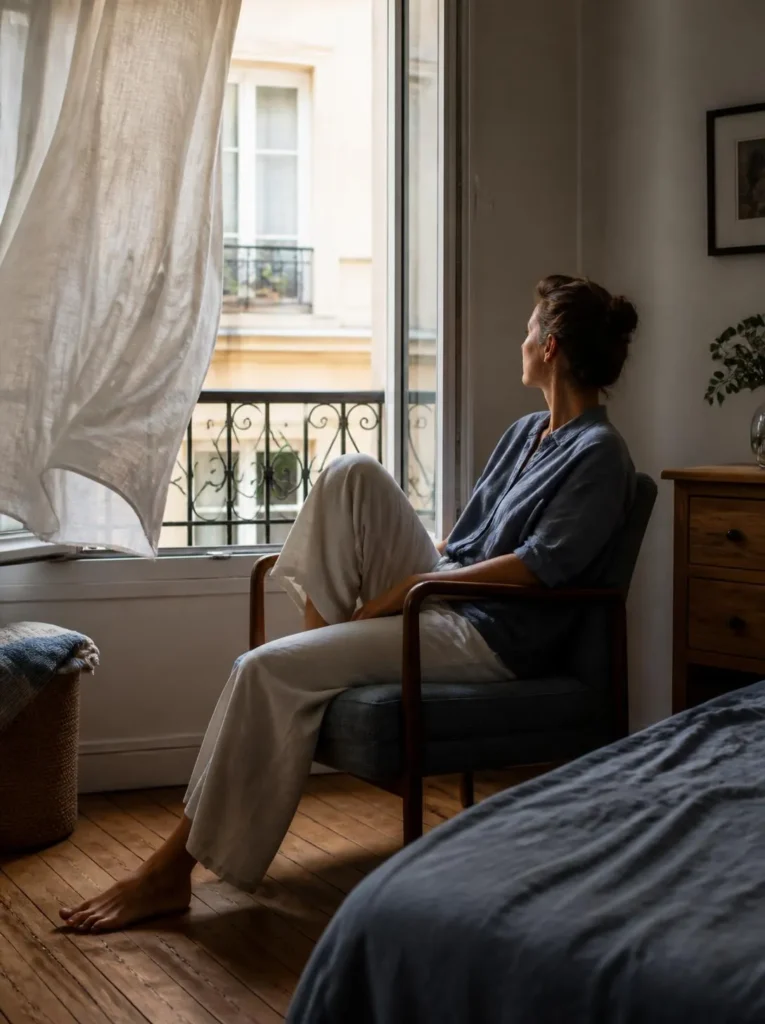
Together, they offer a grounded alternative to constant striving: not a life without effort, but a life in which effort is chosen more carefully; not permanent calm, but enough room to return to ourselves.
Reader Reflection
Where does your life need more softness right now—and where would a slower pace help you notice what is already good?
Choose one answer. Let it shape one small decision this week.
Frequently Asked Questions
What is the meaning of soft life?
Soft life is a way of living that prioritizes peace, comfort, joy, healthy boundaries, and freedom from unnecessary struggle. The phrase was popularized through Nigerian online culture, especially among Black women rejecting expectations of constant sacrifice and resilience.
Is soft life the same as slow living?
No. Soft life focuses mainly on ease, boundaries, and reducing avoidable stress. Slow living focuses on choosing an intentional pace, protecting attention, and valuing quality over speed. They overlap, but they are not identical.
Does living a soft life require money?
Financial stability and paid support can make life easier, so access matters. However, soft life is not limited to luxury. Boundaries, asking for help, simplifying expectations, protecting rest, and refusing unnecessary conflict can all introduce softness without buying an aesthetic.
Is soft life just avoiding responsibility?
No. A soft life does not remove necessary work or accountability. It questions avoidable hardship and the belief that suffering proves worth. Responsibilities can still be handled with support, clearer limits, and more realistic expectations.
Does slow living mean doing everything slowly?
No. Slow living means choosing the appropriate pace. It encourages slowing down when speed damages attention, quality, relationships, or well-being, while still using efficiency when it genuinely supports life.
Can I practice soft life while working full-time?
Yes. Start with the areas you can influence: communication expectations, breaks, workload clarification, transitions after work, shared responsibilities at home, and limits around availability. Small structural changes are more useful than pretending work does not exist.
Which is better: soft life or slow living?
Neither is universally better. Choose softness where life contains unnecessary strain and slowness where rushing prevents attention or meaning. Most people can benefit from elements of both.
How do I start living more gently?
Identify one repeated source of avoidable stress and one meaningful experience you regularly rush. Make the first easier and the second slower. This creates a practical starting point without redesigning your entire life.
Continue the Journey
- How to Slow Down in Life When Your Days Still Feel Busy: Find realistic ways to create breathing room without waiting for every responsibility to disappear.
- Gentle Productivity: Explore a more sustainable approach to meaningful work that respects energy, limits, and well-being.
- Digital Slow Living: Build a calmer relationship with technology while keeping the tools that genuinely support your life.
- Rest Is Productive Too: Reconsider the guilt around stopping and make recovery a normal part of everyday life.