
“Almost everything will work again if you unplug it for a few minutes, including you.”
— Anne Lamott
The idea that rest is productive often gets lost in our daily hustle. There’s a quiet guilt that creeps in the moment we stop. A closed laptop on a weekday afternoon. An empty to-do list on a Sunday. A nap taken not out of exhaustion, but simply because it sounded good. For many of us, rest has been quietly recast as something to earn—a reward for finishing everything else first—rather than something we’re fundamentally allowed to need.
Slow living asks a different question entirely: what if rest was never the opposite of productivity, but one of its essential ingredients?
The Myth We Inherited
Somewhere along the way, busyness became a badge of honor. Long hours, skipped lunches, and answering emails at midnight got quietly rebranded as dedication. Rest, meanwhile, got filed under laziness—something to feel a little embarrassed about or to justify with phrases like “I deserve this.”
This isn’t a personal failing so much as a cultural inheritance. We built entire systems—workplaces, school schedules, even the interface design of our phones—around the assumption that more output always means more value. Slowing down, within that framework, can feel like falling behind.
But that assumption doesn’t hold up nearly as well as it used to.

What the Research Actually Says
The science on this is surprisingly consistent, and it points in the opposite direction of what hustle culture would have us believe:
- Boosted Efficiency: Spending more time resting doesn’t just prevent burnout; research shows it can stimulate creativity, sharpen concentration, and make the time spent on actual tasks far more efficient. This idea sits at the center of author Alex Soojung-Kim Pang’s work on rest, which argues that meaningful downtime is a core part of working well, rather than a break from it.
- Neurological Downtime: The restorative pattern shows up at the neurological level too. Downtime activates what neuroscientists call the brain’s default mode network, a system that plays a critical role in creativity, memory consolidation, and problem-solving. In other words, some of the mental work that matters most doesn’t happen while you’re focused on a task; it happens precisely when you’re not.
- Consistent Performance: Researchers have found that regular breaks built into the workday improve focus and help prevent burnout, keeping overall performance steady over time. Furthermore, people with predictable, consistent time off tend to be more productive overall, largely because they feel mentally rested, motivated, and engaged.
- The Power of Naps: Even something as simple as a daytime rest carries measurable weight. Research published in the Journal of Sleep Research found that napping significantly improves alertness and cognitive performance—the kind of quiet reset that is easy to dismiss as indulgent, until you look at the data.
- Creative Breakthroughs: Perhaps most compelling for anyone who associates rest with creative stagnation: research suggests that up to 40% of our best and most creative ideas emerge during moments of rest, not during forced, focused effort.
Rest Isn’t Just One Thing
Part of why rest feels so difficult to prioritize is that we tend to picture only one version of it—usually sleep, or maybe a long weekend. But rest actually comes in several distinct forms: physical, emotional, mental, and social among them, and each restores something entirely different.
A walk in nature might restore emotional and mental energy without being physically restful at all. Time with close friends might feel recharging to someone who draws energy from connection, while draining to someone who doesn’t. Resting well isn’t about copying what works for other people; it requires understanding your own specific needs and building rest around wherever your personal deficit actually lies.
This is where rest and slow living overlap most naturally. Slow living was never about moving through life at a single, uniform pace. It’s about matching your pace to what the moment actually calls for, and recognizing that rest—in whichever form you need it—is one of those vital moments.
Where This Philosophy Comes From
The philosophy behind all of this traces back further than most people expect. The broader slow movement began in Italy in the late 1980s, sparked by a protest against a McDonald’s opening near Rome’s historic Spanish Steps—a symbolic pushback against the idea that faster always means better.
What grew out of that protest wasn’t really about doing everything sluggishly. It was about doing things at the right speed, and choosing to spend real time on what actually matters, rather than optimizing every hour solely for output. That same idea—choosing the right pace rather than the fastest one—is exactly what reminds us why rest is productive.
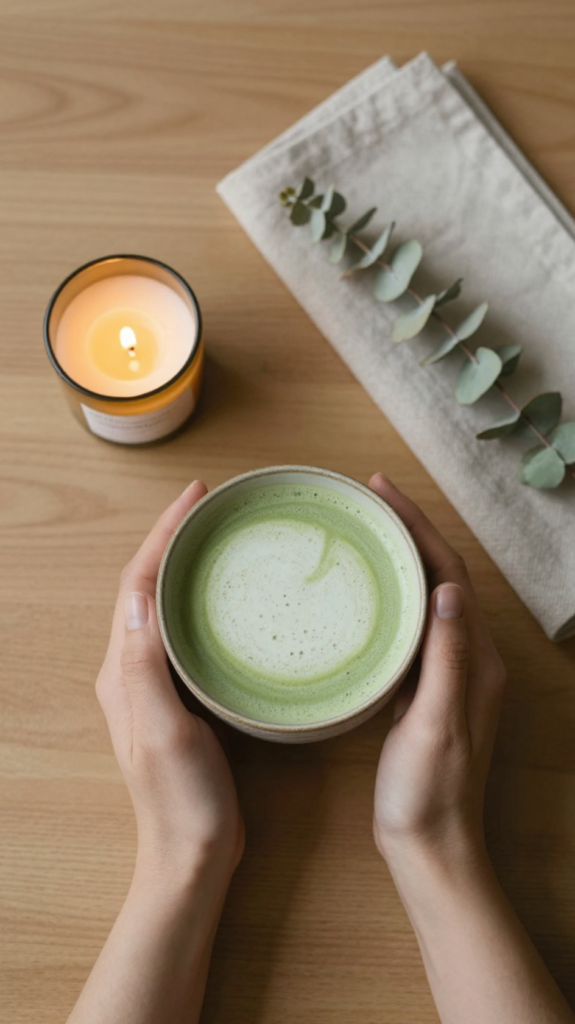
Practicing Rest as a Slow Living Ritual
None of this requires an empty calendar or a week off. Rest, treated as a practice rather than an elite event, tends to look small and manageable:
- It might mean pairing your morning routine with ten unhurried minutes before checking your phone.
- It might mean applying a gentle productivity mindset to your afternoons, permitting yourself to pause between tasks instead of stacking them back-to-back.
- It might simply mean noticing when irritability or mental fog sets in, and treating that as information rather than something to push through.
The goal isn’t to rest perfectly. It’s to stop treating rest as something you constantly have to justify.
A Quieter Kind of Progress
“Rest is not idleness. It is not wasting time. It is the very thing that allows the rest of your life to work.”
There is a particular kind of relief in realizing that slowing down isn’t a detour from a productive life—it is part of how one gets built. The nap, the unhurried morning, the walk with no destination: none of it needs a grand justification beyond the simple fact that your mind and body asked for it.
Rest is productive too. Not despite being restful, but because of it.
Discussion Question:
What’s one form of rest you’ve been putting off, and what would it take to let yourself have it this week? Share your thoughts in the comments below.
Continue the Journey
- Gentle Productivity: Explore how to pursue meaningful goals without the pressure of constant output.
- Slow Morning Routine: Discover how a slower start to the day can change how the rest of it feels.
- Calm Lifestyle Habits: Simple, sustainable habits for building more peace into everyday life.