
“A quiet Sunday is not a day lost. It is a day returned to yourself.”
— NewMorning
Sundays often carry too many expectations. We want to rest, prepare for Monday, clean the house, answer messages, finish unfinished work, and somehow enjoy the final hours of the weekend. By evening, the day that was meant to restore us can feel like another deadline.
A slow Sunday offers a gentler alternative. It is not about doing nothing, following a perfect routine, or turning your home into a carefully styled retreat. It is about creating enough space to notice how you feel, choose what would genuinely support you, and let the weekend end without rushing toward the week ahead.
The purpose is simple: to rest without feeling that the day has disappeared.
What a Slow Sunday Really Means
A slow Sunday is a day shaped by intention rather than urgency. The pace may be quieter, but the deeper difference is how you relate to your time.
Instead of asking, “How much can I finish before Monday?” you begin with a more useful question:
“What would help me feel restored today?”
The answer will not always be sleep or complete stillness. Sometimes restoration looks like preparing a simple meal, taking a long walk, reading for an hour, calling someone you love, or organizing one small area that has been weighing on your mind.
Slow living does not require every moment to be passive. It asks us to stop treating every open hour as something that must be optimized.

This is also what separates a slow Sunday from a rigid Sunday reset routine. A reset usually focuses on preparation. A slow Sunday includes preparation, but it protects rest as part of the day rather than treating it as a reward after everything else is finished.
Begin the Day Without Immediate Input
The first few minutes of Sunday can quietly shape everything that follows.
If the day begins with notifications, news, work messages, or an endless scroll, your attention belongs to other people before you have decided what you need. Try allowing the morning to begin without immediate digital input.
You might:
- Open the curtains before opening an app.
- Prepare coffee or tea without bringing your phone to the table.
- Sit outside for a few minutes.
- Read a chapter instead of checking social media.
- Let the room remain quiet while the day begins.
This does not need to become a strict digital detox. The goal is simply to create a small boundary between waking up and entering the noise of the online world.
If reducing screen time feels difficult, our guide to Digital Slow Living explores how to build a calmer relationship with technology without disconnecting completely.
Create Gentle Distance From Work
Rest becomes difficult when the body has left work but the mind is still there.
Research on recovery consistently points to the importance of psychological detachment: mentally stepping away from work during nonworking hours. A study indexed by PubMed found that exhaustion can make detachment increasingly difficult, while pleasurable leisure experiences may help reduce that pattern.
This does not mean you must avoid every practical thought about Monday. It means giving work a clear boundary.
Try creating a short closing ritual:
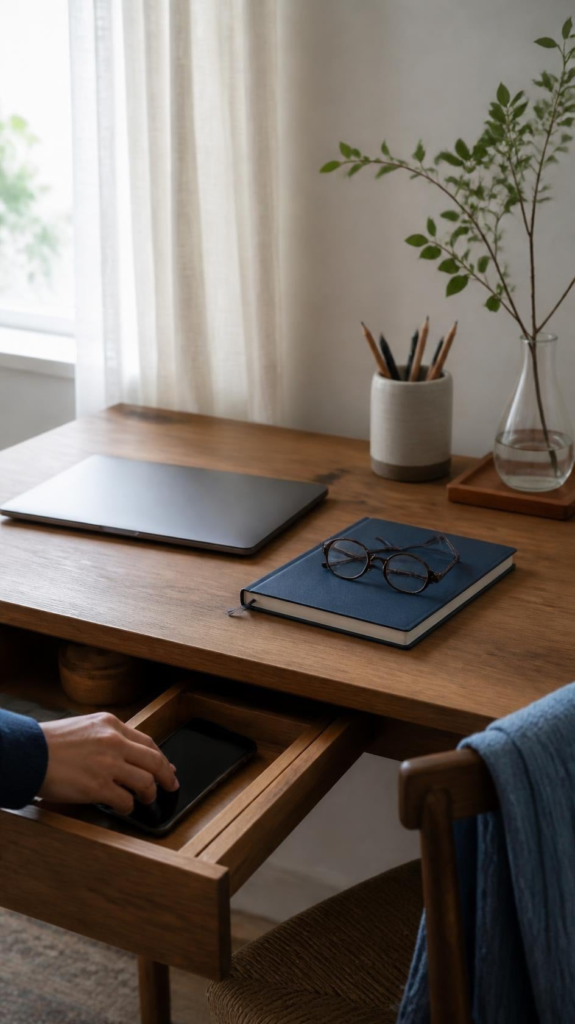
- Write down anything you are afraid you will forget.
- Choose the first important task for Monday.
- Close the notebook or computer.
- Return your attention to Sunday.
Ten intentional minutes of preparation can be more helpful than carrying a vague sense of work throughout the entire day.
If guilt appears when you stop working, remember that rest is productive too. Recovery is not lost time. It is part of sustaining a meaningful life.
Choose One Restorative Anchor
A relaxing Sunday does not need a full schedule. One restorative anchor can give the day enough shape without making it feel controlled.
Choose something that helps you feel present:
- A slow breakfast at the table.
- A morning walk without a destination.
- Time spent gardening or caring for plants.
- A few chapters of a book.
- Cooking something simple from scratch.
- A creative hobby done only for pleasure.
- An afternoon visit with someone who makes you feel at ease.
Gentle movement can be especially grounding after a sedentary week. The World Health Organization notes that regular physical activity supports both physical and mental well-being, and everyday movement such as walking also counts.
The best anchor is not the activity that looks most impressive. It is the one that helps your thoughts settle and allows you to return to your own life.
Let Your Home Support the Pace
Our surroundings quietly tell us how to behave. Bright overhead lights, constant background television, open laptops, and visible piles of unfinished work can make the nervous system feel as though the weekday is still happening.
You do not need to redesign your home for a slow weekend. A few small shifts can change its rhythm:
- Open a window and let fresh air move through the room.
- Use a lamp instead of harsh overhead lighting.
- Clear the table where you want to eat or read.
- Put work materials away, even if only temporarily.
- Play soft music or allow the home to remain quiet.
- Bring a chair closer to natural light.
The goal is not visual perfection. It is to create one or two spaces that support what you want to feel.
A home can hold both unfinished laundry and a peaceful afternoon. Slowness begins when we stop waiting for everything to be complete before allowing ourselves to enjoy where we are.
Make Room for Offline Pleasure
Many weekends disappear into passive screen time. A few minutes of scrolling becomes an hour, and the day feels strangely full yet difficult to remember.
Offline activities create a different experience of time. They ask for enough attention that we become absorbed, but not so much pressure that the activity begins to feel like work.
This might include:
- Baking without trying to perfect the result.
- Working on a puzzle.
- Sketching, knitting, or repairing something by hand.
- Visiting a library or local market.
- Writing a letter.
- Reading somewhere other than your usual chair.
- Taking photographs during a walk without posting them immediately.
These activities do not need to become achievements or side projects. Their value can remain private.
If you need ideas, Slow Hobbies includes peaceful activities that can help you spend less time online while making ordinary free time feel more memorable.
Prepare for Monday Without Giving It the Whole Day
A small amount of preparation can make Sunday evening calmer. The problem begins when preparation expands until it occupies the entire day.
Instead of attempting a complete life reset, choose a short list:
- Check Monday’s schedule.
- Prepare one meal or ingredient.
- Set out what you need for the morning.
- Tidy the room you will enter first.
- Write down three realistic priorities.
Then stop.
Preparation should reduce pressure, not create more of it. If your Sunday reset routine regularly leaves you tired, the routine may be asking too much.
The National Institute of Mental Health recommends setting goals and priorities, deciding what must be done and what can wait, while also making time for relaxing activities such as reading, music, nature, and low-stress hobbies.
A gentle reset leaves room for the evening. It does not consume it.
Protect the Sunday Evening
Sunday evening often carries a quiet shift in mood. Thoughts move toward alarms, schedules, responsibilities, and everything waiting on the other side of sleep.
Rather than fighting that feeling, create a simple transition.
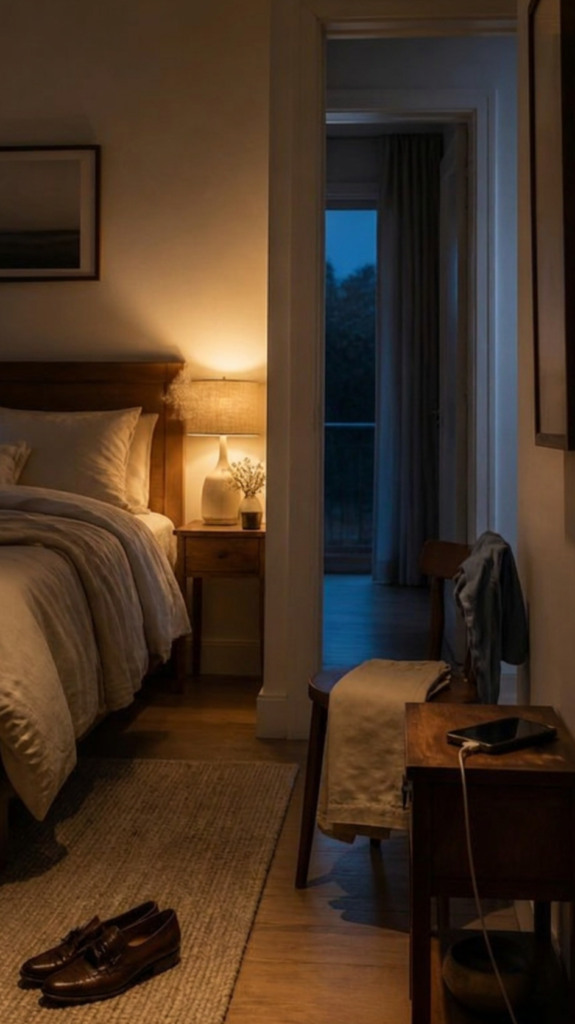
Lower the lights. Put your phone away for a while. Take a warm shower. Read something comforting. Prepare a drink and sit without trying to fill the silence. Let the home signal that the day is closing.
Keeping a relatively consistent sleep schedule can also make Monday feel less abrupt. The CDC’s guidance on healthy sleep recommends going to bed and waking at similar times each day, turning off electronic devices before bed, and keeping the bedroom quiet and relaxing.
The evening does not need to be elaborate. Repeating a few familiar actions can become a quiet message to the body: nothing more is required today.

Create a Slow Sunday Routine That Fits Real Life
There is no single correct slow Sunday routine. Your version should respond to your responsibilities, energy, family, work schedule, and season of life.
A 30-Minute Slow Sunday
For a busy day or a work schedule that includes weekends:
- Spend ten minutes without your phone.
- Make a warm drink and sit down to enjoy it.
- Take a short walk or stretch gently.
- Write Monday’s first priority.
- End with a few pages of a book.
A Slow Sunday Morning
For a few protected hours:
- Wake without checking messages immediately.
- Prepare a simple breakfast.
- Walk, read, or work on a quiet hobby.
- Complete one practical task.
- Leave the rest of the day open.
A Full Slow Sunday
For a day with more flexibility:
- Begin with an unrushed morning.
- Choose one restorative activity outside the home.
- Prepare and enjoy a simple meal.
- Spend part of the afternoon offline.
- Complete a short Monday reset.
- Protect the final hour before bed.
The structure is only a guide. A successful slow Sunday is not one in which every step is completed. It is one that leaves you feeling as though you were present for your own day.
What a Slow Sunday Does Not Need
Slow living can easily become another aesthetic standard. It is worth remembering what the day does not require.
Your slow Sunday does not need:
- A spotless home.
- An expensive brunch.
- A five-step wellness routine.
- A complete digital detox.
- Perfect weather.
- An empty schedule.
- A photogenic morning.
- Permission from productivity culture.
It can happen in a small apartment, during a rainy afternoon, after a difficult week, or within twenty quiet minutes between responsibilities.
The point is not to perform calm. It is to experience a little more of it.
Let the Weekend End Gently
We often think a good weekend must be memorable. It should include plans, progress, beautiful meals, completed projects, or something worth sharing.
But some of the best Sundays leave very little evidence behind.
A cup washed and returned to the shelf. A few pages read. A meal shared. A walk taken slowly. A room becoming darker as evening arrives.
These moments may not look significant, but they restore something that busy days slowly take from us: the ability to inhabit our own time.
A slow Sunday is not about escaping Monday. It is about meeting the new week without abandoning yourself first.
A Simple Slow Sunday Checklist
- [ ] Begin the morning without immediate notifications.
- [ ] Choose one restorative activity.
- [ ] Create a clear boundary around work.
- [ ] Spend part of the day away from screens.
- [ ] Complete only the preparation that genuinely helps.
- [ ] Protect a quiet moment before bed.
Choose two or three. Let the rest remain optional.
Frequently Asked Questions
What is a slow Sunday?
A slow Sunday is an intentionally quieter approach to the final day of the weekend. It prioritizes rest, presence, simple rituals, and gentle preparation rather than filling the day with errands or productivity.
How is a slow Sunday different from a Sunday reset?
A Sunday reset usually focuses on preparing for the week through cleaning, planning, meal preparation, and organization. A slow Sunday may include some of those activities, but it keeps them limited so that rest and enjoyment remain central.
Do I need to stay offline all day?
No. A slow Sunday is not necessarily a digital detox. Try creating a few screen-free periods, especially after waking and before bed, or use technology more intentionally instead of scrolling automatically.
What if Sunday is one of my workdays?
Choose another day or protect a smaller window of time. Slow living is not tied to a particular calendar. Even thirty quiet minutes can become a restorative weekly ritual.
How can I stop feeling guilty when I rest?
Begin by treating recovery as a genuine need rather than something you must earn. Set a clear limit for essential tasks, choose one restful activity, and notice whether you return to your responsibilities with more energy and clarity.
Reader Reflection
What would make this Sunday feel genuinely restorative for you—not productive or perfect, simply restorative?
Continue the Journey
- Slow Hobbies: Peaceful Ways to Spend Less Time Online — Discover quiet, hands-on activities that make offline time feel engaging, creative, and deeply satisfying.
- Digital Slow Living: A Calmer Relationship With Technology — Build healthier boundaries with screens without rejecting the useful role technology plays in everyday life.
- Rest Is Productive Too — Explore why rest supports sustainable energy, attention, and a more humane relationship with productivity.
- Simple Living Moments: Finding Joy in Ordinary Days — Notice the quiet routines and everyday experiences that bring greater meaning to an intentional life.