
“The seasons do not ask us to become someone new. They simply invite us to notice what this moment needs.” — NewMorning
Modern life is remarkably good at making every month feel the same.
We work under the same electric lights, buy much of the same food, maintain similar schedules, and expect our energy to remain consistent throughout the year. A calendar may announce that a new season has arrived, but daily life often continues as if nothing outside the window has changed.
The natural world does not work that way.
Light shifts. Temperatures rise and fall. Rain arrives or disappears. Different foods become abundant. Some evenings invite us outdoors; others make home feel especially protective. Even in places without four dramatic seasons, the year still has patterns: dry and rainy periods, windy months, flowering trees, school holidays, harvests, and subtle changes in daylight.
Seasonal living begins by noticing those patterns.
It does not require moving to the countryside, growing all your food, or decorating the house every few months. It is simply the practice of letting the conditions of the present season influence how you eat, rest, care for your home, spend time outside, and arrange your days.
Instead of demanding the same rhythm all year, seasonal living asks a gentler question:
What does this particular time invite?
What Seasonal Living Really Means
Seasonal living is an intentional way of responding to the recurring changes in the natural and cultural year.
The idea is closely related to slow living because both value attention, quality, and a stronger relationship with place. Slow Living LDN’s introduction to seasonal living describes it as aligning habits with seasonal changes rather than moving through the year disconnected from them.

This alignment can be practical:
- opening the curtains earlier when morning light returns;
- changing the time of an outdoor walk as afternoons become hotter;
- cooking with produce that is currently abundant;
- preparing the home for wetter, colder, or dustier months;
- leaving more room for rest during a demanding season;
- choosing social rituals that suit the weather and available daylight.
It can also be emotional.
Certain parts of the year naturally feel expansive. Others feel quieter or more inward. Seasonal living gives us permission to acknowledge those differences without turning them into rigid rules.
The goal is not to behave like nature in a literal or romanticized way. Human beings still have jobs, appointments, caregiving responsibilities, and school schedules. The goal is to stop treating every environmental change as an inconvenience to overcome and begin asking how we might cooperate with it.
Seasonal Living Is Not a Four-Season Aesthetic
Online, seasonal living is often represented through autumn leaves, winter candles, spring flowers, and summer picnics.
These images can be beautiful, but they tell only one version of the story.
Many places do not experience four sharply defined seasons. In tropical climates, life may be shaped more clearly by rainy and dry periods, changes in humidity, local harvests, flowering cycles, tourism, school calendars, or the hours when heat and rain are most intense.
A seasonal life should begin with the place where you actually live.
Your seasons might include:
- weeks when afternoon rain makes mornings more valuable;
- months when outdoor work is easier before the heat rises;
- a windy period that changes how the home feels;
- the arrival of mangoes, citrus, coffee harvests, or local vegetables;
- a holiday season shaped by family gatherings rather than snow;
- a quieter period after tourism or school activities slow down;
- months when laundry, ventilation, transportation, or gardening require different planning.
Seasonal living is not the performance of someone else’s climate. It is attention to your own.
Your Body Already Notices Changes in Light
Seasonal rhythms are not purely decorative.
Light is one of the strongest environmental signals influencing the human sleep-wake cycle. Research published in Current Biology found that the human circadian clock responds to seasonal differences in natural light-dark cycles, with sleep and biological night shifting after exposure to winter and summer light conditions. The study is available through PubMed Central.
This does not mean everyone should wake at sunrise or reorganize life around sunset. Work schedules, geography, health, and family responsibilities make that unrealistic for many people.
It does mean that light deserves more attention.
The Sleep Foundation’s guidance on healthy sleep notes that daylight exposure—especially earlier in the day—helps support the body’s internal clock. As available daylight changes, small adjustments can make daily routines feel more natural:
- open blinds soon after waking;
- step outside briefly during the brightest part of a dark or rainy day;
- soften indoor lighting as evening arrives;
- move a desk or favorite chair closer to useful natural light;
- notice whether bedtime needs a calmer transition during darker periods;
- use shade, curtains, and ventilation when long bright days make rest difficult.
Seasonal living begins with observation, not optimization. Notice how changing light affects your alertness, sleep, mood, and desire to be indoors or outside. Then make one realistic adjustment.
Start by Creating a Map of Your Own Year
Before changing routines, learn what the year actually looks like where you live.
A seasonal map does not need to be scientific. Take a blank page and divide it into the periods that feel meaningful in your region. You may use four seasons, twelve months, wet and dry periods, school terms, agricultural cycles, or a combination.
For each period, write down:
- typical daylight and weather;
- foods that become abundant or appealing;
- household tasks that become necessary;
- activities you naturally enjoy;
- common pressures or obligations;
- changes in energy and sleep;
- family or community traditions;
- something you tend to miss when the period ends.
This creates a more honest picture than a generic seasonal checklist.
Perhaps the rainy season makes the home feel peaceful but complicates laundry and transportation. Perhaps the hottest months bring long evenings but reduce your energy in the afternoon. Perhaps December feels joyful and socially full, while January creates a need for simplicity and quiet.
Your map is not a schedule you must obey. It is a record of recurring conditions you can prepare for with more care.
Let the Home Respond Gently
A seasonally responsive home does not need a complete visual transformation.
The most useful changes are often functional:
- placing a drying rack where it is easy to use during wet months;
- cleaning screens and improving airflow before hotter weather;
- keeping a light blanket available when evenings become cooler;
- moving a chair toward changing daylight;
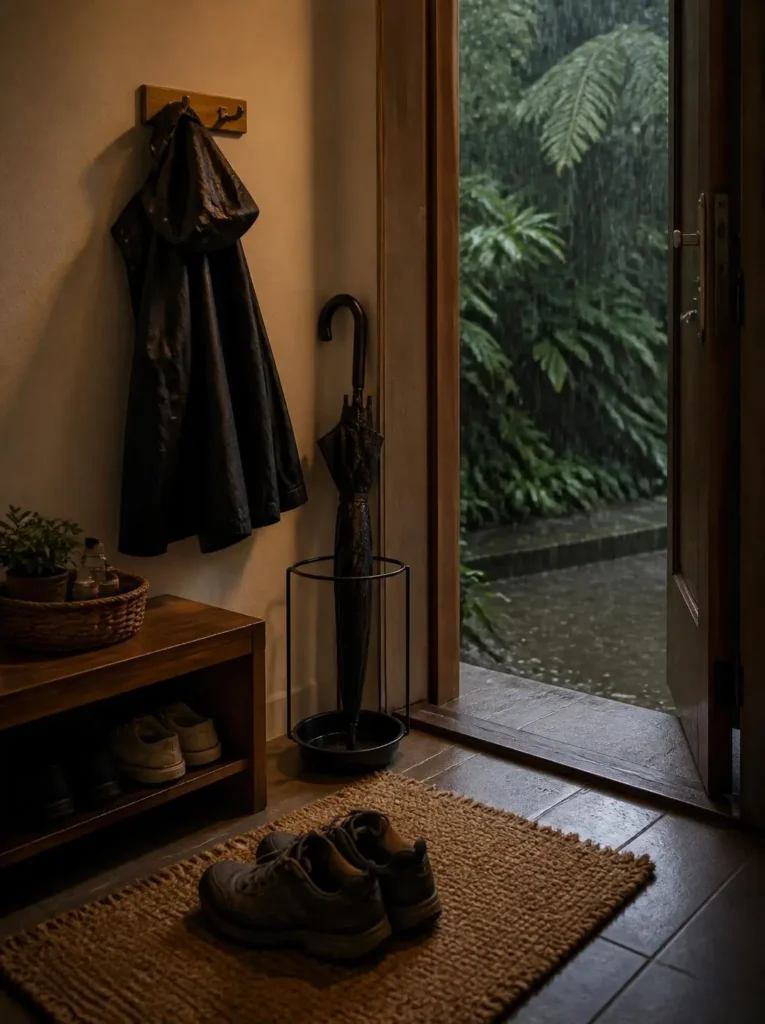
- creating a practical place for muddy shoes, umbrellas, hats, or outdoor equipment;
- rotating only the textiles that genuinely improve comfort;
- adjusting fans, curtains, lamps, and bedding before discomfort becomes constant.
These small changes help the home support the season instead of fighting it.
They also fit naturally with The Art of a Cozy Home, where comfort comes from daily usefulness and personal rituals rather than constant renovation.
Seasonal objects can still bring pleasure. A branch from the garden, flowers currently blooming, a bowl of local fruit, or a textile associated with a family tradition may help us notice the time of year. The difference is intention: the home reflects the season without becoming another shopping project.

Eat With the Season Without Becoming Rigid
Food is one of the easiest ways to experience the year.
Seasonal eating can mean choosing produce that is locally abundant, changing cooking methods with the weather, or returning to dishes connected with particular family and cultural moments. It does not require purity.
A warmer period may invite fresh fruit, quick meals, cold drinks, and food that requires less time near a stove. Rainy or cooler evenings may make soups, roasted ingredients, warm breakfasts, or shared baking feel more appealing.
The global Slow Food movement has long emphasized food traditions, biodiversity, local knowledge, and the relationship between what we eat and where it comes from. Seasonal living brings a small part of that awareness into an ordinary kitchen.
Try asking:
- What is especially good or affordable right now?
- Which ingredient appears briefly and deserves attention?
- What meal belongs to this time of year in my family?
- Does the current weather call for simpler preparation?
- Is there one food I could preserve, freeze, share, or enjoy before its season passes?
You can still use frozen vegetables, canned food, imported ingredients, and convenient meals. Seasonal eating is an invitation to notice abundance, not a moral test.
Change the Rhythm, Not Every Responsibility
One of the most meaningful parts of seasonal living is allowing routines to breathe.
The same morning routine may not fit every month. The same exercise time may become uncomfortable as temperatures change. A creative project that feels natural during a quieter period may be difficult during a socially full season.
Instead of abandoning structure, create a stable core with a flexible edge.
The core might include:
- a consistent waking range;
- regular meals;
- necessary work and caregiving;
- basic movement;
- enough sleep;
- a small practice that helps you feel grounded.
The flexible edge can change:
- when you go outside;
- which room you use most;
- how elaborate meals become;
- what kind of movement feels supportive;
- whether evenings are social or quiet;
- how much creative work you attempt;
- which household tasks deserve attention.
This approach prevents seasonal living from becoming another complete lifestyle reset.
How to Slow Down in Life When Your Days Still Feel Busy uses the same principle: meaningful change often begins inside existing responsibilities, not after they disappear.
Respect Seasonal Energy Without Turning It Into a Rule
People often describe summer as energetic and winter as restful. That pattern may feel true for some, but it is not universal.
A person may feel exhausted during a hot summer, socially overwhelmed during December, or deeply creative during long rainy afternoons. Work deadlines, health, finances, caregiving, and personal history influence energy as much as weather does.
Use the season as information, not instruction.
At the beginning of each new period, ask:
- What usually requires more effort now?
- What becomes easier?
- When do I have the clearest energy?
- Which obligations increase?
- What kind of rest actually helps?
- What can be prepared before the difficult part arrives?
If afternoons become draining, move focused work earlier when possible. If darker evenings make you sleepy, create a simpler nighttime routine. If a festive season becomes crowded, protect one evening each week from plans.
Seasonal living should reduce friction. It should never shame you for having a different rhythm from the one shown online.
Create Rituals That Help You Notice Time
Without small markers, one month can blur into the next.
A seasonal ritual gives time a shape. It does not need to be elaborate or photogenic. Its purpose is to help you arrive in the season consciously.
You might:
- take the same neighborhood walk at the beginning of each new period;
- prepare the first meal associated with that season;
- clean and reorganize one practical area of the home;
- write down what you want to protect during the coming months;
- visit a market and notice what has changed;
- photograph the view from the same window;
- invite someone for a simple recurring meal;
- choose one offline activity suited to the weather;
- repair or prepare something before it is needed.
Rituals become meaningful through repetition. The first rainy afternoon spent making the home comfortable can become a quiet threshold. So can the first morning warm enough to open every window.
These moments remind us that time is not only something measured by deadlines. It is something experienced through return.
Make Transitions Part of the Practice
Seasons rarely change neatly on the first day printed in a calendar.
There are mixed weeks: a warm day followed by rain, a dry morning interrupted by a storm, an early sunset that arrives before we feel ready. Our routines may take time to catch up.
Instead of demanding an instant transition, create a short period of adjustment.

During that week:
- review the seasonal map you made;
- prepare one useful part of the home;
- change one routine affected by light or weather;
- plan two or three appropriate meals;
- decide which commitment needs more margin;
- choose one ritual to welcome the new period;
- put away only what you are confident you will not need.
A gradual transition respects reality. It also reduces the urge to buy a completely new version of the season.
Seasonal Living Can Include Digital Seasons
Not every season is created by weather.
Life also contains personal seasons: a demanding work period, recovery after illness, caregiving, study, travel, grief, creative expansion, financial rebuilding, or the arrival of a new relationship.
These experiences change capacity and attention.
A digital season may require similar honesty. During a busy project, technology may need to become highly practical and structured. During rest, you may want fewer notifications and more offline time. During travel, the phone may be essential; at home, it may be easier to leave it in another room.
Digital Slow Living offers ways to make technology serve the phase you are in instead of setting the rhythm for every phase.
The useful question remains the same:
What does this season require—and what can it release?
Do Not Turn Every Season Into a Shopping Event
Modern marketing treats each season as a reason to replace what we own.
There are new colors, new collections, new storage systems, new table settings, and new objects designed to make the season look complete. Even slow living can become a cycle of rapid consumption dressed in natural materials.
Before buying something seasonal, ask:
- Do I already own something that serves this purpose?
- Is the need practical or primarily visual?
- Will I use it for several years?
- Can I borrow, repair, rearrange, or make do?
- Is storage becoming a burden?
- Would an experience or ritual help me notice the season more than an object?
A seasonal home should feel alive, not overmanaged.
Use what you have first. Rotate a few useful things. Bring in elements that can return to the earth, be eaten, or be enjoyed without long-term storage. Let the season be visible through light, weather, food, and everyday activity—not only through purchases.
A Simple Seasonal Reset
If you want a practical beginning, set aside thirty quiet minutes at the start of the next noticeable change.
Notice
Look outside and around the home. What has changed in light, temperature, rain, wind, vegetation, schedules, or food?
Name
Choose three words for the period ahead. They might be open, social, light or protected, steady, restorative.
Prepare
Make one functional change to the home. Clean a fan, ready an umbrella, move a chair, change the bedding, or clear an entryway.
Adjust
Change one part of the daily rhythm: the timing of a walk, the evening lighting, meal preparation, or a weekend activity.
Choose
Select one ritual you want to repeat while this season lasts.
Release
Decide what expectation, commitment, or unnecessary purchase does not need to come with you.
This is enough. Seasonal living grows through observation over several years, not through completing a perfect checklist once.

Let the Year Have Texture Again
Seasonal living is ultimately a practice of attention.
It helps us remember that life is not meant to feel identical every month. There are times for openness and times for protection, periods of abundance and periods of simplicity, weeks that invite movement and evenings that ask us to stay close to home.
We do not have to romanticize every kind of weather. We do not have to enjoy every holiday or become productive according to nature’s calendar. We only need to notice where cooperation might feel better than resistance.
Open the window when the air changes.
Prepare for the rain before it arrives.
Eat the fruit that will not be here forever.
Move a daily ritual toward the available light.
Let one demanding season become simpler rather than more impressive.
The year is already changing around us. Seasonal living is the choice to be present while it does.
Reader Reflection
What tells you that a new season has arrived where you live—and what small change would help your daily rhythm respond to it?
Choose one signal and one adjustment. Let that be your beginning.
Frequently Asked Questions
What is seasonal living?
Seasonal living is the practice of adapting parts of everyday life—such as food, home care, rest, outdoor time, and routines—to changes in weather, daylight, local abundance, and cultural rhythms throughout the year.
Is seasonal living the same as slow living?
They are closely related but not identical. Slow living is a broader philosophy about pace, attention, and quality. Seasonal living applies those values specifically to the recurring changes of the year and the place where you live.
Can I practice seasonal living in a tropical climate?
Yes. Seasonal living does not require spring, summer, autumn, and winter. You can follow rainy and dry periods, temperature and humidity changes, local harvests, flowering cycles, school calendars, holidays, and other rhythms that shape your region.
Do I need to eat only seasonal food?
No. Seasonal eating can simply mean noticing and enjoying ingredients that are locally abundant while continuing to use frozen, canned, imported, and convenient foods when they support your life.
How can I make my home feel more seasonal without buying decor?
Respond functionally: adjust bedding, ventilation, curtains, lighting, entryway storage, drying space, or furniture placement. You can also use flowers, branches, fruit, or objects you already own to mark the season.
Does seasonal living mean changing my entire routine?
No. Keep a stable core of sleep, meals, responsibilities, and basic care. Adjust only the flexible parts affected by light, weather, energy, or current obligations.
What if I do not enjoy a particular season?
You do not need to romanticize it. Identify what makes the period difficult, prepare for those challenges, and create one supportive ritual. Seasonal living is about responding honestly, not forcing gratitude.
How do I begin living more seasonally?
Observe the place where you live, create a simple map of the year, and choose one change in your home or routine. Start small and let your understanding develop through repeated observation.
Continue the Journey
- How to Slow Down in Life When Your Days Still Feel Busy: Create realistic breathing room inside an ordinary schedule rather than waiting for responsibilities to disappear.
- Digital Slow Living: Build a calmer relationship with technology and protect your attention through changing periods of life.
- Simple Living Moments: Discover how everyday moments can make life feel more grounded without requiring a complete reinvention.
- The Art of a Cozy Home: Create a home that responds to comfort, daily rituals, and the life you actually live.