
“A quieter life is not empty. It is spacious enough for the sounds, people, and moments that matter to be heard.” — NewMorning
There are days when life feels loud before anyone has spoken.
The alarm becomes a podcast. Breakfast happens beside notifications. Traffic, appliances, messages, music, headlines, videos, open browser tabs, unfinished tasks, and other people’s urgency continue to gather until silence begins to feel unfamiliar.
Not all of this noise is measured in decibels.
Some of it is visual: surfaces crowded with things asking to be handled. Some is digital: a steady stream of information with no natural ending. Some is social: the pressure to remain reachable, informed, responsive, and available. Some is internal: every quiet moment immediately filled with planning, comparison, or worry.
Quiet living is a response to that accumulation.
It does not require living alone, moving somewhere remote, or removing music and conversation from your life. It means becoming more selective about the sounds, inputs, obligations, and forms of urgency allowed to shape an ordinary day.
The aim is not perfect silence.
The aim is enough space to hear your own life again.
What Quiet Living Really Means
Quiet living is an intentional approach to reducing unnecessary stimulation while protecting meaningful connection, activity, and sound.
It belongs naturally beside slow living, but the two ideas are not identical. Slow living asks whether the pace of life supports attention and quality. Quiet living asks whether the volume of life—physical, digital, visual, and emotional—leaves enough room to think, rest, and be present.
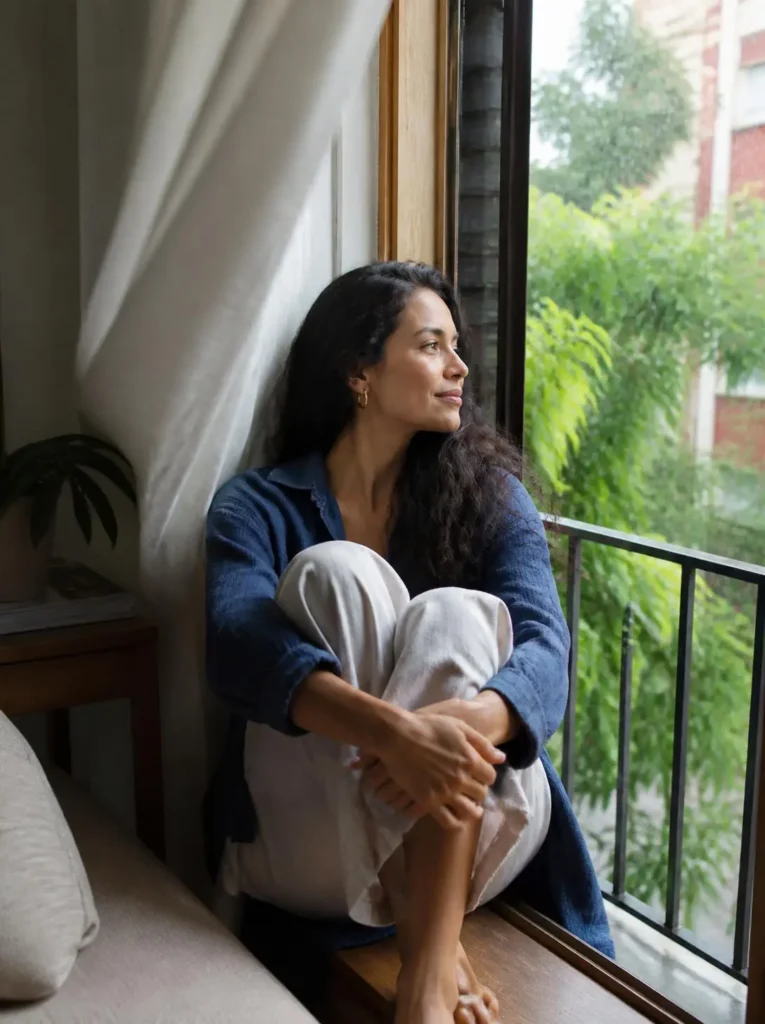
A quiet life may include:
- mornings that do not begin with immediate media;
- periods without background audio;
- fewer notifications and interruptions;
- a home arranged to feel usable rather than visually demanding;
- relationships that do not depend on constant access;
- work completed with fewer competing inputs;
- walks where the surrounding place can be heard;
- evenings that gradually become calmer;
- conversations given full attention.
None of these choices is dramatic. Their value comes from repetition.
Quiet living is not a personality type reserved for introverts. Extroverted people also need recovery from stimulation. Families can practice it without expecting children to remain silent. People living in cities can create pockets of calm without pretending traffic does not exist.
It is not about making life smaller. It is about making attention less scattered.
Physical Noise Is More Than an Annoyance
Some noise is simply inconvenient. Excessive or continuous environmental noise is also a public-health concern.
The World Health Organization’s guidance on environmental noise links excessive exposure with sleep disturbance, annoyance, hearing effects, cognitive impairment, hypertension, and other health risks. Common sources include road, rail and air traffic, construction, industry, and loud leisure activities.
Many people cannot simply remove themselves from these conditions. Housing costs, work, infrastructure, neighborhood design, and unequal access to quieter areas shape exposure. Quiet living should never turn a structural problem into a personal failure.
Still, small protections can improve the parts of the soundscape within your influence:
- identify the loudest recurring times and activities;
- close a door during focused work;
- use soft furnishings already in the home to reduce echo;
- place noisy appliances away from rest or work areas when possible;
- repair rattling fans, loose fixtures, or doors that slam;
- choose quieter hours for tasks you control;
- lower personal audio instead of competing with surrounding noise;
- protect sleep from avoidable household sound.
If noise is loud enough to require shouting, causes ringing in the ears, or regularly disrupts sleep, it deserves more than lifestyle advice. The WHO’s safe-listening guidance explains how volume, duration, and frequency of exposure all affect hearing risk.
A quieter lifestyle begins with care, not perfection.
Learn the Difference Between Sound and Noise
Quiet living does not treat every sound as a problem.
A neighbor laughing, a child playing, rain on a roof, birds at dawn, food cooking, someone practicing music, and the familiar activity of a household all carry meaning. A completely silent home can feel less alive than one with gentle, recognizable sounds.
Noise is often sound that is unwanted, intrusive, excessive, or competing with what deserves attention.
This distinction helps us make better choices.
Instead of asking, “How can I make everything silent?” ask:
- Which sounds help me feel grounded?
- Which ones repeatedly interrupt rest or concentration?
- What do I play automatically rather than intentionally?
- Which sounds tell me something useful about my home or neighborhood?
- When does background audio support an activity, and when does it prevent thought?
The U.S. National Park Service treats natural soundscapes as resources worth protecting. Its overview of why sounds matter notes that natural sounds are associated with lower stress and improvements in mood, cognition, and social well-being.
Quiet is not always the absence of sound. Sometimes it is the return of sounds that were being covered.

Notice How Often You Add Background Noise
Many people rarely experience an activity without accompaniment.
Music plays while cleaning. A video plays during meals. A podcast fills the walk. Television remains on while no one watches. The phone enters every pause.
None of these habits is inherently wrong. Audio can bring pleasure, company, education, and energy. The question is whether it is chosen.
Try observing one day:
- When do you turn something on automatically?
- Which activities genuinely become better with audio?
- When does sound make it harder to finish or remember something?
- Do you select what to hear, or accept whatever a platform serves next?
- Which quiet moments feel uncomfortable?
Then reclaim one activity from background noise.
Wash dishes without playing anything. Drive one familiar route without a podcast. Eat breakfast before opening a video. Fold laundry while listening to the room. Take a short walk without headphones.
The first minutes may feel strangely empty. Stay long enough to notice what replaces the input: thoughts, environmental sounds, bodily sensations, or simply less effort.
This is not deprivation. It is a way of restoring choice.
Reduce Digital Noise at Its Source
Digital noise is difficult because it is designed to continue.
There is always another message, headline, recommendation, short video, comment, or update. Even useful information becomes exhausting when it arrives without boundaries.
Digital Slow Living explores this relationship in depth. For quiet living, begin by reducing the number of things that can interrupt you:
- disable notifications that do not require immediate action;
- remove news and social apps from the first screen;
- leave group chats that no longer serve a purpose;
- choose specific times to check email or messages;
- unsubscribe from recurring content you routinely ignore;
- keep one room, chair, or meal free from scrolling;
- allow videos and music to end instead of autoplaying indefinitely;
- use one device at a time.
The goal is not digital purity. A phone can support work, navigation, friendship, creativity, and safety. Quiet living simply refuses to give every app permission to enter every moment.
A useful boundary is to decide what the phone is for before unlocking it. Complete that action, then put it down. This small pause interrupts the habit of entering for one reason and emerging twenty minutes later carrying five new concerns.
Give Your Eyes Somewhere to Rest
Visual noise can make a home feel busy even when it is physically quiet.
This does not mean every surface must be empty or that personal objects should disappear. A lived-in home contains evidence of life: tools, clothing, projects, family items, useful furniture, and things with emotional value.
The problem is not fullness alone. It is the feeling that everything visible represents a task or decision.
Choose one small visual-rest area:
- a clear section of the kitchen counter;
- the top of a bedside table;
- the wall facing your work chair;
- the entrance where you first arrive home;
- one corner used for reading or rest.
Remove only what does not belong there. Group the objects that remain. Give unfinished tasks a defined place instead of allowing them to spread across the room.
Warm Minimalism offers a helpful middle ground: simplicity that still feels personal and lived in. Quiet living does not ask your home to look empty. It asks the space to stop shouting instructions from every direction.
Create One Quiet Transition
A noisy day often follows us home because nothing marks the change.
We finish work and immediately begin chores. We leave traffic and open social media. We move from caregiving into administration without a pause. The body arrives in a new place while the mind remains inside the previous demand.
Create a transition of five to fifteen minutes.
It might be:
- changing clothes before checking messages;
- washing your face and hands slowly;
- sitting near an open window;
- walking once around the block;
- stretching without a video;
- preparing a simple drink in silence;
- putting away work materials before entering the evening;
- dimming one lamp as the day changes.
The activity matters less than its consistency.
A quiet transition tells the nervous system that one mode has ended. It also prevents rest from beginning only after every household task is complete.
How to Slow Down in Life When Your Days Still Feel Busy uses the same realistic principle: a slower life is often built through transitions and margins, not through removing every responsibility.
Protect Quiet Without Demanding It From Everyone
Shared homes are rarely silent.
Partners have different schedules. Children play. Relatives call. Someone cooks while another works. Pets, appliances, visitors, and ordinary movement create sound.
Quiet living in a shared space requires cooperation rather than control.
Try practical agreements:
- establish one or two predictable quiet periods;
- use headphones thoughtfully rather than making everyone hear the same content;
- warn others before a loud household task;
- keep calls away from sleeping areas when possible;
- create a visual signal for focused work;
- rotate access to the calmest room;
- discuss sleep needs directly;
- allow reasonable everyday sound outside protected times.
A peaceful home is not one where everyone fears making noise. It is one where different needs can be expressed and considered.
Sometimes connection itself creates calm: preparing food together, sitting nearby while doing separate activities, or having a conversation without television underneath it. Quiet living can be shared.
Quiet Is Not the Same as Isolation
A desire for less stimulation can easily be confused with withdrawing from people.
Chosen solitude can be restorative. Social isolation and loneliness are different matters. An NIH overview of social connection explains that some people may enjoy solitude without feeling lonely, while others can feel lonely even when surrounded by people. It also emphasizes the importance of social bonds for physical and mental health.
Quiet living should improve the quality of connection, not eliminate it.
You might prefer:
- one thoughtful conversation over a crowded event;
- a walk with a friend instead of a noisy venue;
- a shared meal without phones;
- a small recurring group;
- time alone followed by intentional contact;
- reading beside someone without needing constant conversation.
If quiet becomes a reason to avoid every invitation, stop answering people, or remain alone despite feeling distressed, the issue is no longer simply overstimulation.
The healthiest version of a quiet life contains both solitude and belonging.

Lower the Volume of Social Obligation
Some noise comes from expectations rather than sound.
There are messages that seem to require instant replies, invitations accepted from guilt, conversations continued after energy is gone, and the pressure to know what everyone is doing.
Quiet living includes clearer limits:
- “I will reply tomorrow.”
- “I cannot make it this week.”
- “I have about twenty minutes.”
- “I am keeping tonight free.”
- “I would rather meet somewhere quieter.”
- “I need time to think before answering.”
These are not rejections of people. They are ways of protecting the attention needed to meet others honestly.
A calendar with no margin creates emotional noise long before the event begins. Leave some evenings undesignated. Avoid scheduling every weekend in advance. Let one relationship be maintained through a simple recurring ritual rather than constant messaging.
A quieter social life can still be warm, generous, and connected.
Let Work Contain Fewer Competing Inputs
Quiet work is not necessarily slow work.
It is work with fewer unnecessary switches.
When possible:
- close tabs unrelated to the current task;
- place the phone beyond immediate reach;
- define the next visible action;
- work in a single document or window;
- keep a small note for thoughts that belong later;
- batch routine replies;
- choose sound intentionally;
- stop at a clear point instead of carrying every task mentally.
This is not about achieving perfect focus for hours. Even twenty uninterrupted minutes can feel different from twenty minutes divided among five inputs.
Quiet living should not turn productivity into another obsession. The aim is to finish necessary work with less mental residue so more of the day remains available for life.
Make Room for Quiet Pleasure
Quiet living can sound overly serious if it is described only through reduction.
Its purpose is also to make subtle pleasures easier to notice:
- rain beginning in another room;
- fresh air after a hot afternoon;
- the sound of vegetables being chopped;
- a familiar song heard with full attention;
- a cat settling nearby;
- conversation that does not compete with a screen;
- evening light moving across the wall;
- finishing one thing before beginning another;
- the relief of no one needing an immediate answer.

These moments already exist. Constant input makes them easier to miss.
Slow Hobbies can help create this kind of absorbed quiet through drawing, gardening, puzzles, handwork, walking, or other activities that do not demand continuous digital stimulation.
A quiet life is not a life without excitement. It is a life in which excitement is no longer required every minute.
Build a Quiet Evening Without Making It Perfect
Evenings are a natural place to lower the volume, but they often become a second shift of chores, media, and unfinished communication.
Choose three simple signals:
Close
End one channel of input: work email, news, social media, or television.
Soften
Lower the lighting, volume, or pace of one activity.
Prepare
Complete one small task that makes tomorrow easier.
After that, let the evening remain ordinary.
You do not need an elaborate routine. The existing guide to Nighttime Rituals offers a fuller screen-free structure, but quiet living can begin with only ten minutes before bed when nothing new is allowed to enter.
No new headlines. No new arguments. No new task list.
Let the day become smaller before sleep.
A Seven-Day Quiet Living Experiment
You do not need to redesign your life. Try one change each day and notice what genuinely helps.
Day One: Listen
Spend ten minutes without adding audio. Identify the sounds already present.
Day Two: Silence One Notification
Choose the interruption that creates the least value and turn it off.
Day Three: Clear One Resting Place
Create a small area where your eyes are not met by unfinished tasks.
Day Four: Protect One Transition
Leave five minutes between work, errands, caregiving, or social activity and what follows.
Day Five: Choose Quiet Company
Share a walk, meal, or room with someone without constant media.
Day Six: Find a Natural Soundscape
Visit a garden, park, quiet street, balcony, or open window and listen to the place.
Day Seven: Keep What Worked
Do not preserve the entire experiment. Choose one practice that made the day feel more spacious.
Quiet living becomes sustainable when it removes effort rather than adding another demanding routine.
A Quieter Life Is Still a Full Life
Quiet living is not an escape from responsibility, community, ambition, or joy.
It is a way of deciding what deserves to be loud.
Some moments should be energetic. Music can fill a room. Friends can laugh across a table. Children can play. Celebrations can be exuberant. Important conversations may be uncomfortable. Work can require urgency.
A quiet life makes room for those experiences because everything else is not competing at the same volume.
It reduces the background hum of automatic media, scattered attention, visual reminders, unnecessary availability, and constant anticipation. What remains can be experienced more fully.
Begin with one silence you choose.
One notification that no longer enters.
One room allowed to settle.
One conversation that receives your complete attention.
The world may not become quieter. But your relationship with its volume can become more intentional.

Reader Reflection
Which kind of noise is taking the most from you right now: physical, digital, visual, social, or internal?
Choose one source and reduce it slightly this week—not to create perfect peace, but to make room for something you want to hear.
Frequently Asked Questions
What is quiet living?
Quiet living is an intentional lifestyle that reduces unnecessary physical, digital, visual, and social noise so that attention, rest, relationships, and everyday experiences have more space.
Is quiet living the same as slow living?
They overlap but are not identical. Slow living focuses mainly on pace, attention, and quality. Quiet living focuses on reducing excessive stimulation and choosing more carefully what receives access to your senses and attention.
Do I need to live in the countryside to practice quiet living?
No. Quiet living can be practiced in cities, apartments, family homes, and busy neighborhoods. Focus on the inputs and routines you can influence rather than expecting total environmental silence.
Is quiet living only for introverts?
No. People with different personalities need periods of lower stimulation. Extroverted people can enjoy active social lives while still protecting quiet transitions, focused work, sleep, and intentional time without media.
How can I reduce noise in a shared home?
Agree on predictable quiet periods, place calls away from sleeping areas, use headphones considerately, warn others before loud tasks, and protect one small space or time for focused work or rest.
Is quiet living the same as being alone?
No. Solitude can be part of quiet living, but meaningful social connection remains important. A quiet life can include close relationships, small gatherings, shared activities, and attentive conversation.
How do I reduce digital noise?
Disable nonessential notifications, check messages at chosen times, stop autoplay, remove distracting apps from the first screen, and create one phone-free meal, chair, or room.
What is the easiest way to begin quiet living?
Choose one activity you normally fill with background audio and do it quietly once. Notice whether the absence of added sound improves attention, calm, or enjoyment.
Continue the Journey
- Digital Slow Living: Reduce digital overload while keeping the technology that genuinely supports your everyday life.
- How to Slow Down in Life When Your Days Still Feel Busy: Create realistic breathing room without waiting for every responsibility to disappear.
- Slow Hobbies: Find absorbing offline activities that make quieter time feel meaningful rather than empty.
- Quiet Reading Nights: Turn an ordinary evening into a calmer reading ritual with fewer competing inputs.