
“Night does not need to be filled. Sometimes it only needs to be allowed to arrive.”
— NewMorning
The day may be technically over, yet our attention often remains scattered across messages, unfinished tasks, videos, headlines, and everything we meant to do. We sit down to rest with a phone in our hands and discover that the evening has disappeared without ever feeling restful.
Thoughtful nighttime rituals create a different ending. They help us move from activity into quiet, from public life into private life, and from constant input toward something slower. A screen-free evening routine does not have to reject technology or begin at an exact hour. It only needs to create a clear moment when the day stops asking for more.
The goal is not a perfect bedtime. It is a gentler transition.
Why Evenings Can Feel So Unfinished
Modern evenings rarely arrive with a natural stopping point.
Work follows us home through email. Entertainment continues automatically from one episode or video to the next. Social media offers an endless stream without a final page. Even when the body is tired, the mind receives constant signals to keep looking, responding, and deciding.
Screens are not the only reason an evening feels restless, but they can make it harder to notice when enough is enough. A large 2025 study of more than 122,000 adults found that daily screen use before bed was associated with later bedtimes, shorter sleep, and a higher prevalence of poor sleep quality. Because the study was observational, it does not prove that screens caused every difference, but it strengthens the case for creating a little distance between digital activity and sleep. You can read the study through PubMed Central.
A calm evening routine gives the day an edge. It offers a place to stop.
What Nighttime Rituals Actually Do
A habit is something we repeat. A ritual is something we repeat with attention.
Brushing your teeth may be a habit. Lowering the lights, putting your phone away, washing your face, and preparing the room in the same quiet order can become a ritual because the sequence carries meaning. It tells you that work is finished, the outside world can wait, and rest is approaching.
Effective nighttime rituals are usually:
- Simple enough to repeat.
- Flexible enough for real life.
- Pleasant rather than punitive.
- Connected to a clear transition.
- Focused on how the evening feels, not how it looks.

You do not need candles, expensive products, or an elaborate wellness routine. Familiar actions are powerful precisely because they require very little decision-making.
Choose a Clear Beginning for the Evening
Many routines fail because they never truly begin. We plan to use our phones less “later,” but later keeps moving.
Choose one ordinary action to become your transition:
- Finishing the evening dishes.
- Changing into comfortable clothes.
- Turning off the main overhead lights.
- Closing your laptop.
- Taking a shower.
- Setting an alarm that means “the day is winding down.”
This moment does not need to happen at the same minute every night. Its purpose is to separate the active part of the evening from the quieter part.
Once the transition happens, avoid beginning new work unless it is genuinely necessary. Write the task down for tomorrow instead. The ritual becomes easier when the mind trusts that unfinished thoughts have somewhere safe to wait.
Create a Realistic Screen-Free Boundary
A screen-free evening does not need to last three hours. Start with a boundary you can actually keep.
The CDC recommends turning off electronic devices at least 30 minutes before bedtime. That half hour is a practical starting point, not a test you either pass or fail.
You could begin with:
- The final 20 minutes before bed.
- The time between your shower and sleep.
- One phone-free hour after dinner.
- A screen-free bedroom.
- Two evenings each week rather than every night.
Consistency matters more than ambition. A short boundary repeated often will shape the evening more effectively than a strict digital detox abandoned after two days.
This practice also extends the ideas in Digital Slow Living: technology remains useful, but it no longer receives every unclaimed moment.
Give Your Phone a Physical Home
Willpower becomes less important when the environment supports the decision.
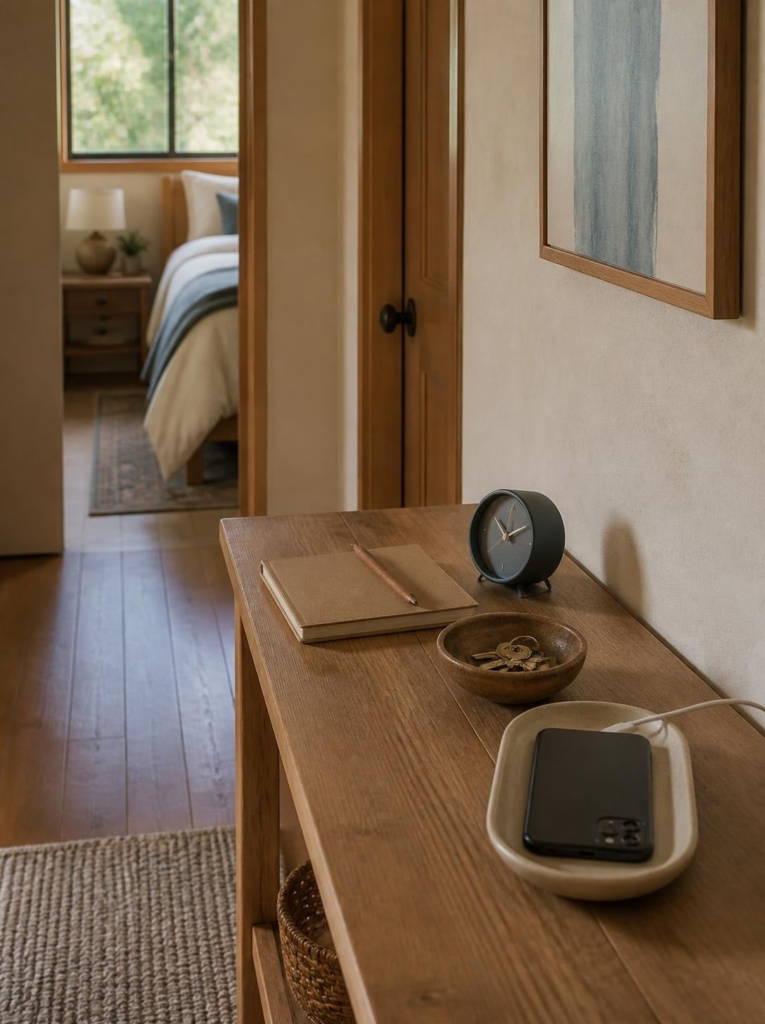
Instead of placing your phone on the bedside table, choose a clear resting place:
- A small tray near the entrance.
- A drawer in the living room.
- A charging station outside the bedroom.
- A shelf across the room.
- A basket where household devices rest overnight.
The location should be practical enough that you will use it. If you need the phone as an alarm, place it far enough away that checking it requires a deliberate choice, or consider a simple alarm clock.
You can also make the boundary visible by adding a small analog object beside the charging place: a notebook, a paperback, a deck of cards, or the project connected to one of your slow hobbies.
The aim is not to hide technology because it is bad. It is to stop keeping an entire digital world within reach of the pillow.
Let the Lighting Change Before Bed
Light is one of the clearest ways a home communicates time.
Bright overhead lighting keeps a room feeling active. Softer lamps create a more gradual transition. The National Heart, Lung, and Blood Institute recommends using the hour before bed for quiet time and avoiding bright artificial light from televisions and computer screens.
Try changing the atmosphere in stages:
- Turn off the brightest ceiling lights.
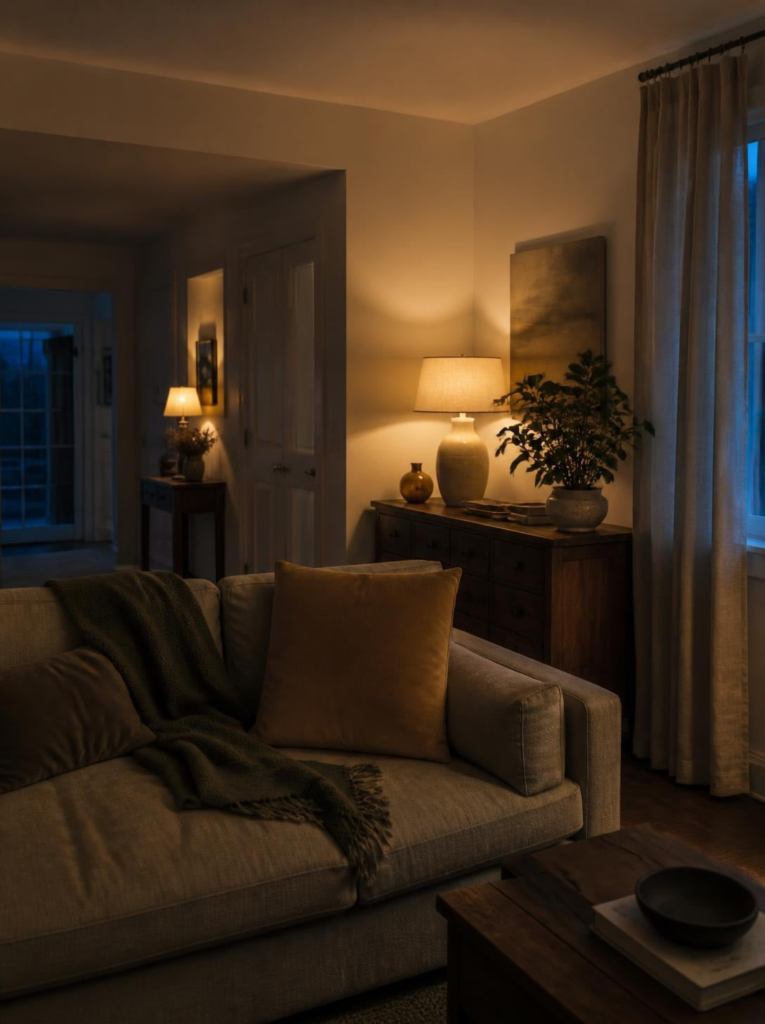
- Use one or two warm lamps.
- Reduce unnecessary light in hallways and unused rooms.
- Close curtains and allow the room to become visually quieter.
- Keep the bedroom cool, dark, and uncluttered enough to feel restful.
You do not need to make the home dim too early. The lighting should help you function safely while gently signaling that the day is closing.
This is one reason warm lighting appears so often in cozy homes: it does more than decorate a room. It changes the pace of the space.
Replace Scrolling With One Analog Anchor
Removing a habit leaves an empty space. If nothing replaces scrolling, the phone will usually return.
Choose one analog anchor that is easy to begin and easy to stop:
- Read a few pages.
- Stretch slowly on the floor.
- Work on a puzzle.
- Knit, sketch, or mend something.
- Listen to an album without opening other apps.
- Prepare clothes or breakfast items for the morning.
- Sit with someone and talk without a second screen nearby.
The activity does not need to be useful. In fact, something enjoyable and low-pressure may be more restorative than another task disguised as self-care.
Reading works especially well because it gives attention somewhere to settle without demanding constant decisions. Quiet Reading Nights explores how books, lighting, and small rituals can turn an ordinary evening into a peaceful reading practice.
Close Mental Loops on Paper
Sometimes the phone is not what keeps the mind active. The real problem is the collection of unfinished thoughts behind it.
Before putting your notebook away, write:
- Anything you must remember tomorrow.
- One task that can wait.
- One thing that went well today.
- The first small action for the morning.
Keep the practice brief. This is not an invitation to review your performance or plan your entire life at night. It is a way to stop rehearsing reminders in your head.
.
If journaling feels like another obligation, use a single sentence:
“Tomorrow, I will begin with…”
Then close the notebook. The physical action matters. It marks the end of planning
Prepare the Home Without Starting Another Shift
A little preparation can make the morning gentler, but evening tasks easily expand into a second workday.
Choose no more than two or three actions:
- Clear the kitchen counter.
- Fill a water bottle.
- Set out clothes.
- Place breakfast essentials together.
- Return cushions and blankets to the sofa.
- Put work materials out of sight.
Stop when those actions are complete.
The goal is not to wake to a flawless home. It is to remove one or two points of friction. Your evening should still contain time that belongs to the present, not only preparation for tomorrow.
This balance is similar to a slow Sunday: practical care can support rest, but it should not consume the entire experience.
Build a Routine Around Your Actual Life
Nighttime rituals should adapt to your responsibilities rather than asking your life to fit an ideal schedule.
A 20-Minute Routine
For a busy evening:
- Put the phone in its charging place.
- Wash your face and brush your teeth.
- Write tomorrow’s first task on paper.
- Read or stretch for ten minutes.
- Turn off the light.
A One-Hour Screen-Free Evening
For nights with more space:
- Dim the main lights.
- Finish one small household task.
- Take a warm shower.
- Prepare what you need for morning.
- Spend twenty or thirty minutes reading, talking, or enjoying a slow hobby.
- Enter the bedroom without the phone.
A Shared-Home Routine
For partners, families, or roommates:
- Agree on a time when the television goes off.
- Place devices together in a shared charging area.
- Prepare the kitchen for morning as a team.
- Choose a quiet shared activity.
- Keep the final part of the routine flexible for individual needs.
A Routine for Shift Work
The ritual does not have to happen at night. If your work schedule ends in the morning or afternoon, create the same progression after your shift: reduce light, stop work communication, choose one quiet activity, and protect the place where you sleep.
The clock is less important than the sequence.

When You Still Need a Screen
Some evenings require technology. You may need to answer an important message, follow a recipe, manage a health device, finish work, or stay available to family.
On those nights, make screen use more intentional:
- Decide what you are opening before unlocking the device.
- Complete one task instead of moving between apps.
- Silence nonessential notifications.
- Reduce brightness and avoid upsetting or highly stimulating content.
- Set a stopping time.
- Put the device away when the necessary task is complete.
A filter or dimmer may make the screen feel less harsh, but it does not address endless content or delayed bedtime by itself. The more useful question is not only, “How bright is the screen?” but also, “Why am I still using it?”
Avoid Turning Rest Into Another Performance
Nighttime rituals can become another standard to fail.
You do not need to complete every step. You do not need a matching pajama set, a perfect journal, or a bedroom that looks like a hotel. Some nights will be noisy. Some nights will include work, caregiving, travel, worry, or a show you genuinely want to finish.
The routine is not ruined when life interrupts it.
Return to one signal:
- Put the phone down.
- Lower one light.
- Take one slow breath.
- Write one reminder.
- Read one page.
A ritual survives because it welcomes you back.
Let the Day Become Quiet
An evening does not need to be productive to be meaningful.
There is value in washing the final cup, hearing the house settle, leaving a message unanswered until morning, and noticing the moment when the room becomes darker than the sky outside.
These small actions may not transform every night. They do something quieter: they create a recognizable path away from noise.
Over time, nighttime rituals become less about controlling sleep and more about honoring the end of the day. They remind us that attention can return home, technology can rest, and nothing else has to be added before the night is allowed to begin.
A Simple Nighttime Ritual Checklist
- [ ] Choose one action that begins the wind-down.
- [ ] Put the phone in its overnight place.
- [ ] Reduce screen use for at least 20–30 minutes.
- [ ] Lower the lighting.
- [ ] Write down unfinished thoughts.
- [ ] Choose one analog activity.
- [ ] Prepare only what genuinely helps tomorrow.
- [ ] Keep the bedroom quiet, cool, and dark.
Start with three. Let the routine grow only if it continues to feel supportive.
Frequently Asked Questions
What are nighttime rituals?
Nighttime rituals are simple, repeated actions that help mark the transition from daytime activity to rest. They may include lowering the lights, putting devices away, washing up, writing down reminders, reading, stretching, or preparing the bedroom.
How long should a screen-free evening routine be?
There is no required length. The CDC recommends turning off electronic devices at least 30 minutes before bedtime, but starting with 15 or 20 consistent minutes can still create a useful boundary.
Do I have to remove my phone from the bedroom?
No, but keeping it away from the bed can reduce automatic checking. If you need it for emergencies or as an alarm, place it across the room and silence nonessential notifications.
What can I do instead of scrolling before bed?
Choose an activity with a low barrier to entry: read a few pages, stretch, listen to calm music, complete a puzzle, journal briefly, prepare for morning, or work on a quiet hobby.
Can nighttime rituals cure insomnia?
No. A calming routine can support healthy sleep habits, but it is not a treatment or guarantee. If sleep problems are persistent, severe, or affecting daily life, speak with a qualified healthcare professional.
Reader Reflection
Which part of your evening currently feels the noisiest—and what small ritual could help it become quieter?
Continue the Journey
- Digital Slow Living: A Calmer Relationship With Technology — Create more intentional boundaries with devices without removing technology from everyday life.
- The Art of a Slow Sunday: How to Rest Without Losing the Day — Build a restorative weekend rhythm that leaves room for both rest and gentle preparation.
- Slow Hobbies: Peaceful Ways to Spend Less Time Online — Find quiet, hands-on activities that make offline time feel satisfying rather than empty.
- Quiet Reading Nights — Turn reading into a comforting evening ritual through warm lighting, simple routines, and a calmer atmosphere.