
“A bedroom should feel like the end of the day arriving to meet you.”
Disclosure: This article contains affiliate links. If you purchase through one of these links, NewMorning may earn a commission at no additional cost to you. As an Amazon Associate I earn from qualifying purchases. Every recommendation is selected for its usefulness, design, and ability to support everyday comfort at home.
Of all the rooms in a home, the bedroom has the clearest purpose. It is where the day closes, where the next one begins, and where comfort matters more than presentation. The most useful cozy bedroom finds support that purpose without turning the room into another space filled with unnecessary objects.
Just as we might focus on creating a cozy living room for gathering or designing a welcoming kitchen for everyday rituals, the bedroom deserves its own kind of attention—one shaped around rest, privacy, and the routines that mark the beginning and end of the day.
A more comfortable bedroom does not require a full redesign. Often, it begins with smaller decisions: bedding suited to the local climate, a clean pillow beneath your head, a rug positioned where your feet actually land, storage that reduces visible clutter, or a mirror installed where it can reflect light safely.
This Cozy Finds edit brings together eight practical selections. None of them can guarantee deeper sleep, but each can help create a bedroom that feels softer, calmer, and easier to maintain.
Begin with the Conditions That Support Rest
Before buying anything, notice the conditions already present in the room. Is it too warm at night? Does light enter through the window? Are phone notifications or household sounds interrupting the quiet? Does clutter remain visible from the bed?
A comfortable bedroom depends on more than decoration. The CDC and NIOSH guidance on sleep environments emphasizes darkness, quiet, a cool temperature, and physical comfort. Addressing those conditions may matter more than adding another decorative accessory.
Start with the part of the room that currently creates the most friction. Bedding, flooring, storage, and lighting should support the way you actually sleep and move through the space.
Choose Bedding for the Way You Sleep
Bedding changes both the appearance of the room and the physical experience of getting into bed. The right choice depends on climate, personal temperature preferences, fabric composition, fill, weight, and how frequently the set can realistically be washed.
Natural fibers are often valued for comfort, but fiber name alone does not determine breathability or warmth. The weave, thickness, filling, finishes, and construction also influence how bedding feels. Always review the complete material information instead of relying only on words such as “soft,” “cooling,” or “all-season.”
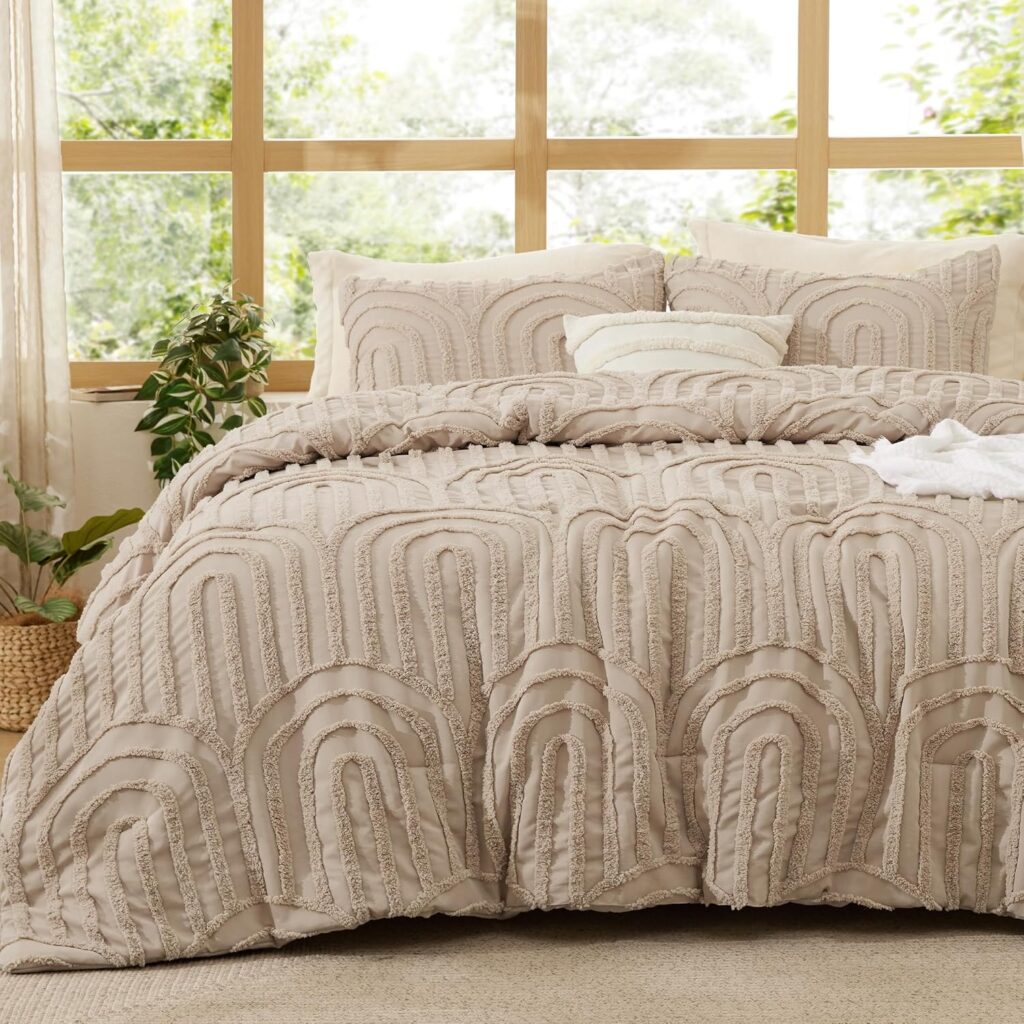
Neutral Tufted Comforter Set
Best for: Refreshing the main visual layer of the bed with a quiet color and noticeable texture.
Why it works: The raised tufted pattern brings depth to neutral bedding without relying on a busy print. Its restrained color can also work with several wood tones, rugs, and wall colors.
What to check: Confirm the exact bed size, included pieces, outer fabric, filling, weight, washing instructions, drying requirements, and whether the comforter suits your usual nighttime temperature.
Protect the Pillows You Already Own
Pillows collect moisture, oils, dust, and everyday wear. A washable protector creates a removable layer between the pillow and the decorative pillowcase, making regular care more manageable.
The pillowcase placed over that protector can then be chosen according to texture and personal preference. The important distinction is function: a protector helps preserve the pillow, while a pillowcase is the surface that touches the face and completes the bedding.

Zippered Pillow Protectors
Best for: Adding a washable protective layer to standard pillows already in regular use.
Why it works: The zippered construction encloses more of the pillow than an open-ended case and can be removed independently from the main bedding.
What to check: Verify pillow dimensions, closure construction, waterproof or water-resistant claims, washing temperature, drying instructions, and the complete textile label.
Textiles described casually as “bamboo” are often viscose or rayon made using bamboo as the original cellulose source. The Federal Trade Commission explains that these materials should be identified as rayon or viscose made from bamboo unless they contain mechanically processed bamboo fiber.

Mulberry Silk Pillowcase Set
Best for: Someone who prefers a smooth, lightweight surface against the face and is comfortable following more delicate care instructions.
Why it works: Silk introduces a different tactile layer without changing the rest of the bedding. The hidden zipper can also help the case remain in place around the pillow.
What to check: Confirm whether both sides are silk, the stated momme weight, certification or testing information, pillow dimensions, zipper placement, washing method, detergent requirements, and whether the package includes one or two cases.
Choose silk for its feel and material qualities rather than treating a pillowcase as a guaranteed solution for hair, skin, or sleep concerns.
Add Softness Underfoot
A rug can soften sound, add visual weight around the bed, and make the floor more comfortable when getting up. The right size depends on the room, bed, furniture placement, doors, and the amount of exposed flooring you want to keep.
A larger rug can help anchor the entire bed, while a smaller rug works well beside the bed or in a compact room. Neither approach is automatically better; the useful choice is the one that fits the available space without blocking doors or creating curled edges in walking paths.

Large Washable Low-Pile Rug
Best for: Anchoring a bed or filling a larger section of exposed bedroom flooring.
Why it works: The faded pattern introduces visual texture while the low profile can be easier to vacuum and position beneath furniture than a deep-pile rug.
What to check: Measure the bed and room before choosing a size. Review the actual fiber content, backing, pile height, washing-machine requirements, drying instructions, floor compatibility, and whether a separate rug pad is recommended.
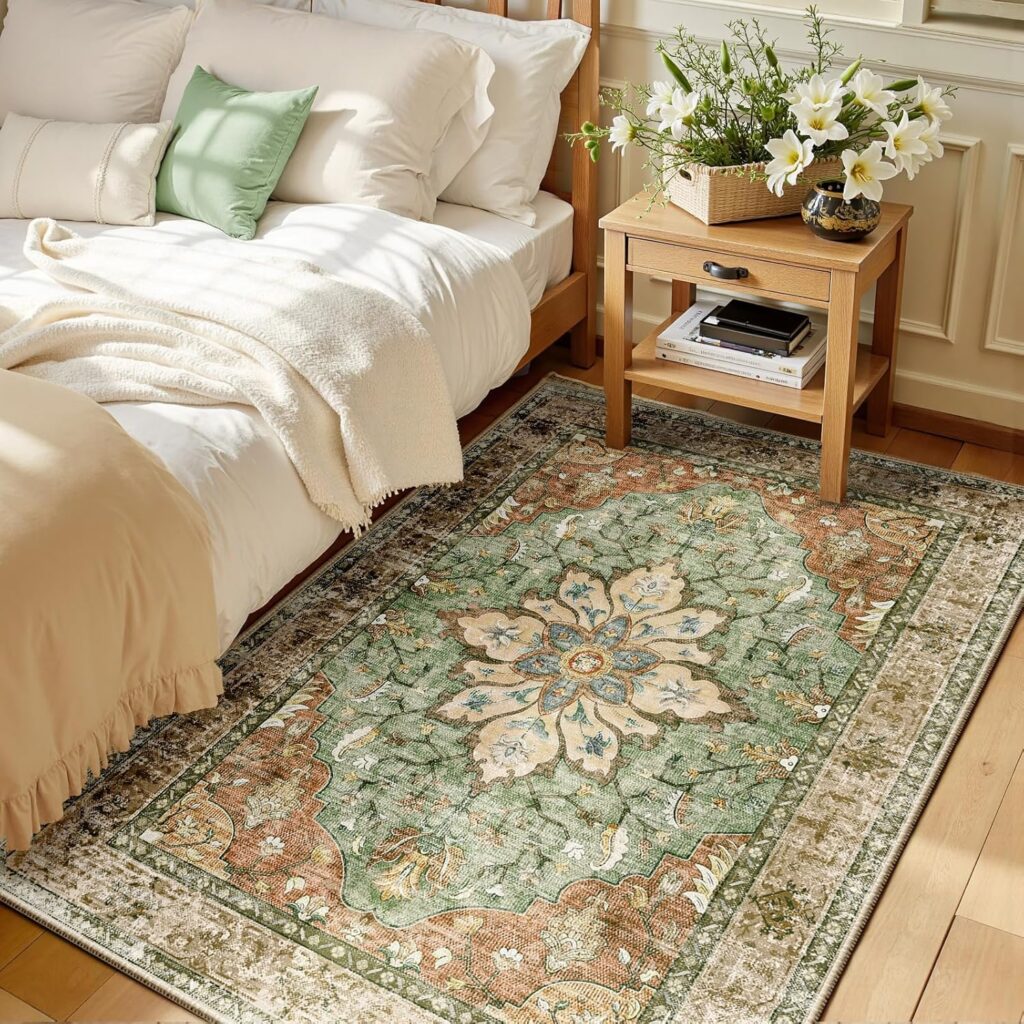
Vintage-Style Bedside Rug
Best for: A smaller bedroom, one side of the bed, or a dressing area that does not require a full-room rug.
Why it works: The compact scale introduces softness exactly where it is needed, while the distressed floral design can add character without visually filling the entire floor.
What to check: Confirm that the listed dimensions cover the intended area. Review backing, edge construction, pile height, washing instructions, and whether additional non-slip support is needed for your flooring.
Reduce the Clutter That Follows You to Bed
A bedroom does not need to be perfectly minimal, but unfinished piles and overcrowded storage can make the room feel as though the day’s tasks are still waiting. The most effective organizing system begins with what you genuinely own, not with the number of compartments a product provides.
Sort and measure before ordering. Hanging organizers make use of vertical closet space, while open cubes are better suited to folded items that benefit from being visible and easy to reach.
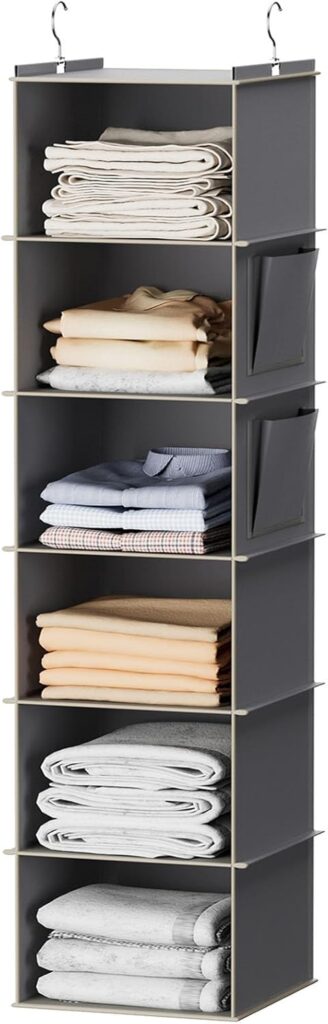
Hanging Closet Organizer
Best for: Folded clothing, accessories, or linens in a closet with unused hanging space.
Why it works: The vertical shelves divide one tall area into smaller sections without requiring a freestanding piece of furniture.
What to check: Measure the closet rod height and available width. Review the organizer’s total dimensions, shelf depth, weight limit, hanger construction, reinforcement, and the strength of the existing closet rod.
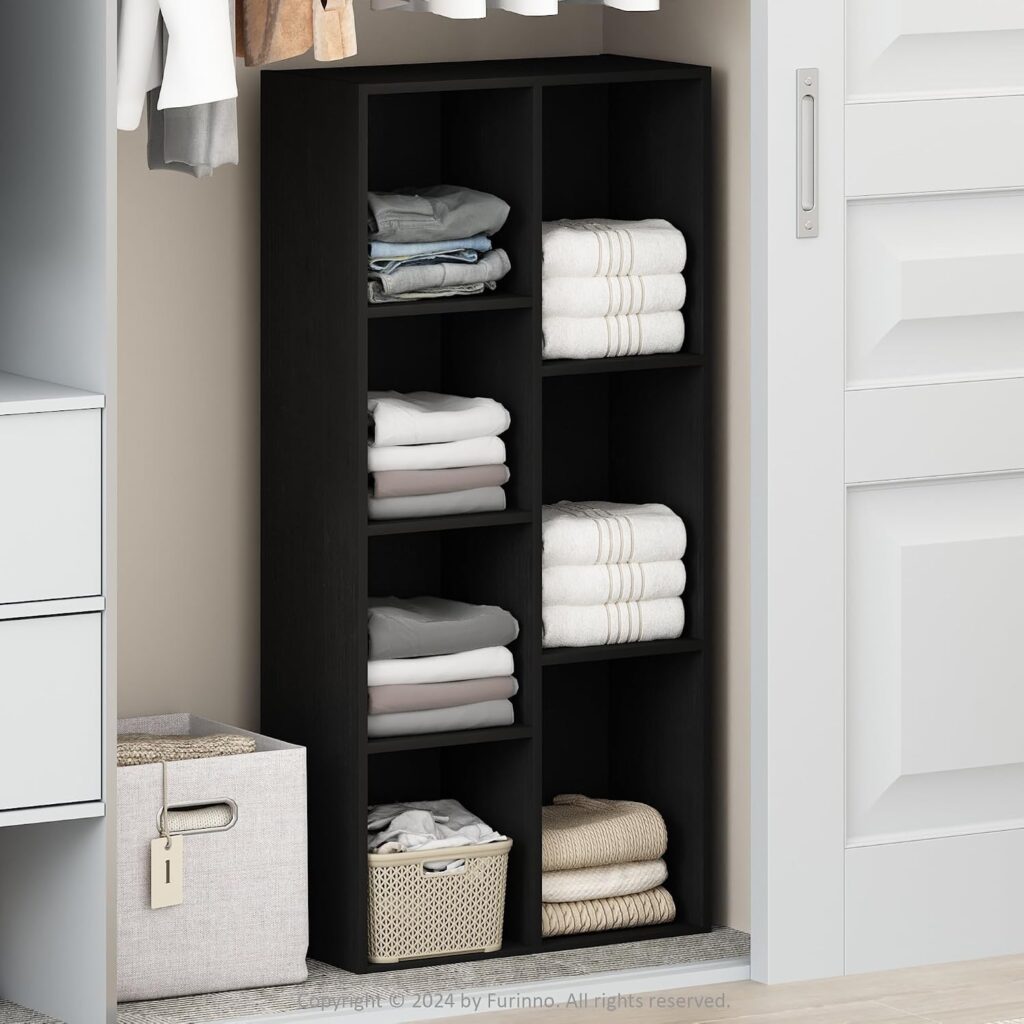
Seven-Cube Open Organizer
Best for: Folded clothing, baskets, shoes, or accessories that need a defined place outside the closet.
Why it works: Different compartment sizes can separate several categories while keeping frequently used items visible.
What to check: Confirm assembled dimensions, shelf capacity, construction materials, assembly requirements, base stability, wall-clearance needs, and whether an appropriate anti-tip system is included.
The U.S. Consumer Product Safety Commission recommends anchoring furniture such as bookcases and storage units to the wall. Follow the manufacturer’s instructions, use hardware suitable for the wall, and place heavier objects on the lower shelves.
Use a Mirror Without Overcrowding the Room
A full-length mirror can support the morning routine and reflect existing daylight into another part of the bedroom. Its effect depends on placement: a mirror facing a window reflects more light, while one directed toward clutter may simply make that clutter more visible.
Large mirrors should not be treated casually because of their weight and breakable surface. Leaning a mirror may look relaxed in a styled photograph, but safe installation should follow the manufacturer’s mounting or anti-tip instructions.
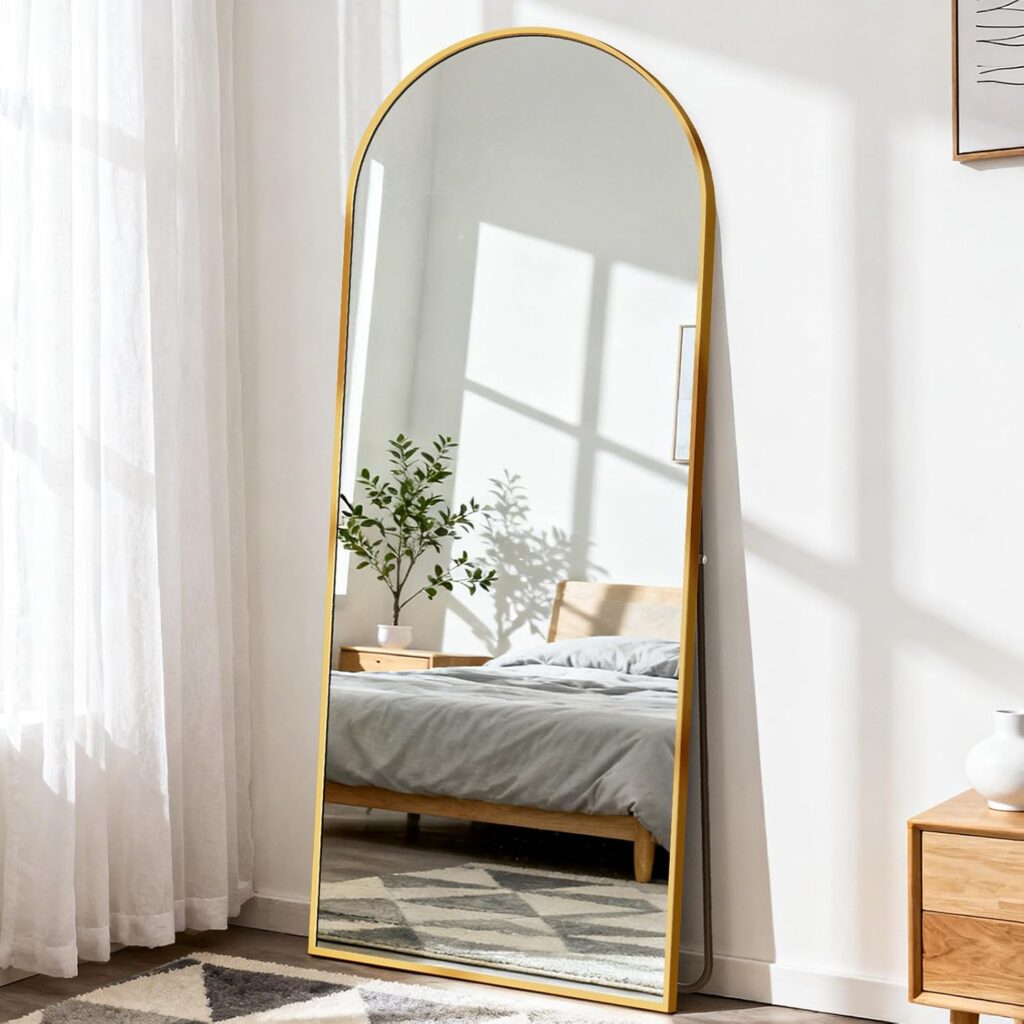
Arched Full-Length Mirror
Best for: A dressing area or bedroom wall where a full-body reflection is genuinely useful.
Why it works: The narrow frame and arched top create a softer silhouette than a large rectangular mirror, while the full-length format serves a clear everyday function.
What to check: Review total dimensions, weight, glass construction, frame material, included stand, wall-mounting hardware, installation instructions, return process, and replacement policy for damage during shipping.
Secure the mirror according to the manufacturer’s instructions, particularly in homes with children or pets. Do not rely on its weight or a wall lean alone to prevent movement or tipping.
What to Check Before Ordering Cozy Bedroom Finds
A bedroom product is used in close contact with the body or placed in a room occupied for many hours. Materials, maintenance, dimensions, and safety deserve as much attention as appearance.
- Measure the bed, floor, closet, and walls. Product photographs can make bedding, rugs, organizers, and mirrors appear larger than they are.
- Read the complete textile label. Look beyond words such as soft, natural, cooling, premium, silk-like, or bamboo.
- Review care requirements. Consider washing-machine capacity, drying space, detergent instructions, and whether delicate materials fit your routine.
- Confirm what is included. Bedding sets vary in the number of shams, sheets, pillowcases, inserts, and decorative pieces supplied.
- Check installation and stability. Secure large mirrors and freestanding storage according to their instructions, using hardware appropriate for the wall.
- Prioritize the sleep environment. Darkness, quiet, comfortable temperature, and reduced nighttime interruptions matter more than decorative perfection.
Let Comfort Develop Gradually
A comfortable bedroom rarely comes from replacing everything at once. It develops through observation: learning which blanket feels too warm, where clutter gathers, what needs to be within reach, and which objects make the room harder to maintain.
Begin with the part of the room that most directly affects everyday comfort. Replace worn bedding before adding decorative layers. Organize the clothing you actually use before buying more containers. Measure an empty wall before choosing a mirror.
These cozy bedroom finds are possibilities rather than a formula for better sleep. Their purpose is to support a room that feels calm, practical, and ready for the routines that help the day come to an end.
“A restful bedroom does not demand perfect sleep. It simply creates better conditions for letting the day go.”
Reader Reflection
What is the first thing you notice when you enter your bedroom at night? Choose one small change that would make the room easier to settle into: clearing a surface, adjusting the temperature, preparing clean bedding, reducing visible light, or giving tomorrow’s clothes a designated place.
Continue the Journey
- Create a Cozy Bedroom: Explore the foundational guide to building a warmer and more restful bedroom.
- Cozy Socks and Throws: Find additional layers for cooler nights, reading, and quiet evenings at home.
- Cozy Living Room Finds: Continue the Cozy Finds series with thoughtful details for your favorite shared room.
- Slow Morning Routine: Create a gentler transition between the bedroom and the beginning of the day.